The application window runs from your entry stamp, not from the start date on your contract. The authority has fifteen days from receipt to decide, and the counter receipt covers your legal stay for up to fifteen working days; larger cities issue the card in about a week. Every family member needs a separate card.
the first thing to understand is that three documents get confused with each other constantly, and they do different jobs. you obtain the visa abroad, and it gets you through the border. the human resources authority issues the work permit, which authorises the employment. the public security exit and entry administration issues the residence permit after you arrive, and it is the one that keeps you legally present, lets you leave and come back without a new visa, and unlocks a bank account, a phone contract and a lease in your own name.
this guide covers only the third one. the route to the job itself, including the Z visa and the work permit categories, is in the work visa guide. what follows is the part that begins the week you land, when the employer hands over a folder of paper and expects you to know what to do with it.
The clock starts at the border, not at the office
article 30 of the Exit and Entry Administration Law sets the window: a foreign national whose visa states that a residence document is required after entry must apply within thirty days of the date of entry, at the exit and entry administration of the public security organ at or above county level in the place where they intend to reside.
two words in that sentence cause most of the trouble. the first is entry, because the count starts on the stamp in your passport rather than on your employment start date, and a week spent travelling before you report to the office is a week off the thirty. the second is intend to reside, because the application goes to the city you will live in and not the city you flew into, which matters if you landed in Shanghai and the job is in Suzhou.
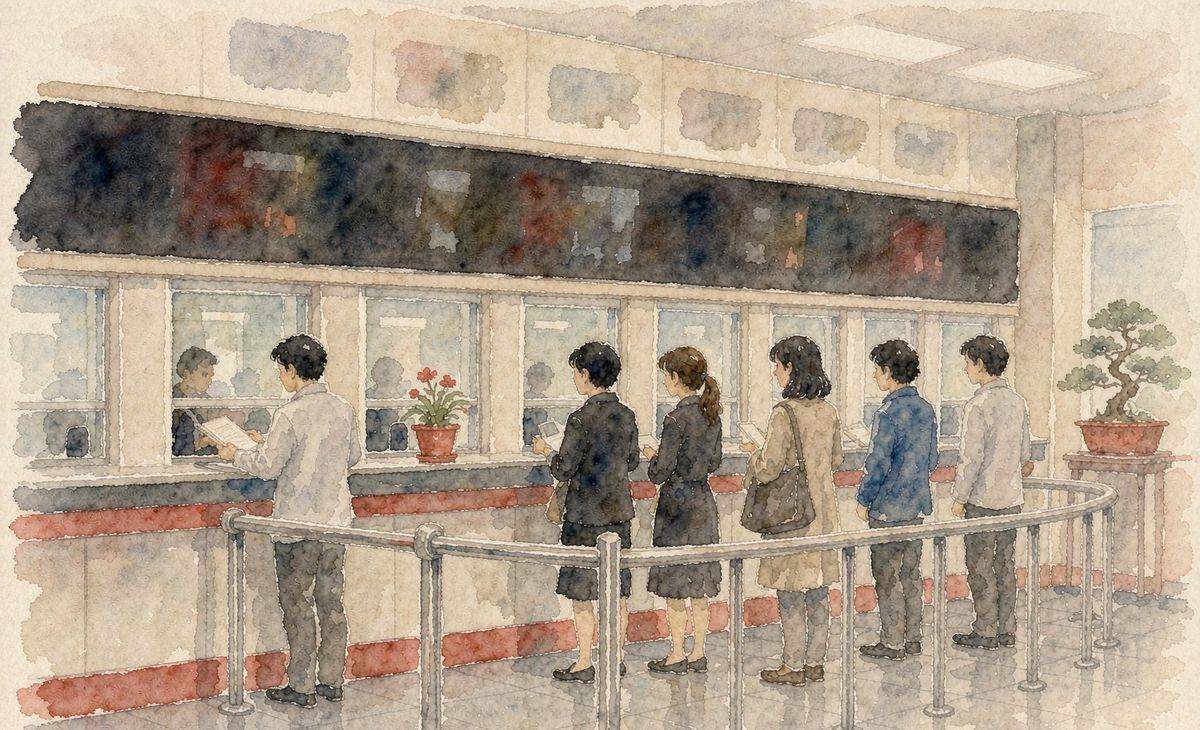
the timing inside the office is where English-language guides drift, because the law and the service manual use two different units that read the same in translation. the law says the authority shall review the application and reach a decision within fifteen days of receiving it. the service manual says the receipt issued at the counter stays valid for up to fifteen working days, and that a decision will be made before it expires. fifteen calendar days and fifteen working days are not the same promise, and the second is the one printed on the slip you walk out with.
there is a detail on that slip worth knowing before you need it. if the officer retains your passport while the application is processed, the receipt is your legal status in the country for as long as it is valid, and you can travel domestically with it. if you need the passport back in the meantime, for a hotel check-in or a flight, you can ask for it temporarily and return it before the receipt expires.
for anyone already living here on a permit rather than applying for a first one, the same article 38 of the law applies: foreign nationals aged sixteen and over must carry their passport or residence document at all times and produce it for inspection if asked. leaving it in a drawer at home is a breach on its own terms, separate from whatever prompted the check.
Five categories, five evidence bundles
article 15 of the Regulation on the Administration of the Entry and Exit of Foreigners names five kinds of residence document, and the category decides both what you must bring and how long the card can run. the durations below come from the National Immigration Administration's own application guide, which is more specific than the statute.
| Category | Who it is for | Core evidence | Maximum duration |
|---|---|---|---|
| Work (工作类) | Anyone employed in China | Work permit from the human resources or foreign expert authority, plus an employer letter | 5 years for high-level and urgently needed talent or investors; 2 years at a reputable registered employer; 1 year otherwise |
| Study (学习类) | Long-term students | School letter stating the study period, plus admission or enrolment proof | Matched to the study period stated by the school |
| Journalist (记者类) | Resident foreign correspondents | Letter from the provincial foreign affairs office and the press card | 1 year |
| Family reunion (团聚类) | Family of Chinese citizens or of permanent residents | Sponsor's identity document and proof of the family relationship | 3 years for under-18s and over-60s, ending no later than the 18th birthday; 2 years for others |
| Private affairs (私人事务类) | Spouses, parents and children of foreign residents; other personal matters | Sponsor's letter and residence permit plus relationship proof, or documents for the personal matter | Matched to the sponsor's permit for visiting relatives; 1 year for other personal matters |
the statutory floor matters as much as the ceiling. article 30 fixes the shortest work-type permit at ninety days and the shortest non-work permit at one hundred and eighty, which is why a short assignment is often handled with a ninety-day card and a fresh application later rather than an attempt to negotiate a six-month one. the family route has its own guide, since the visa you arrive on decides which of the last two rows applies to you: the spouse and family visa guide covers the Q1 and S1 split.
one category carries a restriction that surprises students every year. under article 22 of the regulation, a study-type permit holder who wants to work part-time off campus or take an internship must first get the school's consent and then have the location and period annotated on the permit. without that annotation the work is not permitted, and the annotation is a separate counter visit rather than something the school can arrange by email.
The medical certificate above one year
the single line that changes the paperwork most is in article 16 of the regulation: an applicant for a residence document valid for one year or more must submit a health certificate. it must come from the local health quarantine department or a health authority at county level or above, and it must confirm the absence of severe mental disorder, infectious tuberculosis, or another infectious disease capable of causing serious harm to public health. the certificate is valid for six months from the date it is issued.
that threshold explains a decision that looks arbitrary from outside. a ninety-day work permit needs no health certificate, so a company bringing someone in for a quarter will often take the shorter card and skip the medical. a one-year card requires it, and the clinic appointment becomes part of the arrival schedule alongside the lease and the bank visit. if you obtained your certificate before you left home and the visa process took longer than expected, check the date before you queue: six months runs from issue, not from arrival.
the examination happens in China at an international travel healthcare centre, which issues the report locally rather than translating one from abroad. bring the passport, the photo and the employer's letter, and expect a morning rather than an hour.
What the window costs
no city sets its own fee. a 2004 notice from the National Development and Reform Commission and the Ministry of Finance fixes the schedule, and the schedule charges by duration rather than by category. the immigration administration publishes the current version on its fee page.
| Item | Fee |
|---|---|
| Permit valid under 1 year | RMB¥400 |
| Valid 1 year up to 3 years | RMB¥800 |
| Valid 3 years up to 5 years | RMB¥1,000 |
| Change of registered particulars | RMB¥200 per change |
| Removing an accompanying family member | RMB¥200 per person |
| Permanent residence application | RMB¥1,500 per person |
| Permanent residence card | RMB¥300 per card |
| Replacement of a lost or damaged permanent residence card | RMB¥600 per card |
adding an accompanying family member costs the same rate as the principal applicant, so a couple on two-year permits pays RMB¥800 each rather than a single fee with a supplement. the jump at the one-year mark is the reason a two-year card at RMB¥800 is better value than two consecutive one-year cards at RMB¥400 each, before the second clinic visit is counted.
nothing in the national schedule is a fast-track payment, and there is no official expedited tier to buy. what exists instead is a discretion: the application guide allows an applicant with a proper reason to ask for the review period to be shortened, and the local office may accommodate it. if a flight or a contract deadline is genuinely at risk, that request is made at the counter, in person, with the reason stated plainly.
Reading the card
the card itself is small and dull, and it is the document that gets photographed most often in your first month here. article 33 of the law lists what is printed on it: name, sex, date of birth, purpose of residence, period of residence, date and place of issue, and the number of the passport it was issued against.
that last field is the one to remember. the residence permit number is tied to the passport number, and when the passport is replaced the permit must be reissued. the same article requires an application within ten days of any change to the registered particulars, which includes a new passport, a new address where the law requires it, and a change in the purpose of residence.
the number is also the identifier that half the country's systems will ask for. a bank account opening will ask for it, and so will a phone contract, a lease registration and the counter at a railway station when the passport reader hesitates. the bank account guide walks through which fields the teller copies and why the permit number rather than the visa number is the one they want. in practice, keeping a photograph of the card in your phone saves a walk home roughly once a month.
one benefit is easy to miss because it is never stated at the counter. article 22 of the law lists the categories of foreign national who may enter without a visa, and holders of a valid foreigner residence document are on that list. a permit is therefore a multiple-entry travel document for its whole validity: you can leave for a holiday and come back on the same card, without a re-entry permit and without counting days.
Ten days one way, thirty the other
two deadlines sit on either side of the card's validity, and they run in opposite directions. the change clock is short and starts when something about you changes. article 33 requires an application within ten days of a change in the registered particulars. the renewal clock is long and starts before the card expires: article 32 requires an application thirty days before the expiry date.
both are frequently missed for the same reason, which is that neither sends a reminder. a new passport collected in March, filed in May, is an overstay of the change obligation even though the card still looks valid. a renewal started two weeks before expiry is late under the statute, and while offices do accept late filings in practice, the acceptance is a courtesy rather than an entitlement.
there is a heavier consequence attached to the change obligation than a fine. article 34 of the regulation allows the issuing authority to declare a residence document void where the original purpose of residence has changed and the holder failed to report it within the prescribed period, and did not respond after a public notice. a permit tied to an employer you no longer work for, left unreported, is a document that can be cancelled rather than merely criticised.
loss and damage have their own route. article 35 of the law covers a permit that is damaged, lost or stolen, and the replacement application requires a police report or a note from your embassy, plus a valid new passport. the ten-day clock applies here too, and a stolen bag with a permit inside is a same-week problem rather than a next-month one.
The gap between one job and the next
the work-type permit is tied to the employer, and this is where the structure becomes visible. leaving a job ends the purpose of residence, and the employer is separately obliged under article 26 of the regulation to report the departure to the exit and entry administration. the card does not quietly continue.

what covers the gap is a stay permit, a different document with a different ceiling. the application guide allows a stay permit of up to thirty days where the purpose of residence has ended and a humanitarian reason justifies remaining, and the same thirty-day option appears for people who need to wrap up affairs before leaving. thirty days is the whole runway, and the count starts from the point the old purpose ended rather than from the day you notice.
moving to a new employer is not a gap at all if it is handled in sequence: the new work permit first, then the change or reissue of the residence permit within the ten-day window. the 2024 policy package added an exception that saves a counter visit for some people, allowing foreign managerial and technical staff to move between positions within their own group, or to enrol in a domestic university, without re-applying for the permit. that exception is narrower than it sounds and is worth confirming with the local office before relying on it.
What overstaying costs
article 78 of the law sets the frame, and article 25 of the regulation defines what counts: staying past the permitted period, staying past a visa-free period without obtaining a document, and leaving the area where you are permitted to stay. the penalty schedule is set out in the immigration administration's published discretion standards, and it is more forgiving at the bottom than the headlines suggest and harsher at the top.
| Days overstayed | Penalty |
|---|---|
| 10 days or fewer | Warning |
| 11 to 60 days | RMB¥500 per day from the 11th day, capped at RMB¥10,000 in total, or 5 days detention |
| More than 60 days | RMB¥10,000, or detention of 5 to 15 days |
read the second row carefully, because it contains the detail almost every summary drops. the fine is counted from the eleventh day, so the first ten days cost nothing beyond the warning, and an eleven-day overstay is a RMB¥500 problem rather than an RMB¥5,500 one. the cap is reached at day thirty, after which additional days add nothing to the amount but do move the case toward the next tier.

the tier that actually ends a stay is above sixty days, where the penalty becomes a flat RMB¥10,000 or detention, and where deportation enters the conversation. article 62 of the law allows deportation for illegal residence, and a deported person is barred from re-entry for one to five years. for anyone building a life here, that is the number that matters, because it is measured in years rather than in fines.
being stopped for a routine check without the card is a separate matter under article 38, and a photograph on a phone is not the document. the practical rule is unglamorous: the card lives in the same pocket as the passport, and the photograph exists for the bank, not for the officer.
What changed after 2024
the process has been consolidated since 2024, and the changes are worth knowing because older guides still describe the sequence as three separate queues. at a State Council policy briefing in March 2024, the immigration administration's foreigner management department described a joint process in which the work permit and the work-type residence permit are accepted at one window, reviewed in parallel, and issued together.
three specific relaxations came with it. foreign staff who have already held two consecutive work-type permits of more than a year, and staff at well-known enterprises or research institutions, can be issued a permit of up to five years. staff moved between positions within their group, or enrolled in a domestic university, do not have to re-apply. and where the officer has verified the passport in person, it need not be retained during processing, so the applicant keeps it and collects the card later. the same briefing noted that accommodation registration records and employer business licences can be checked through inter-agency data sharing, which removes paper from the pile.
local practice continues to diverge, and it diverges in the direction of more integration rather than less. Xiamen's 2026 pilot, run under the State Council's single-matter reform list, links the work permit, the work-type residence permit and tax registration into one submission and cut the document count from 42 to 21. a city that has done this will feel entirely different from one that has not, which is why the first call should be to the local office rather than to a forum.
that call has an official number. the immigration service hotline 12367 has run since April 2021, answers in English around the clock, and is reachable from abroad on +86-12367. the same service runs through the immigration administration's app and its WeChat and Alipay mini-programs. since December 2025 the hotline has added French, with Russian, Japanese and Korean handled through an interpreter bridge. for a question about which counter in which building, this is faster than any guide, including this one.
Common questions about the residence permit
Can I convert a visa-free entry into a residence permit?
Not as a rule. Article 34 of the law directs visa-free arrivals who need to stay past the permitted period to a stay permit instead, which is a different document with a ceiling of 180 days. Article 31 does allow a change from stay to residence for specially qualified talent, investors, or on humanitarian grounds, with approval from a municipal-level exit and entry administration. A tourist entry followed by a job offer is therefore a leave-and-return situation, not a counter conversation.
How long does the application take in practice?
The law gives the authority fifteen days from receipt to decide, and the receipt issued at the counter is valid for up to fifteen working days. In larger cities the card is often ready in about a week. If your passport is retained, the receipt covers your legal status meanwhile; ask for the passport back temporarily if you need to travel, and return it before the receipt expires.
Does my family need separate permits?
Yes, one card each, and the category can differ within one household. A spouse arriving on an S1 joins a private affairs permit matched to the working partner's validity; a child arriving on a Q1 with a Chinese grandparent as sponsor falls under family reunion, with a three-year ceiling that ends on the eighteenth birthday. Each additional accompanying person is charged at the same rate as the principal applicant.
Why did my fee double when I asked for two years?
Because the schedule is charged by duration band, not by category or by effort. Under one year is RMB¥400, one to three years is RMB¥800, and three to five years is RMB¥1,000. Two consecutive one-year cards cost RMB¥800 in fees alone and add a second clinic visit for the health certificate, so the two-year card is the cheaper route as well as the simpler one.
Do I need a health check every time I renew?
Only where the new permit will run one year or more, and only with a certificate issued within the previous six months. A renewal that keeps the same duration still needs a current certificate, so the six-month validity date is the thing to diarise. Shorter permits avoid the requirement entirely.
What happens if I change address or passport?
Apply within ten days. Article 33 covers changes to the registered particulars, which include the passport number and the purpose of residence, and the fee for a change is RMB¥200. Separately, article 39 requires accommodation registration within 24 hours of moving into a non-hotel address, which is the step the apartment guide treats as day-one business rather than paperwork.
Can I work on a study permit?
Only with an annotation. Article 22 of the regulation requires the school's consent and then an annotation of the location and period on the permit itself before any off-campus part-time work or internship. Working without it falls inside the definition of illegal employment in article 43 of the law, which also covers working outside the scope the permit allows.
Is a five-year permit available to everyone?
No. The five-year ceiling is open to high-level talent, urgently needed specialists and investors under the national criteria, and, since the 2024 changes, to staff who have held two consecutive work-type permits of more than a year or who work at well-known enterprises and research institutions. Everyone else sits at two years at a reputable registered employer or one year otherwise.