most of the world runs on the same handshake: your home license plus an international driving permit opens the roads of roughly 150 countries. China is not part of that handshake. it never joined the road traffic convention that IDPs are issued under, so it neither issues one nor recognizes one, and the traffic law states plainly that driving here requires a Chinese license obtained through Chinese channels. travelers discover this at rental counters, where staff refuse the booking without a local document.
that is the bad news. the useful news is that China built two legal doors for foreigners who genuinely want to drive, one for short stays and one for residents, and both are more obtainable than the IDP wall suggests. everything below traces to the public security regulations that govern them, checked 13 October 2026.
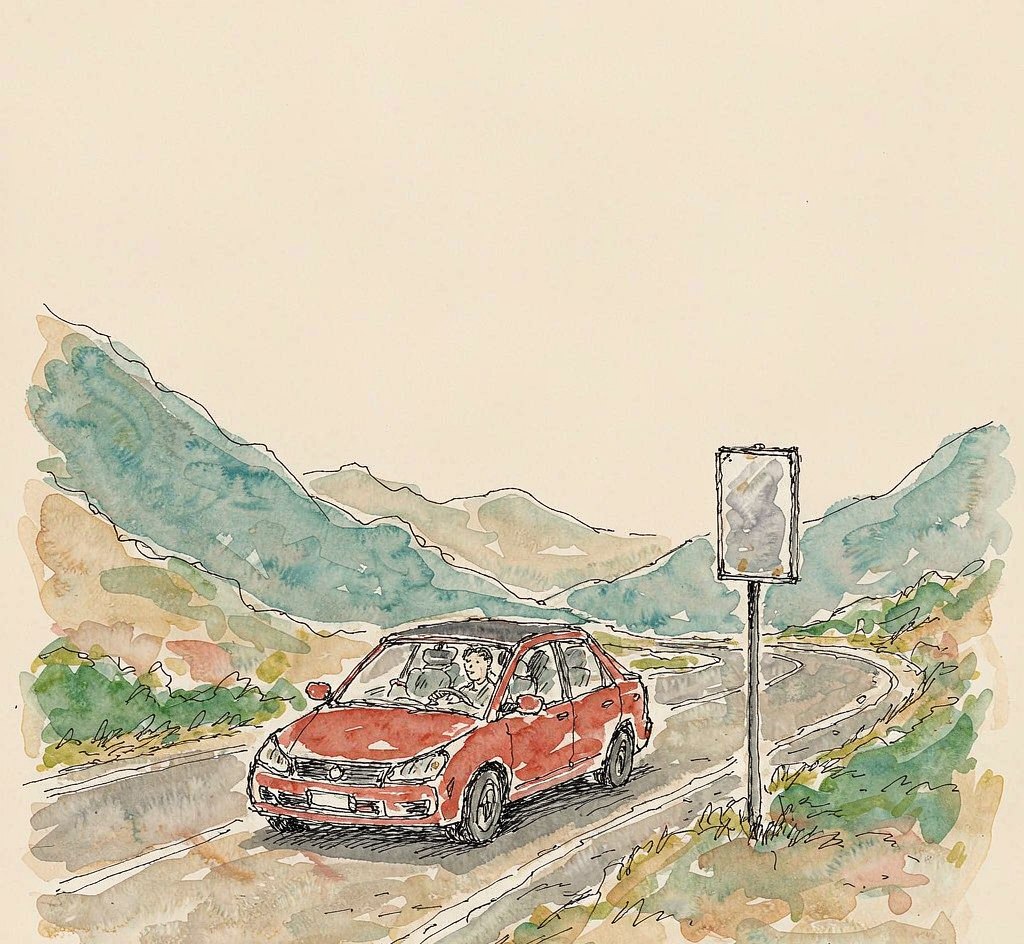
Can you drive with a foreign license?
no, not by itself, and not with an IDP either. police treat a driver holding only a foreign license as unlicensed: fines, and for some cases short-term detention. the scenario that catches people is ordinary confidence, a visitor who drove legally in a dozen other countries assumes the paper works here. a traffic police post in Jiyuan, Henan publicized exactly this case in 2026: a driver stopped while driving on a foreign license, penalized as unlicensed, and told to convert before driving again.
the vehicle side matters too. even with the right permit, the categories you may drive follow your foreign license's vehicle classes, and rental cars are capped at small vehicles: classes C1 (manual small car) and C2 (automatic small car). motorcycles, trucks, and buses do not open through the short-stay door.
The temporary driving permit
this is the short-stay door, created for visitors under the public security ministry's rules on temporarily entering drivers (ministerial order No. 90). the shape of it:
what it gives you: legal driving in China on top of your foreign license, valid alongside it. the permit lasts up to three months, matching your entry stamp's permitted stay, and stays valid for repeat entries within that window without reapplication. if your stay or residence runs past three months, the validity can extend to as long as one year, capped by your visa.
what you bring to the vehicle administration office (车管所, at your place of entry or residence): your passport and visa, your foreign license with a Chinese translation from a translation agency or notary, and a passport photo. you then sit through a short session on Chinese road rules, after which the permit is issued on the spot. no driving test, no theory exam.
the Hainan pilots: Hainan province is trialing an easier version, skipping the medical check for short-term applicants, extending the permit to a full year for longer stays, and setting up service desks at airports and ports so you can apply where you land.
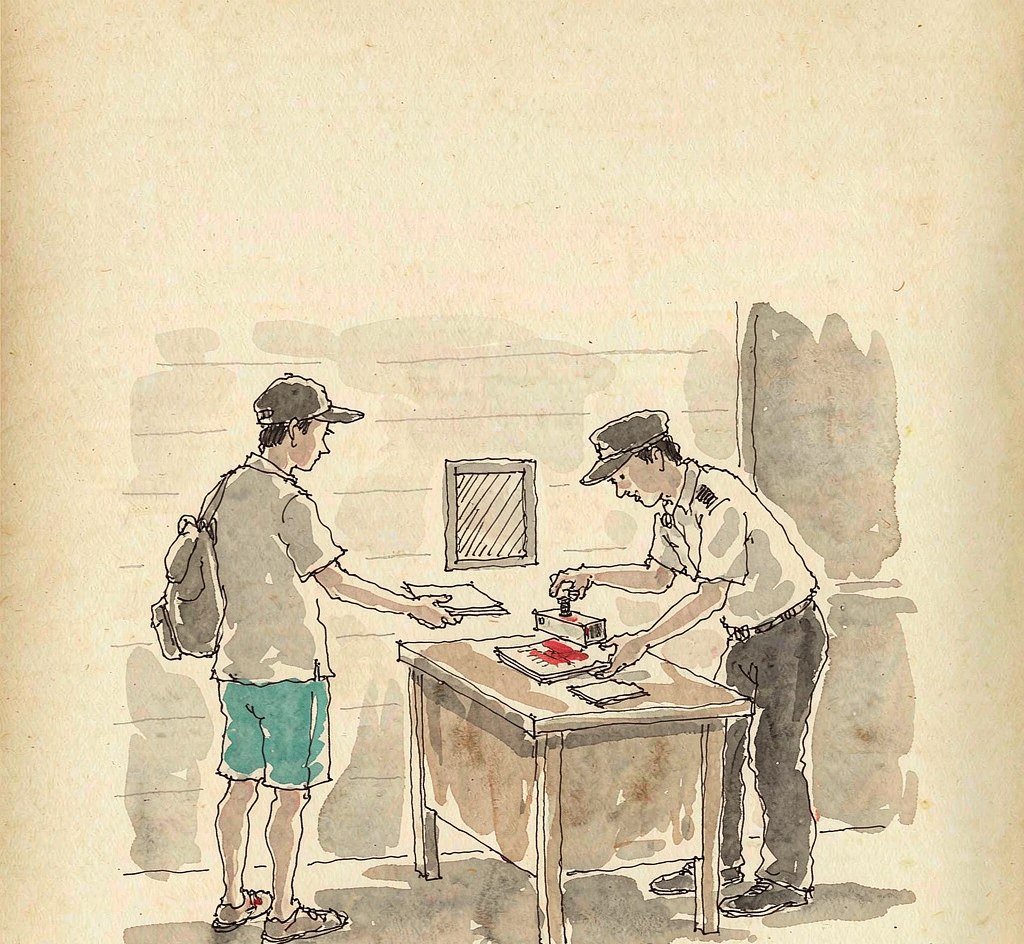
practical reading of all this: the permit is designed for the person who has a real reason to drive, a self-drive route, a business itinerary outside the rail network, a relative to ferry around. a first-time visitor doing Beijing, Shanghai, and Xi'an will never miss it, because the high-speed rail and ride-hailing with DiDi cover that trip better than a car would.
Converting to a Chinese license
residents and long-stay visitors go through the conversion door instead, under ministerial order No. 139 on applying for motor vehicle driving licenses. the requirements: a valid passport with a visa or residence permit of at least three months, an accommodation registration certificate from the police, a physical examination from a county-level or above medical institution, your foreign license with translation, and photos. applications go to the vehicle administration office where you live.
the exam is the theory paper (subject one): one hundred questions on road rules and signs, ninety to pass. no road test for ordinary car classes, which makes this one of the friendlier license conversions anywhere. heavier categories, large buses and trucks among them, add the on-road subject three. you have three years from acceptance to finish the required exams. the exam system runs in eight languages including English, French, Russian, Japanese, Spanish, German, and Korean.
a shortcut exists for a few nationalities: China has signed mutual-recognition agreements with France, the UAE, and Belgium, with Serbia added, easing exchange for their license holders. everyone else converts by exam, and after conversion your Chinese license is a normal domestic one, valid for six years on first issue.
What driving is actually like
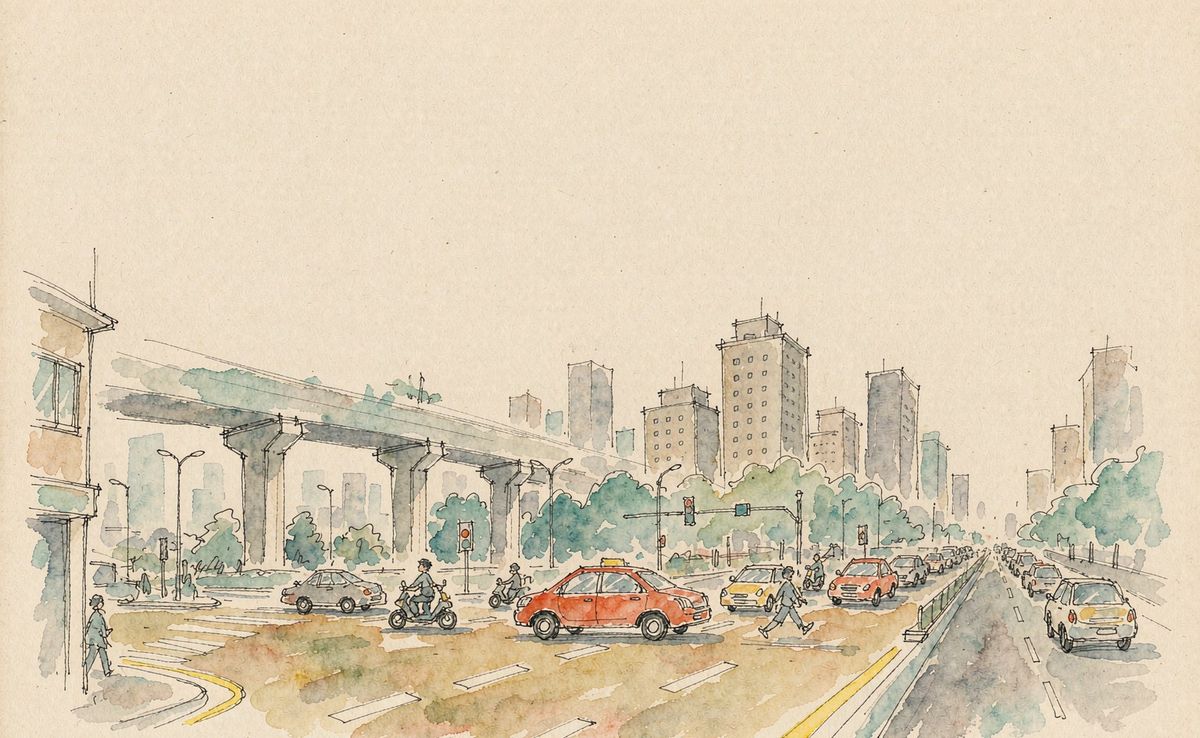
traffic keeps to the right, set by article 35 of the road traffic safety law. beyond that one certainty, calibrate expectations: Chinese cities run dense traffic with assertive lane discipline, scooters appearing from every gap, and junction behavior that locals negotiate by millimeters rather than rules. the roads themselves are excellent, the expressway network is among the world's largest, well paved and clearly signed in Chinese plus English on major routes. expressways are tolled, fuel is cheap by international standards, and parking in city centers is the genuinely scarce resource.
navigation is a solved problem if you use the right app. AMap handles driving directions better than any international alternative inside China, including live congestion and speed cameras. rent or drive without it and you are navigating a character-based address system blind.
Renting a car
rental counters, international brands and Chinese chains alike, ask for exactly one of two documents: a Chinese license or a temporary driving permit. an IDP plus a passport books nothing. once you hold the permit, the rental flow itself is ordinary: a deposit, sometimes a sizable one held on card, and a walk-around inspection. keep the rental contract in the car, police can ask to see it alongside the permit. and remember the class cap: rentals through the short-stay door are C1 and C2 only, so manual and automatic small cars are your universe.
one honest footnote: for most visitors the honest answer to "should I drive in China" is "only if the trip demands it." the cities are densely served by metro and ride-hailing, the intercities by trains that beat driving on every route they serve, and the 12306 booking system puts those trains in your pocket. driving earns its place on self-drive itineraries: the mountain roads of Yunnan and Guizhou, the lacustrine plains around Qinghai Lake, small towns the rail map skips.
Common questions
Can I drive in China with a US license?
Not by itself. A US license, with or without an international driving permit, does not authorize driving in mainland China; police treat it as driving without a license. Short-term visitors can drive legally only after obtaining a temporary driving permit at a vehicle administration office, which takes your passport, visa, translated US license, and a short rules session.
Why is my international driving permit invalid in China?
IDPs exist under the UN road traffic conventions, and mainland China never joined the convention that issues them, so it neither issues nor recognizes the document. This is national law, not a regional quirk, and it applies everywhere in the mainland including free-trade zones.
Which side of the road does China drive on?
The right, set by article 35 of the road traffic safety law. Drivers from left-hand-traffic countries like the UK, Japan, or Australia need a little extra attention on roundabouts and overtaking during the first day.
How long does the temporary driving permit take?
The permit is issued on the spot once you bring the documents (passport and visa, translated foreign license, photo) and complete the short road-rules session at the vehicle administration office. It is valid up to three months, extendable to one year for longer stays, and covers repeat entries within its validity.
Can I rent a car in China as a foreigner?
Yes, with a temporary driving permit or a Chinese license; rental companies accept nothing else, IDPs included. Rentals through the short-stay route are limited to small vehicles, classes C1 and C2. Expect a deposit and keep the rental contract in the car.
Is driving in China safe?
The roads and cars are modern and the expressways are excellent, but traffic behavior is assertive and collision rates in dense cities are higher than most visitors are used to. If you drive, drive defensively, navigate with AMap, and avoid night driving on unfamiliar rural roads.
How do I get a full Chinese driver's license?
Residents convert their foreign license at the local vehicle administration office: passport with a visa or permit of three months or more, police accommodation registration, a medical check, and the translated license, then pass the 100-question theory exam with 90 to qualify. No road test for ordinary cars, exams available in eight languages, and France, the UAE, Belgium, and Serbia have mutual-recognition arrangements.