Whether you're already in China or still planning the trip, one rule outlasts every guidebook: you need DiDi. In a country where hailing a taxi on the street can mean a language barrier standoff, this ride-hailing super app has grown far beyond a simple car service, from everyday commutes to airport runs, it's the quiet backbone of getting around China's cities.
Master DiDi, and you'll never struggle to catch a ride again.
on my first rainy night in a new city, i stood at a quiet intersection with no taxi in sight, honestly, i opened DiDi, picked Express, and watched a car turn onto my street within four minutes. that small relief is why i put this app on every visitor's phone before they land.
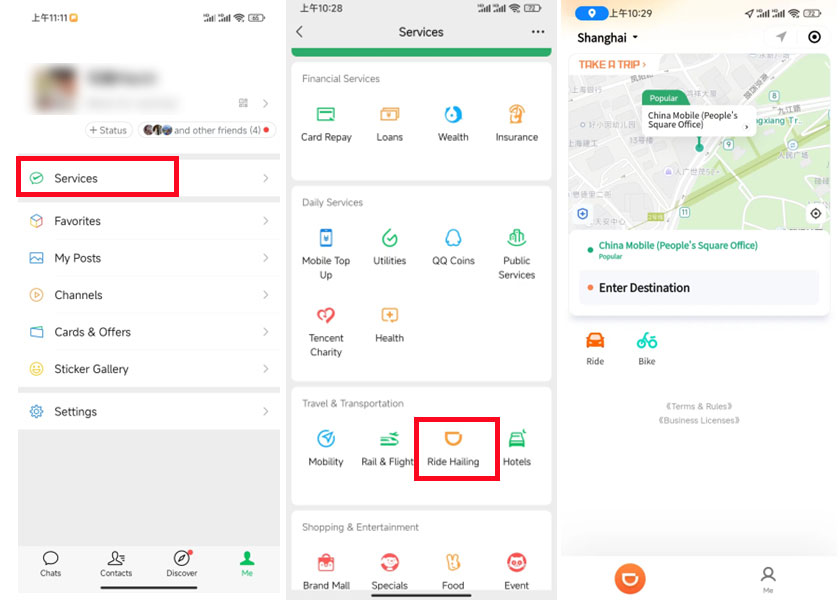
DiDi works through its own app, or directly inside WeChat and Alipay. You'll need WeChat Pay or Alipay set up with a bound card to pay, the fare deducts automatically when the trip ends. See our guides to WeChat Pay setup and Alipay card binding if you haven't.
DiDi
DiDi Chuxing (滴滴出行) is China's leading ride-hailing platform, think of it as the local equivalent of Uber. It operates in hundreds of cities across China, offering everything from economical rides to high-end cars and even carpooling. The app supports an English interface, making it accessible to foreigners without reading Chinese.
1. Set up DiDi
Your first task is choosing how to access DiDi and switching the interface to English.
-
Choose your entry point, You have three options: download the standalone "DiDi" app from the App Store or Google Play; or open WeChat → "Services" → "Ride Hailing" (出行); or open Alipay and search for "DiDi".
-
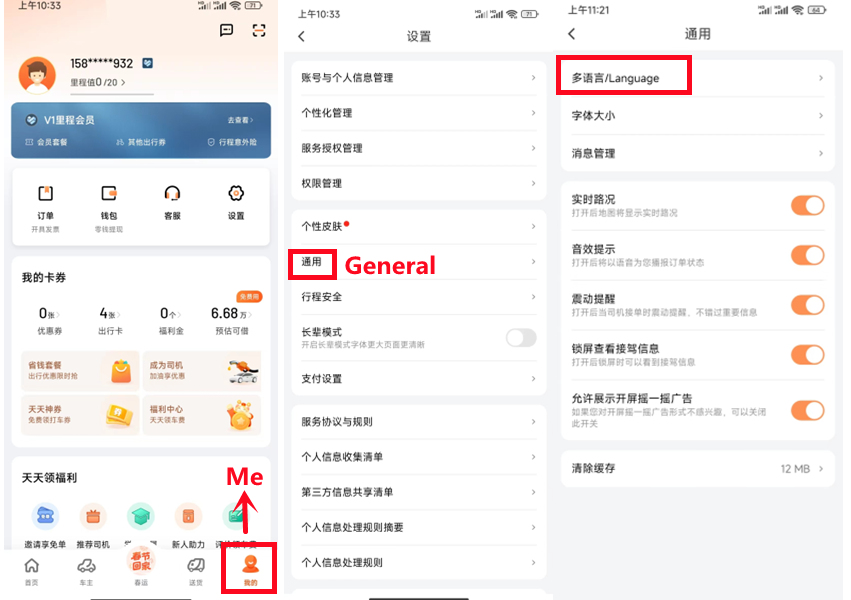
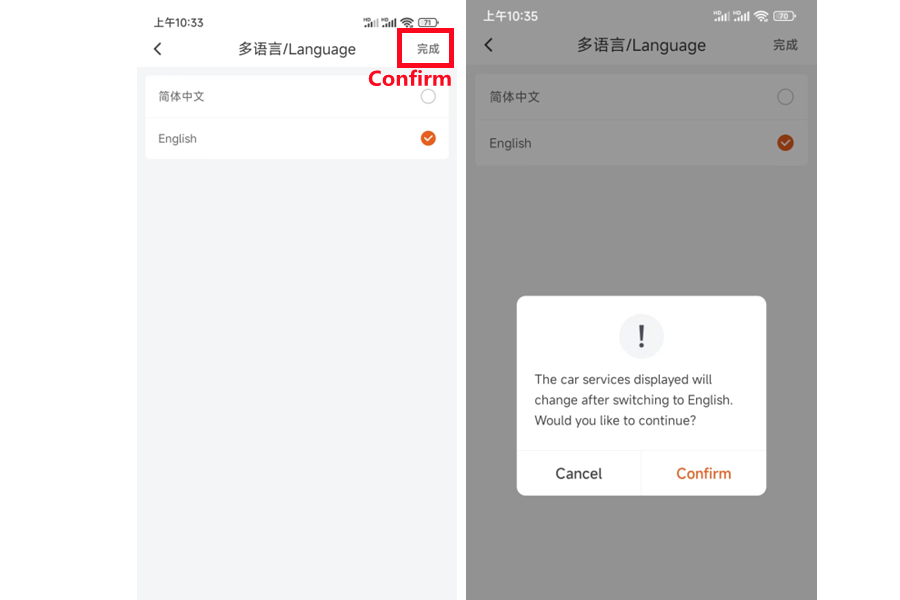
Switch to English, If you're using the standalone app, go to "我的 (Me)" → "设置 (Settings)" → "通用 (General)" → "语言 (Language)" → "English" → "Confirm". If you're using the WeChat or Alipay mini program, the interface usually follows your app's language setting.
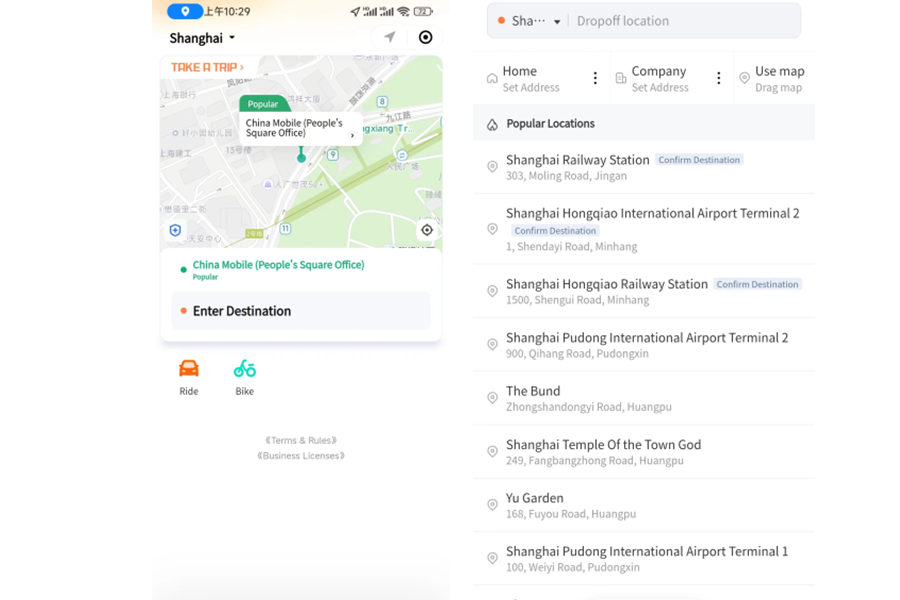
- Set your pickup point, The app uses your GPS location by default. Drag the pin to adjust if needed, or search for a specific landmark.
2. Hail a ride
- Enter your destination, Type an address, landmark, or business name in English. DiDi recognizes English queries and matches them to Chinese place names.
-
Choose a car type, Options typically include Express (economy), Premier (high-end), and Taxi. Each shows an estimated fare and wait time. Pick the one that suits you.

- Confirm and wait, Tap "Confirm" to send the request. When a driver accepts, their photo, name, car model, and license plate number appear on screen. You can see the driver approaching in live on the map.
it is not always as smooth as the demo. during rush hour or rain, a small surcharge line appears and the wait doubles, and once a driver accepted but circled the block because my pin landed inside a gated community, i was annoyed, walked to the gate, and he found me in a minute. since then i drop the pin on the nearest main road, not the building itself.
3. During the ride
When the driver arrives, confirm the license plate matches what's shown in the app. You can enter the car and verify the last four digits of your phone number with the driver for confirmation.
Communication. If you need to tell the driver something, use the in-app messaging feature, messages you type in English are automatically translated to Chinese for the driver, and their replies are translated back to English.
Payment. The fare is automatically deducted from your WeChat Pay or Alipay account when the trip ends. No cash, no negotiation, just get out and go.

beyond the basics, a few things make DiDi feel local. Express is the everyday economy ride, Premier is the high-end quiet car, and Carpool (拼车) can cut the fare by a third if you don't mind a detour. a short city hop runs about ¥10 to ¥25, an airport run lands near ¥80 to ¥150 depending on the city, and the fare deducts automatically from WeChat Pay or Alipay when you arrive, no cash, no haggling with the driver.
Common questions about using DiDi in China
Do I need to speak Chinese to use DiDi?
No. The app has a full English interface, and the in-app messaging feature automatically translates between English and Chinese. You can type your destination in English too, DiDi matches it to the Chinese place name. Just make sure your destination is entered correctly.
How do I switch DiDi to English?
In the standalone app, go to "我的 (Me)" → "设置 (Settings)" → "通用 (General)" → "语言 (Language)" → "English" → "Confirm". If you're using DiDi through WeChat or Alipay, the mini program usually follows that app's language setting.
Is DiDi cheaper than a taxi in China?
Often yes, especially for Express rides. DiDi also shows the fare estimate upfront, so there's no surprise at the end of the trip.
Can I pay for DiDi with a foreign card?
Not directly. The fare is deducted automatically from WeChat Pay or Alipay when the trip ends, so link your foreign card to one of those two wallets and the ride settles from it. No cash, no negotiating with the driver.
What if the driver can't find me?
The driver can see your GPS pin on their map. If the location isn't accurate, use the in-app call or messaging feature to guide them. A translation feature is built into the messaging.
Can I use DiDi at the airport?
Yes. Set your pickup point to the airport's designated ride-hailing area (usually marked with signs), and DiDi will route the driver there. Some airports have specific pickup zones, check the app for guidance.
Can I schedule a DiDi ride in advance?
Yes. Tap "Reserve" (预约) instead of "Ride Now" when booking. You can schedule a ride up to several days in advance, which is useful for early-morning airport trips.
Is Uber available in China?
Not as a separate service, Uber folded its China business into DiDi in 2016. DiDi runs in hundreds of Chinese cities and is the practical equivalent, with Express as the everyday economy option and Premier as the quieter, higher-end car.