Meituan and DiDi Qingju charge RMB¥1.5 per thirty minutes; HelloBike charges the same in fifteen. A thirty-five-minute ride therefore costs RMB¥3.00 on the first two and RMB¥4.50 on HelloBike on a weekday. No Chinese number is needed, but a passport verified inside Alipay is, because the operators inherit that identity check.
a shared bike is the cheapest powered transport in any Chinese city and the easiest thing to get wrong without noticing. nothing about the transaction is hard: you point a phone at a square of paint on the frame, a lock clicks, you ride. the part that costs people money happens at both ends of that ride, in the fare that keeps ticking after you stop pedalling and in the place you choose to leave the bike.
this guide is about the money and the rules, since the pedalling needs no instruction. if the wallet side is not set up yet, do that first in the Alipay guide. if the journey starts and ends at a station, the metro guide covers fares and the transport QR code. what follows is the part between them.
The gap the metro leaves
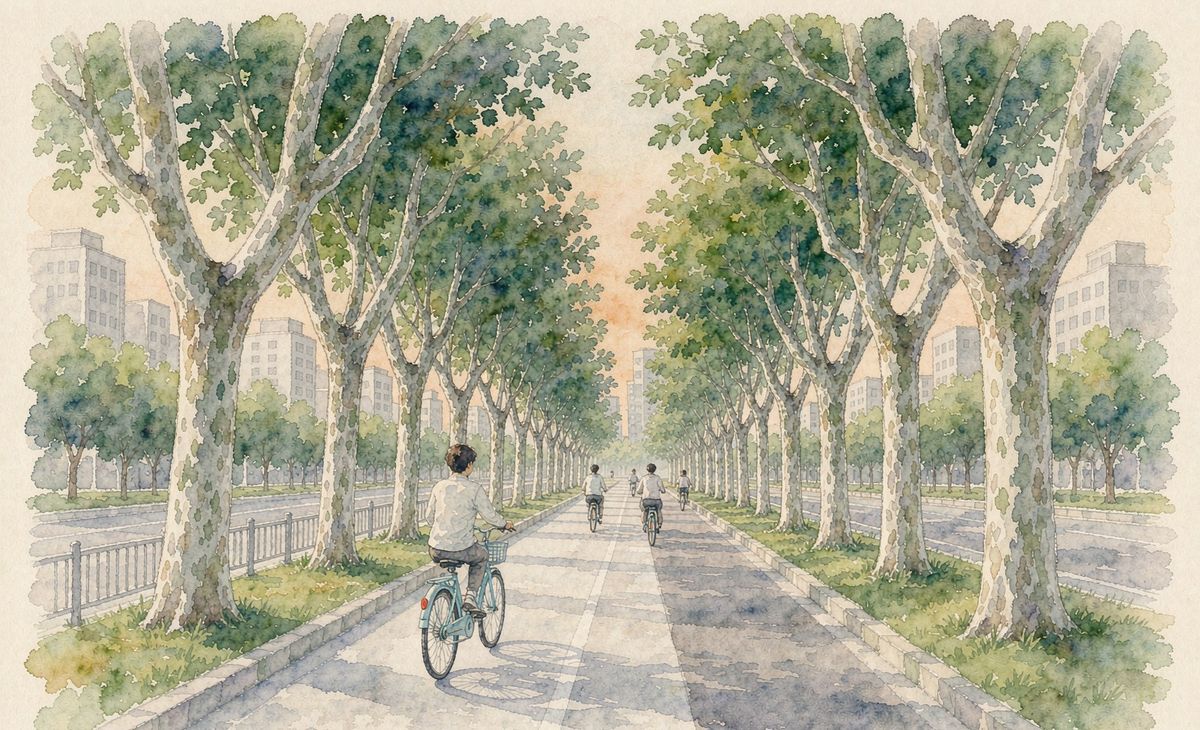
chinese cities were built around bicycles before they were rebuilt around cars, and the road layout still shows it. most arterial roads carry a separated lane on each side, sometimes wider than a car lane, usually with a physical divider. that inheritance is why a city of twenty million people can be crossed at nine in the evening on a bicycle in less time than the same trip takes by car at six.
it also means the bike is not a tourist novelty here. it is the middle distance of an ordinary commute: station to office, station to restaurant, station to the friend's compound that turns out to be on the other side of a ring road. the local habit is worth copying for the same reason locals copy it. under three kilometres, nothing else is faster.
the awkward part is that the network is dockless. there is no rack to return to, which is what makes it convenient, and no rack to return to, which is what produces the fines discussed below. that single design choice accounts for almost every complaint a visitor will have.
Three fleets, one app
three operators cover essentially the whole country. they are easy to tell apart by colour, and the colour matters less than the company behind it, because each one is bolted onto a different super-app.
| Operator | Colour | Owner | Main entry point | Where it is strongest |
|---|---|---|---|---|
| Meituan Bike | Yellow | Meituan (formerly Mobike) | Meituan app, WeChat mini program, Alipay scan | Tier-1 cities, dense central districts |
| HelloBike | Blue and white | Hello Inc. (Alibaba-backed) | Alipay mini program, Helloride app | Widest city count, strongest in tier-2 and tier-3 |
| DiDi Qingju | Green | DiDi | DiDi app, WeChat mini program, Alipay scan | Travels with your DiDi account |
the practical consequence is that you rarely need to install anything. Alipay's scan button reads the code on any of the three and opens the right mini program by itself, which means the brand question answers itself at the handlebars. the exception is a bike whose code belongs to an operator that has withdrawn from that city, in which case the scan fails and you walk to the next one.
two things vary by city more than the marketing suggests. coverage is not equal: a district can be saturated with one colour and empty of the others, and tier-2 cities often have HelloBike as the only realistic option. and most fleets now mix ordinary bicycles with pedal-assist models, which are a different vehicle under the law, cost more per minute, and carry a higher age floor. if the frame has a battery box under the saddle, you are not on a bicycle in the legal sense, and the section on rules applies to you differently.
How each one meters a ride
the fare is a starting price plus a time charge, and the three operators do not agree on either number. this is the single most useful thing to know before you scan, because the difference on a half-hour ride is not small.
| Operator | Starting price | Time charge after that | Weekend and holiday |
|---|---|---|---|
| HelloBike | RMB¥1.5 weekday | RMB¥1.5 per 15 minutes | RMB¥1.8 start, applied since February 2025 in Beijing |
| Meituan Bike | RMB¥1.5, flat | RMB¥1.5 per 30 minutes | No separate weekend price at that check |
| DiDi Qingju | RMB¥1.5, flat | RMB¥1.5 per 30 minutes | No separate weekend price at that check |
run the arithmetic on a 35-minute ride and the gap opens. Meituan and Qingju bill RMB¥1.5 to start plus one RMB¥1.5 block, so RMB¥3.00. HelloBike bills RMB¥1.5 plus two blocks of RMB¥1.5, so RMB¥4.50 on a weekday and RMB¥4.80 at the weekend. the same distance, on the same street, for sixty per cent more, decided entirely by which bike happened to be nearest.
under about fifteen minutes the three converge and the choice stops mattering. that is also the length of most station-to-destination trips, which is why the difference stays invisible until you start using the bike as actual transport rather than as a one-off. the break-even sits somewhere near the twenty-minute mark.
the starting window has been shrinking independently of all this. from June 2024, operators in Chengdu, Guangzhou and Wuhan moved the weekday starting price from the first fifteen minutes to the first ten, with RMB¥1 per fifteen minutes after that. an hour that cost RMB¥4.50 in 2023 cost RMB¥5.50 by early 2025. check the countdown on the unlock screen rather than assuming fifteen minutes, because the window is now a city-level variable.
for anyone staying more than a fortnight, a period pass changes the maths completely. the passes are sold as a block of minutes valid for a month, and per-minute rates stop applying once one is active. if you will ride twice a day, buy one on the second day, not the tenth.
Parking, where the money is
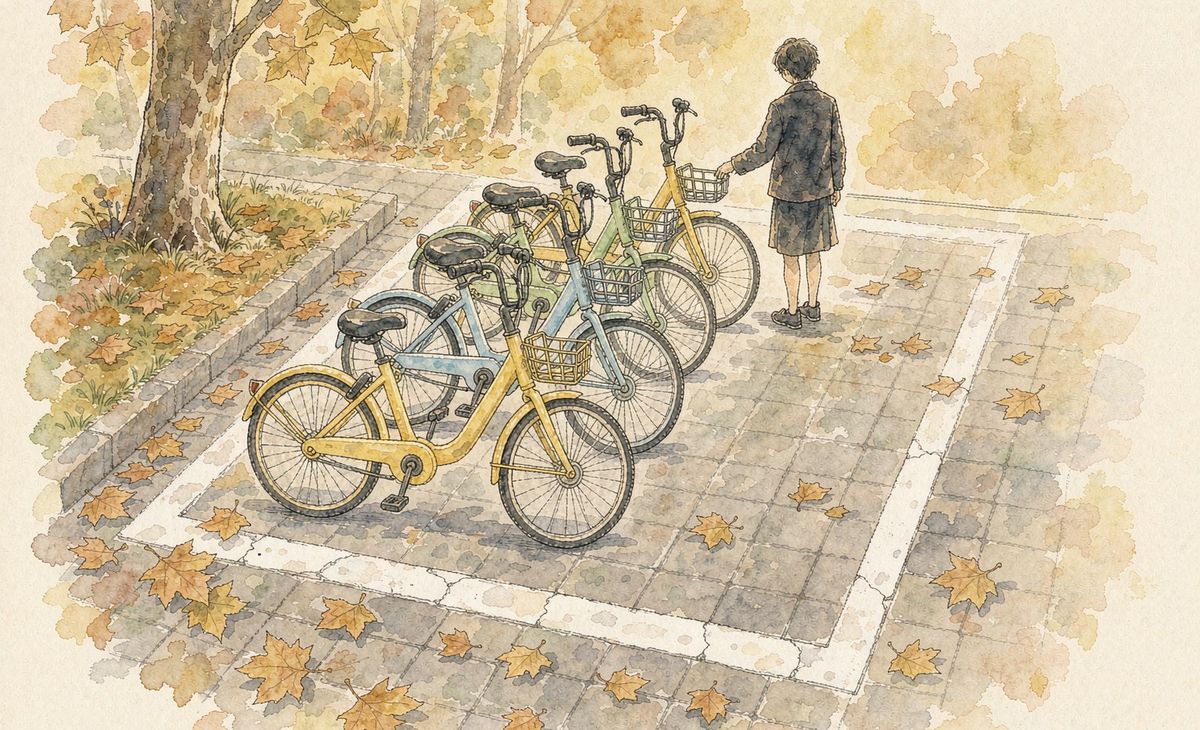
the dockless design pushed the problem of where bikes end up onto city governments, and the response was a virtual fence. a parking zone is drawn as a geofenced polygon and shown on the operator's map as a P marker or a white rectangle on the pavement. lock the bike inside one and the ride ends. lock it outside and the bike refuses, in the most literal way available to it.
the mechanism is worth describing precisely, because it surprises people at the worst moment. on the newer split-lock models, closing the lock outside a zone makes the lock spring open again within a couple of seconds, and a text message arrives telling you that you have not returned it to a P point and that billing continues. the bike is not going to accept your decision. you push it to the zone and close it again.
if you force the issue, the penalty depends entirely on the operator. this is where the brand choice turns from a pricing question into a risk question.
| Operator | Charge for ending a ride in a no-parking zone |
|---|---|
| HelloBike | Up to RMB¥50 per ride, on top of the fare |
| Meituan Bike | RMB¥20 per ride |
| DiDi Qingju | RMB¥5 per ride |
a tenfold spread for the same mistake, and it is not the mistake people plan for. the fine is also automatic, applied the instant the lock closes, which means the dispute happens after the money has moved.
two habits remove most of this risk. before you unlock, look at the map and find a P point near where you are going; if there is none within a block or two, walk or take the metro instead of riding into a dead end. and when you do park, do it in the middle of the zone rather than on its edge, because GPS drifts and the operators say so themselves in their own guidance. a bike straddling the boundary is a coin flip between a clean end and a charge.
cities have their own rules layered on top. Shanghai's non-motor vehicle regulation requires bikes to be left in a designated on-street parking point and allows the police, with the urban management officers, to clear bikes that block traffic when the rider is gone. being towed while you are still being billed is the worse version of this problem, and it is avoidable by the same habit.
Unlocking as a foreigner
registration is where visitors expect friction and mostly do not find it, provided the wallet is already verified. the reason is that the bike mini programs inherit the identity check you completed in Alipay. once your passport is on file there, the bike operator does not repeat the exercise.
- Verify in Alipay first. Passport number and a photograph of the identity page, plus a face check. Approval is usually immediate and it unlocks a whole category of services beyond bikes.
- Scan the bike, not the brand. Alipay's scan reads the code on the frame and routes you to the correct mini program. There is no need to know which operator owns the bike in front of you.
- Accept the location permission. Without it the map cannot show you bikes or parking zones, and the scan will fail for reasons that look like a broken QR code.
- Keep data on. The lock talks to the server, not to your phone. A rider with no connection cannot unlock and cannot end a ride, which is the origin of most billing complaints.
- Confirm the fare screen before you ride. The starting window and the per-block charge are displayed here, and this is the only place they are authoritative for your city and your hour.
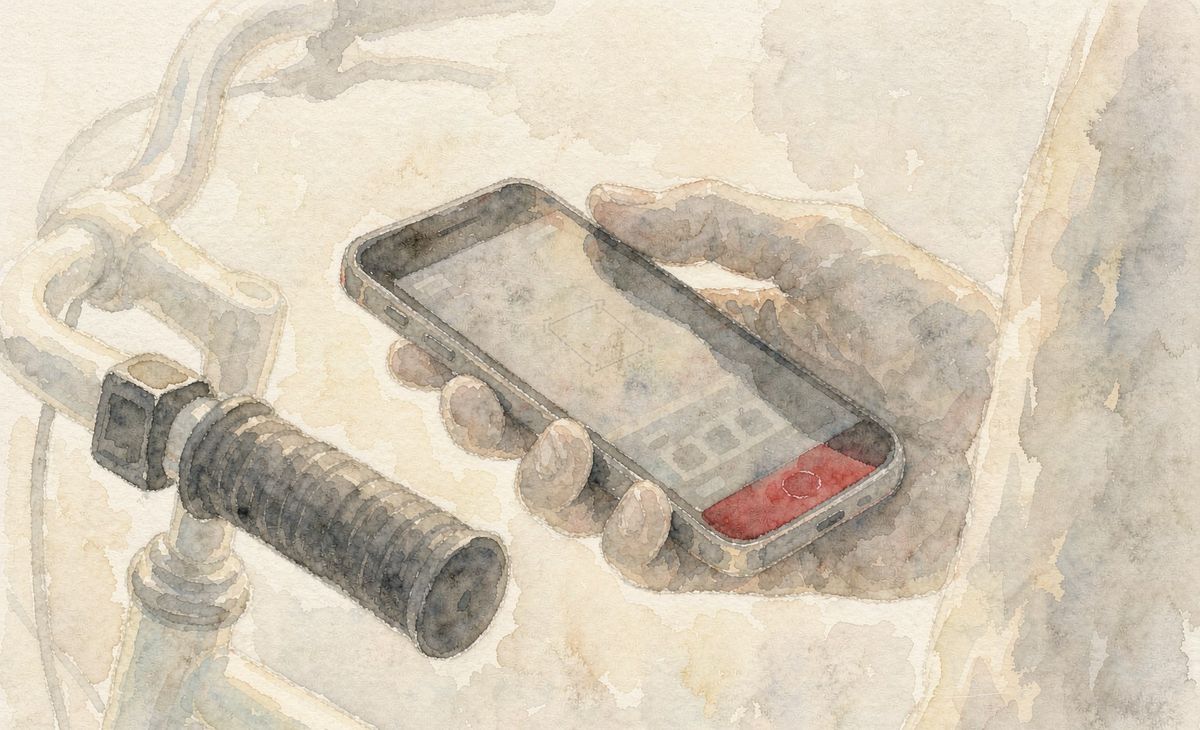
the phone number is a softer constraint than guides imply. a foreign number receives the verification code in most cases, and a Chinese SIM is not a precondition for riding. what it does affect is the arrival of promotional messages and, occasionally, the customer service callback when a ride goes wrong, where a number that answers in China is worth having.
payment is the real gate. a foreign card bound to Alipay handles the small charge fine, and the amount is small enough that the card's own fraud checks rarely intervene. what trips people up is a wallet with a card attached but no identity verification: the lock will not release, and the error message will talk about the account rather than the bike.
one edge case deserves a line. a handful of operators run separate international apps alongside the domestic one, and the domestic app may ask for a mainland number while the international route does not. if a registration screen demands a Chinese number, back out and go through Alipay instead of trying to satisfy it.
When the ride will not end
the classic failure is a lock that closes but does not register, leaving the meter running against a bike you are no longer touching. it happens often enough that it has its own folklore, and the meter does not care that you have walked away.
the sequence that resolves it takes about two minutes, and doing it in this order is what makes it work.
- Do not walk away yet. Every minute of unresolved ride is billed, and a ride left open overnight can produce a bill in the tens of yuan.
- Pull the mini program up and refresh. Close it completely and reopen. A stale screen is the most common cause of a ride that looks active and is not.
- Press the end-ride button if the app offers one. On split-lock models, the physical lock and the software are separate events and either can be the one that failed.
- Photograph the closed lock and the bike number. This is the evidence that decides a refund, and it takes five seconds while you are still standing there.
- Open a service ticket in the mini program. Attach the photo and the timestamp. Refunds for a lock that failed to register are routine once the picture exists.
the second failure is the opposite one: the bike will not lock because you are outside a zone, which the previous section covers. the third is rarer but worth knowing. some zones restrict where a ride may start, and a bike inside one cannot be unlocked at all. the app says so, usually in small grey text under the scan result.
if a charge actually lands, the route is the operator's in-app complaint channel first, then the consumer line 12315 if it is ignored. the consumer disputes guide covers how that escalation works and what response times you are entitled to.
The rules that carry a penalty
cycling in China is regulated at two levels, and the national one sets the floors. Article 72 of the implementing regulations of the Road Traffic Safety Law requires a rider of a bicycle or tricycle to be at least 12 years old, and a rider of an electric bicycle to be at least 16. the same article prohibits riding while drunk, riding two or more to a bicycle, and fitting a power unit to a bicycle.
cities add the detail. Shanghai's non-motor vehicle regulation, in force since May 2021 and amended in 2024, sets out what a rider must actually do: use the marked lane, stay within 1.5 metres of the right edge where no lane exists, never ride against traffic, never enter a motor vehicle lane except where the law allows, and never hold a phone to talk or browse while riding. it also prohibits towing or attaching any device for carrying people or goods, which is the clause that makes an aftermarket child seat on a shared bike illegal rather than merely unwise.
helmets are where foreign assumptions misfire most. the national rules do not require one on a pedal bicycle, and cities that mandate them generally mandate them for electric bicycles, with Shanghai requiring both the rider and any passenger on an e-bike to wear one. a shared pedal bike therefore does not come with a helmet and does not legally need one. a shared pedal-assist bike may fall on the other side of that line, and the 20 to RMB¥50 penalty for riding an e-bike bare-headed is real.
the risks that actually hurt are not the ones the rulebook names. right turns on red are legal for cars here, so a green light for you is not a guarantee that the lane beside you has stopped. electric scooters are silent and fast and use the bike lane as their own. and the delivery riders around you are on a clock that does not include your safety. ride the way the locals ride: predictable, slightly slow, and never first into an intersection.
Deposits and your legal floor
the deposit wars of the last decade ended with a regulatory floor that almost nobody riding today knows about, and it is the strongest piece of consumer protection in this entire category. it comes from the Measures for the Administration of User Funds in New Forms of Transport, issued by six ministries in 2019 and revised in December 2022.
the measures begin from the position that operators should not collect deposits at all, which is why the major fleets now run on credit rather than cash. where a deposit is taken, three numbers apply. a single deposit may not exceed ten per cent of the operator's average vehicle cost. the refund period after you ask may not exceed two working days, against fifteen for car-sharing. and the prepaid balance in a single account may not exceed RMB¥100, with the operator required to hold reserves covering at least forty per cent of those balances.
that two-working-day ceiling is the useful one. it is a rule with a number in it, which means a complaint does not have to argue about reasonableness, only about the calendar. if a refund has not arrived by the third working day, the operator is in breach of a national measure and the local transport regulator is the body that enforces it.
none of this is what the app tells you. the app shows a deposit screen, an amount, and a button. the rights sit in a document published on a government website, and knowing they exist is the difference between waiting and asking.
Your first ride, in order
seven steps, and after them the system stops being opaque.
| # | Do this | Why |
|---|---|---|
| 1 | Verify your passport in Alipay before you leave the hotel | The bike mini programs inherit it; doing it at the kerb wastes ten minutes |
| 2 | Check that mobile data works and location is on | No connection means no unlock and no end-ride |
| 3 | Read the fare screen once, including the starting window | It is city-specific and changes; fifteen minutes is no longer universal |
| 4 | Find a P point near your destination before you set off | Turns a fine into a decision |
| 5 | Ride in the marked lane, never against traffic | The lane is enforced and the oncoming lane is not a shortcut |
| 6 | Park in the middle of the zone, close the lock, watch the screen confirm | Edge-of-zone parking is where GPS drift costs money |
| 7 | Screenshot the closed ride until the receipt appears | Two seconds of evidence for a charge that may never come, and settles it if it does |
after a week the routine compresses into something you do without thinking, which is exactly how it works for everyone else on the road. the one habit worth keeping permanently is the glance at the destination map before unlocking. it is the whole difference between a fifty-yuan lesson and a two-yuan ride.
Common questions about shared bikes in China
Do I need a Chinese phone number to ride a shared bike?
No. The bike mini programs inside Alipay work from the Alipay account, and a foreign number can receive the verification code in most cases. What you do need is a passport verified inside Alipay, because the bike operators inherit that identity check rather than repeating it. Some standalone domestic apps ask for a mainland number; the Alipay route avoids that entirely.
Which shared bike brand is cheapest in China?
Meituan and DiDi Qingju usually are, because their time charge is RMB¥1.5 per thirty minutes while HelloBike charges RMB¥1.5 per fifteen. On a thirty-five-minute ride in Beijing that is RMB¥3.00 against RMB¥4.50 on a weekday, and RMB¥4.80 at the weekend when HelloBike applies its higher starting price. Under fifteen minutes the three are close enough that availability should decide.
Why did my bike keep charging after I locked it?
Either the lock did not register with the server, or you closed it outside a parking zone and the lock sprang open again. Refresh the mini program first, then use the end-ride button, then photograph the closed lock and the bike number and open a ticket. Do not walk away while the ride still shows as active, since billing continues until it closes.
Where am I allowed to park a shared bike?
Inside a marked parking zone: a white painted rectangle on the pavement, or a P marker on the operator's map. Zones are geofenced, so the bike itself decides whether your parking counts. Cities also require bikes to use designated on-street parking points, and Shanghai allows blocking bikes to be cleared when the rider has left. Red areas on the map are no-parking at any time.
Do I need a helmet on a shared bike in China?
Not on a pedal bicycle. National rules do not require one, and cities that mandate helmets generally mandate them for electric bicycles; Shanghai requires both rider and passenger on an e-bike to wear one, with a penalty of RMB¥20 to RMB¥50. Shared pedal-assist models sit close to that line, and no operator supplies a helmet, so bring your own if you plan to use them.
Can two people ride one shared bike?
No. Article 72 of the national implementing regulations prohibits riding a bicycle with two or more riders, and Shanghai's regulation separately prohibits attaching any device for carrying people. That covers the aftermarket child seats sold online, which are both illegal to fit and a common cause of injury. The only lawful passenger arrangement is a child under 12 on a privately owned bicycle where the city allows it.
How do I get a deposit back?
Request it in the app, then count working days. Under the national measures on user funds in new forms of transport, a bike deposit must be refunded within two working days of the request, against fifteen for car-sharing. If it has not arrived by the third, the operator is in breach of a national rule and the local transport regulator handles the complaint.
What happens if I ride outside the service area?
The bike usually keeps working but refuses to end the ride there, and some operators add a dispatch fee to bring it back. The service boundary is drawn on the map as a shaded edge, and it is worth checking before a long ride toward the suburbs, because the return trip is on you. Ending inside the boundary later in the day normally reverses the fee.
Is it safe to cycle in a Chinese city?
Safer than the traffic looks and less safe than the bike lane suggests. The lanes are wide, separated and used by everyone, which is why collisions between bikes are rare. The risks are vehicles turning right on red without yielding, silent electric scooters overtaking in the lane, and delivery riders on timers. Ride predictably, keep left of the lane's centre when overtaking is likely, and never assume a green light means the turning lane has stopped.