Five apps cover a trip: Alipay or WeChat Pay for money, Amap for maps, DiDi for rides, 12306 or Trip.com for trains, Dianping for food. Four of them can be set up after you land. WeChat is the exception, because its final step needs an existing user to scan your code, and inside mainland China that helper must be a mainland user with a bank card bound and an account older than six months.
every article of this kind answers the wrong question. which app is best, it asks, and then sorts ten of them by features, when the thing that actually decides your first day is whether an app will let you in at all. a traveller with a working wallet and a map is fine. a traveller with twelve apps installed and no way past the verification screen has nothing.
so this page is organised by gate rather than by ranking. four gates sit in front of everything here, they get harder in a fixed order, and knowing which gate an app stops at tells you whether it is a task for your sofa at home or a task for the hotel lobby. the appointments themselves are covered in the individual guides, linked as they come up.
Four gates, not five rankings
the first gate is a text message. almost every app sends a six-digit code to whatever number you typed, and a foreign number works as long as it can receive that message while you are abroad. this is the gate people clear without noticing, and the one that fails silently for anyone who bought a data-only eSIM and left the physical SIM at home.
the second gate is a scan from someone who already has an account. only one app on this list uses it, and it is the reason this page exists, because a scan needs a person and a person cannot be downloaded at the airport.
the third gate is a passport held up to a camera. the name must match the machine-readable line, the light must be decent, and the face check that follows fails more often in a dim lobby than in daylight. fourth is a mainland number, which most travellers never need for the five core apps and which several useful extras do require.
| App | What it does | Highest gate | Can wait for arrival |
|---|---|---|---|
| Messages, payments, mini-programs, restaurant menus | Scan from an existing user | No | |
| Alipay | Payments, and a home for ride and travel mini-programs | Passport real-name | Yes |
| Amap Global | Maps, metro, buses, walking | None for basic use | Yes |
| DiDi | Rides, inside the wallet app or standalone | None of its own | Yes |
| 12306 | Trains at official prices | Passport plus SMS | Yes |
| Trip.com | Trains, flights, hotels in English | None of its own | Yes |
| Dianping, Meituan | Restaurant research, delivery, vouchers | SMS, then the wallet | Yes, with a workaround |
read down the last column and the plan writes itself. one task before the flight, everything else after landing, and a fallback column for the two apps that occasionally loop on the text message gate.
The only task that belongs at home
wechat's help centre calls the second gate assistant registration, and the wording is more specific than any guide, because the qualifications change with the region you sign up in. the page lists three cases, and the differences between them are the whole argument for doing this before you fly.
if you sign up inside mainland China, the helper must be a mainland user, must have bound a bank card to their wallet, and must have signed up more than six months earlier. that is a narrow set of people, and in a hotel lobby it means the front desk, not the traveller in the next room. the page then names nine countries with a milder rule: sign up in the united states, canada, russia, india, indonesia, malaysia, the philippines, cambodia or vietnam, and a friend who signed up in your own country more than one month ago can vouch for you. anywhere else, any wechat user outside the mainland qualifies after one month.
the asymmetry is the point. signing up at home widens the pool of people who can help you to almost anyone you know. signing up after landing narrows it to mainland residents with a funded wallet and half a year of history. the same account, the same app, a completely different queue.
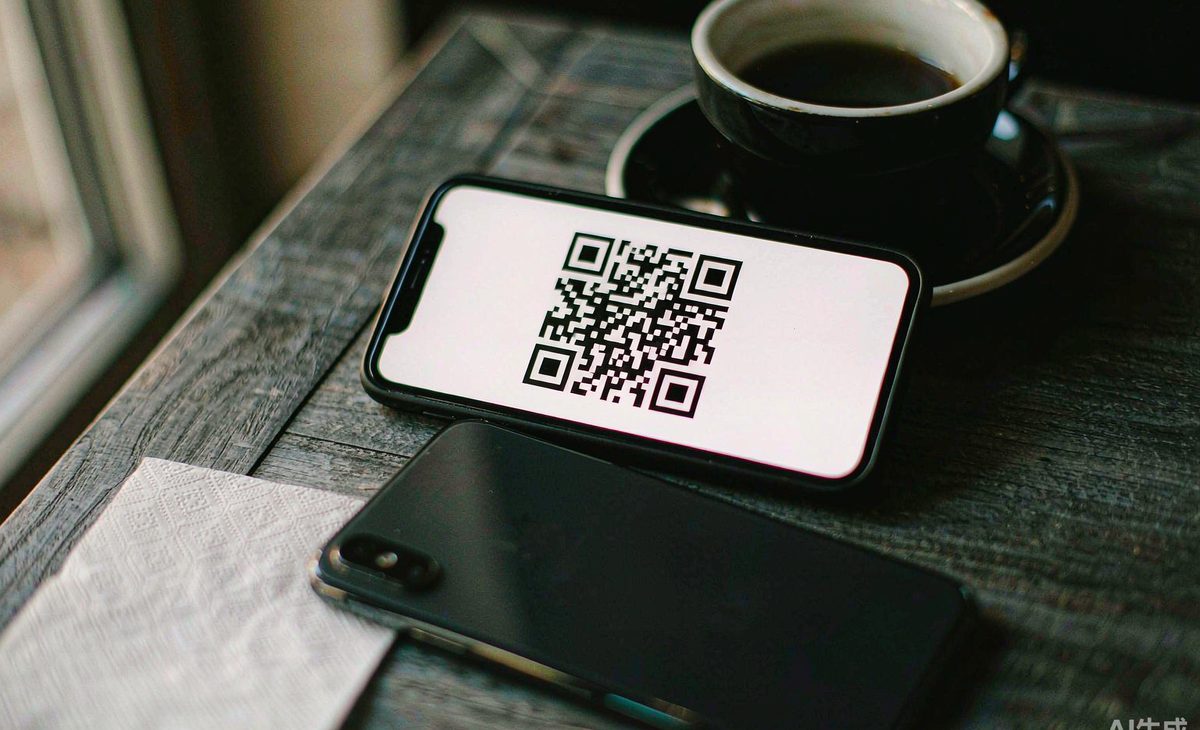
there is a second constraint that costs people a number rather than an evening. one mobile number supports one account, so the number you register with becomes your travel number whether or not you keep the SIM. registering on a number you plan to cancel is how accounts get orphaned. the rest of the setup, from the passport scan to the wallet inside, is covered in the WeChat walkthrough.
the same six-month rule reappears later, in the security centre's rules for unblocking an account: the person who vouches for you must have signed up more than six months ago, must have bound a bank card, and must not have exceeded the help limit of once a month, twice in six months, or three times a year. a friend who has already rescued two people this year is not available for a third.
what if nobody you know uses wechat. the front desk remains the practical answer, and it is a thirty-second favour rather than an imposition, since hotels handle this request constantly. a smaller number of travellers report clearing the step by verifying a payment card instead of a person, which appears to depend on the card's country and on the build of the app, so treat it as something to try rather than something to plan around. the worst option is a paid verification service, a category of offer that exists mostly to harvest accounts.
The wallet every other app hides behind
nothing else on this list matters until one of the two wallets works, because rides, trains and food all hand off to it at checkout. alipay is the easier of the two to open from abroad: it registers with an overseas number, accepts visa, mastercard, discover, jcb and diners club, and completes real-name verification with a photograph of the passport data page. wechat pay asks for the same passport step and then the same card binding, in a slightly longer sequence. the payment guide walks through both, and the comparison covers which one to open first if you only want one.
the fee structure is identical on both, and it is sharper than most guides admit. a transaction at or below RMB¥200 carries no service fee. a transaction above RMB¥200 carries 3% of the entire amount, not 3% of the excess, so a RMB¥201 payment costs RMB¥6.03 while a RMB¥200 payment costs nothing. add a typical 2.5% issuer charge on the foreign card and a single large payment can reach 5.5%.
that one line reorganises how you pay. a RMB¥3,000 hotel bill through the app costs RMB¥90 in fees, and the same bill at the desk card machine costs whatever your issuer charges, which is usually nothing beyond the exchange rate. three scans of RMB¥200 avoid the fee on a RMB¥600 dinner if the merchant is willing to split it.
for short visits there is now a third door. tencent released a standalone app called TenPayGo on 24 September 2026, built by the wechat pay team for visitors, which registers with an email address rather than a phone number and skips the assistant scan entirely. it is a payment app rather than a messaging app, so it does not replace wechat for anything except money.
Maps ask for nothing
the one app you can install on the plane and use the moment the wheels stop is Amap Global, the English build of the mapping service behind most Chinese navigation. it was launched in 2024 as the country's first English-language map aimed at overseas users, it draws on Chinese survey data rather than licensing a foreign base map, and basic navigation needs no account, no number and no verification.
that last detail is worth more than it sounds. the metro diagrams, the bus routes and the walking paths all render without signing in, so a traveller whose wallet verification failed still has a working map. make sure the icon you install is the Global build and not the domestic one, which is Chinese only; if you have the wrong one, the language switch sits under 我的 then 设置 then 语言.
english queries are matched against Chinese place names, which is what makes the app usable without typing characters. a tea house down a side alley will appear with its name in English and its address in Chinese, and that second half is what you show a driver. the AMap guide covers the settings worth changing on day one.
Rides live inside the wallet
didi is the one app on this list that most travellers never install, because it does not need to be installed. there are three entry points: the standalone app, wechat's services menu under ride hailing, and the alipay search box. the last two run as mini-programs, they inherit the language of the app they sit inside, and they skip the registration step entirely because you are already signed in to the wallet.
this is the pattern worth internalising for the rest of the trip. where a service exists as a mini-program inside a wallet you already verified, that mini-program is a way around the gate rather than a lesser version of the app. it cannot do everything the full app does, but it hails a car, shows the fare before you confirm, and charges the wallet automatically when the ride ends.
the fare arriving before you commit is the part that changes behaviour. no conversation about the route, no meter to watch, no cash to break. the driver sees a destination in characters and you see a price in yuan, and the transaction is finished before either of you speaks. the DiDi guide has the pickup points that cause the most arguments.
Trains take a passport, not a phone
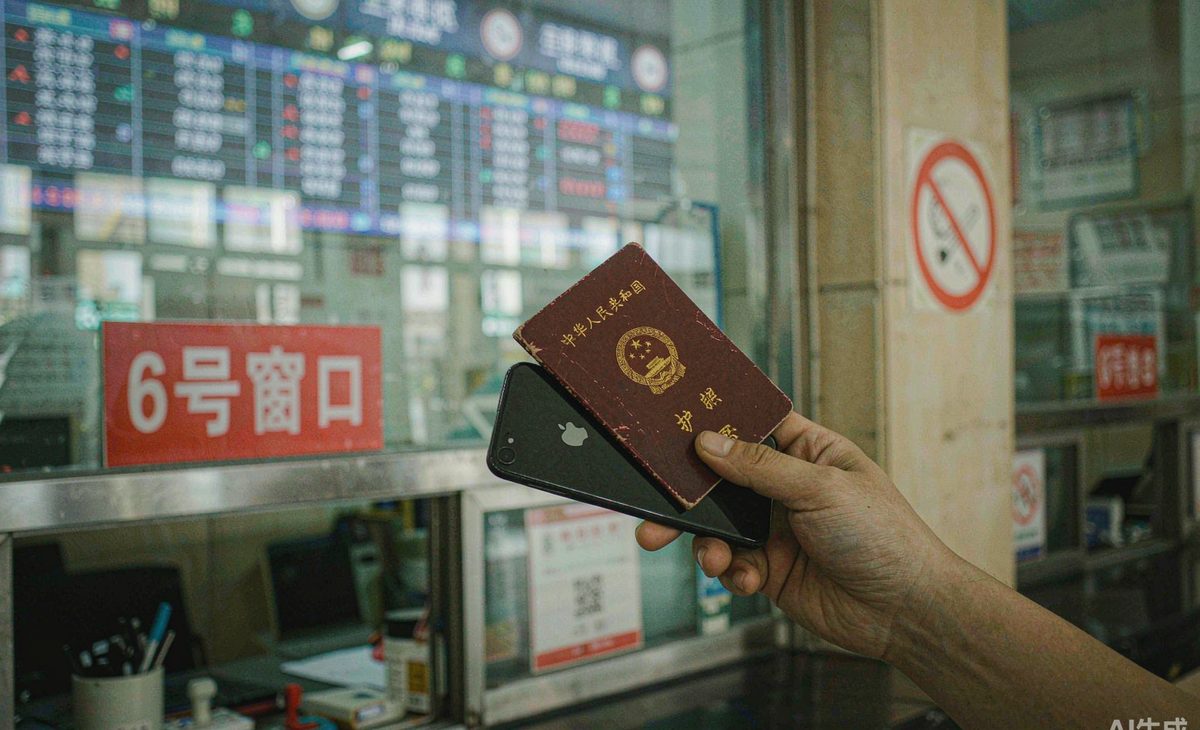
12306 is the railway's own system, it carries the world's largest high-speed network, and it takes foreign passports and foreign bank cards. registration asks for a name, a nationality, a passport number and a phone number that can receive a text, which is the same gate as everything else and no worse. the identity check then usually clears on its own against passport records.
when it does not clear, there are two ways through: upload a photograph of the passport data page for manual review, or take the passport to a station ticket window and verify once in person, which unblocks the account afterwards. the app has an English website and an English mode, and tickets open fifteen days before departure, counting the travel day itself.
trip.com is the fallback for anyone who would rather not fight the identity check. it is fully English, takes international cards, and covers trains, flights and hotels in one place. the trade is a service fee and occasional inventory gaps, which for a two-train trip is a reasonable price for skipping a queue at a station counter. the train ticket guide has the release window, the fares by class and the refund tiers.
Food apps borrow the wallet
dianping is the review layer, meituan is the doing layer, and they share an owner and a login system. neither is a payment method, which is the first thing to understand: at checkout both hand off to the wallet you already set up, so a broken wallet breaks the food apps too, and fixing the wallet is always the first move rather than the last. the delivery guide covers the address format that decides whether the courier finds you.
the gate here is the text message, and it is the one that loops most often for foreign numbers. the reliable path around it is signing in with the wallet account rather than inventing a new login, which converts a failed SMS into an existing session. if it still loops, dianping works in a browser for research, which is most of its value anyway, and the hotel front desk can place an order that will not place.
what dianping is genuinely good at is the thing guidebooks are worst at: the recommended dish list on each restaurant page, photographed by customers, in Chinese, next to the price. screenshot the dish names and hand the phone to the waiter, and the ordering problem disappears without a word of Mandarin.

The floor if WeChat never verifies
some trips will not produce a wechat account. a traveller arriving alone, at night, with no contact in the country and a front desk that will not scan, has no second gate to clear, and the useful thing to know is that the trip still works. alipay opens with a passport and a foreign card, amap needs nothing, and trip.com sells the trains, which together cover money, maps and transport.
the losses are specific rather than general. group chats and event invitations run on wechat, so anything organised socially is out of reach. restaurant tables with a QR code menu expect wechat, though a paper menu almost always exists if you ask. some vendors display only a wechat payment code, and in that case cash settles it, which is why carrying a few hundred yuan is worth the pocket space even in a country that runs on QR codes.
none of this is a reason to skip the attempt at home. it is a reason not to let a stalled verification ruin the first evening, which is the more common failure: people spend three hours in a lobby fighting a scan instead of eating dinner.
What to install, and when
the sequence below assumes a two-week trip and a phone that can receive texts from a foreign number. it front-loads the only irreversible task and leaves the rest until there is wifi and time.
| When | Do this | Why here |
|---|---|---|
| At home, two weeks out | Install WeChat, register, arrange the assistant scan | Signing up outside the mainland lowers the helper's requirements to an account older than one month |
| At home, same week | Install Alipay, complete passport verification, bind one card | Real-name checks fail less often in daylight and on a stable connection |
| At home | Install Amap Global, Trip.com, and the DiDi app if you want it standalone | None of these need anything from you but a download |
| On landing | Test one small payment in each wallet | A card that will fail at a till fails just as loudly for RMB¥3 |
| Day one | Register 12306 if you plan to book direct, and add Dianping | Both are better done with time and hotel wifi than at a station gate |
one habit holds the whole stack together. keep both wallets funded from the same card and test them early, because the failure that ruins a day is not the app that was never installed but the card that was silently blocked by its own issuer for looking like fraud. a two-minute call to the bank before departure costs less than a declined dinner.
Common questions about apps in China
Do I need a Chinese phone number for these apps?
No, not for the five core ones. WeChat, Alipay, Amap, DiDi and 12306 all accept foreign numbers, and Amap needs no account at all. A mainland number becomes useful for some mini-programs, for booking certain attractions, and for restaurant QR ordering, but it is an upgrade rather than a prerequisite.
Can I register WeChat after I arrive?
You can try, but the rules get harder. Signing up inside mainland China requires a helper who is a mainland user with a bank card bound and an account older than six months. Signing up before you fly means a friend who signed up in your own country more than one month ago is enough.
Why does Alipay charge 3% on a large payment?
Because the threshold is per transaction and the fee applies to the whole amount. Anything at or below RMB¥200 is free; anything above it carries 3% of the total, so RMB¥201 costs RMB¥6.03 while RMB¥200 costs nothing. Splitting a bill into several scans avoids it where the merchant agrees.
Can I use Alipay and WeChat Pay with the same card?
Yes, and it is worth binding the same card in both so a single failure does not strand you. Both accept visa, mastercard and the other major networks, and both apply the same RMB¥200 threshold and the same 3% above it.
Do I need both wallets?
One will carry you through most of a trip. Two are safer, because a minority of vendors display only one payment code, and because a card that fails in one app sometimes binds in the other. If you only open one, Alipay is the wider net for visitors.
Is DiDi a separate app I have to register for?
No. It runs as a mini-program inside WeChat and inside Alipay, and in that form it skips registration because you are already signed in to the wallet. The standalone app exists and works, but the mini-program is faster to reach and pays the same way.
What is Trip.com for if 12306 works?
Speed and English. 12306 sells the same seats at the official price and needs a passport identity check that occasionally requires a station visit. Trip.com skips that check, charges a service fee, and covers flights and hotels in the same place.
What happens if none of it works on arrival?
Cash and a map. Amap works without an account, taxis take cash, and hotels accept cards at the desk even when their QR code does not. Fix the wallet the next morning with daylight and a stable connection rather than spending the first evening in a lobby.