By now you've probably planned your payment setup around the big two: WeChat Pay and Alipay. Good — that's still the right default. But there's a third app on every "pay in China" list, the one the government itself runs: the digital yuan, written e-CNY, known locally as 数字人民币.
most guides either hype it as crypto-adjacent magic or dismiss it as redundant. neither is true. after setting it up and watching how visitors actually use it, here's the honest framing: e-CNY is the backup wallet that works when the other two wobble. your card gets declined at a museum ticket window, your Alipay verification acts up, you're underground with no signal — that's when a central-bank wallet with an offline payment mode earns its spot on your phone. it takes about ten minutes to set up, needs no Chinese bank account, and the money comes back out when you leave.

Install the e-CNY app while you still have unrestricted internet: search "e-CNY" in the App Store or Google Play. Registration and wallet setup can all be done from your kitchen table, and the app is small enough that downloading it at the airport on roaming data is a waste of your first hour.
What the digital yuan actually is
e-CNY is cash, in phone form. It's issued directly by the People's Bank of China, which means one yuan of e-CNY is one yuan, full stop — the same legal tender as the banknotes in your pocket. That's the core difference from the apps you already know: Alipay and WeChat Pay are private wallets that move your commercial-bank money around, while e-CNY is the money itself. Merchants displaying a QR code are legally in the same position as merchants with a cash drawer.
In the app you open a "wallet" hosted by one of the operating banks — ICBC, Bank of China, CCB, and the rest, plus MYbank (Alipay's bank) and WeBank (WeChat's bank). You're not opening a bank account with them; think of it as choosing which counter holds your digital cash. And the interoperability is real: the e-CNY app can scan the same merchant QR codes that Alipay and WeChat users scan, and e-CNY shows up as a payment option inside apps like Didi, Meituan, JD.com, and Taobao's checkout.
Why bother, then, if Alipay already works everywhere? Three practical reasons: spending from an e-CNY wallet carries no platform fee of its own; the NFC mode pays with no internet connection at all; and it's legal tender, so a merchant who "doesn't take Alipay" for whatever reason still has no good answer to it. It's not a replacement — it's the second parachute.
Opening a wallet as a foreigner
This is the part the government actually fixed for visitors, and it's genuinely smooth now. The whole flow runs on a foreign phone number and a foreign card:
-
Download the international version, Search "e-CNY" in the App Store or Google Play (Android users in app-store-less regions can also grab the official APK via the QR code in the central bank's visitor guide). The icon is red and white, publisher tied to the PBoC — don't grab a lookalike.
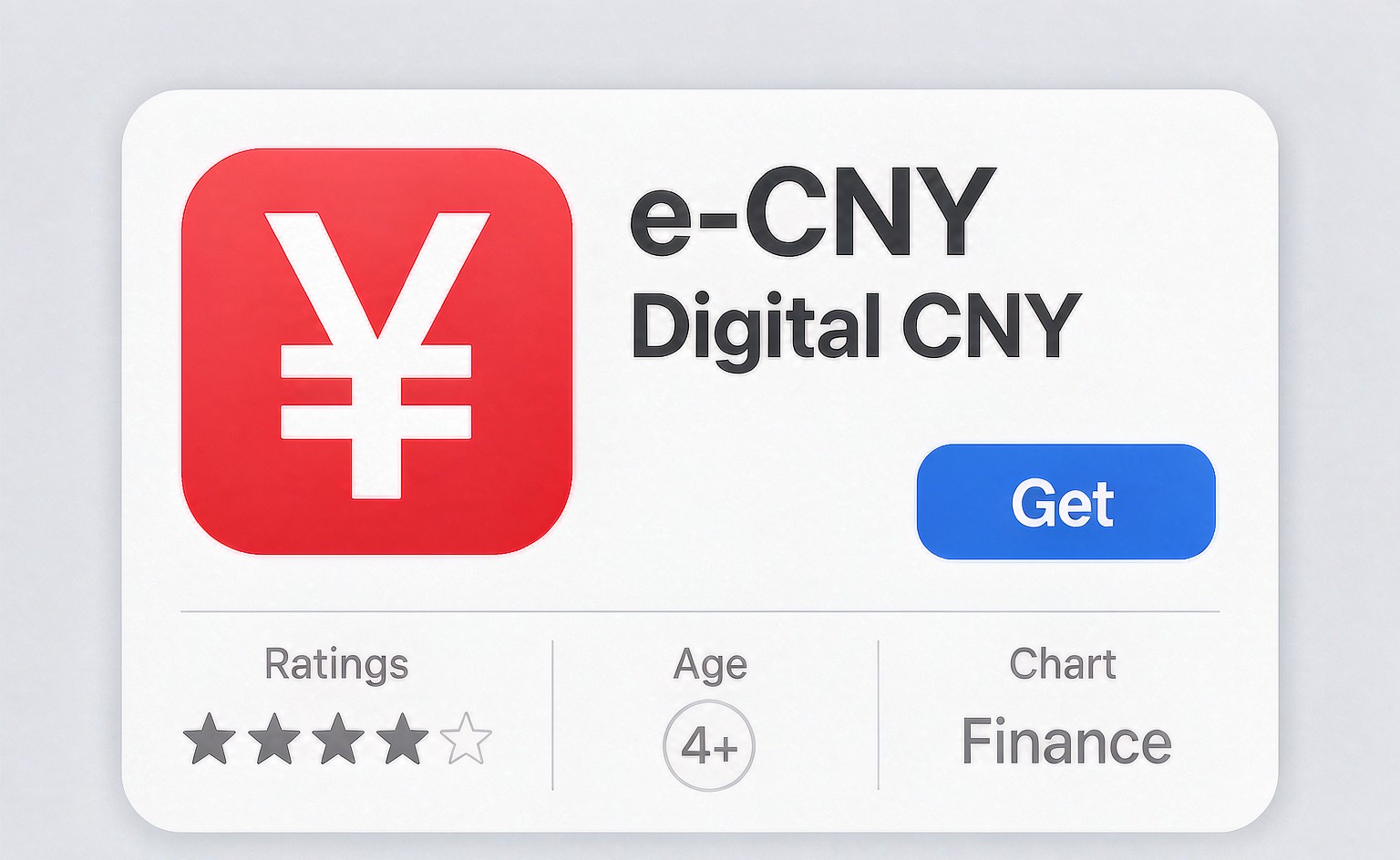
- Sign up with your own phone number, The app accepts mobile numbers from over 210 countries and regions. No Chinese SIM required, no SMS-from-home gymnastics.
- Open a wallet, Pick any operator bank from the list — for visitors it genuinely doesn't matter which. You do not need an account with that bank.
- Decide: anonymous or verified, The anonymous wallet needs no passport, no branch visit, and no Chinese bank account. The trade-off is caps: ¥2,000 per payment and ¥5,000 per day. Verifying with your passport inside the app lifts the limits — the exact tier caps are shown in the app, so read them there rather than trusting any article (including this one) for the current numbers.
Four ways to put money in
-
1. Top-up As You Pay (the recommended default)
Link a Visa or Mastercard and pay merchants straight from the card through the wallet, with no pre-funding at all. The card charge lands in your home currency; the merchant receives yuan. This is the "随用随充" mode the central bank built the whole visitor flow around.
-
2. Top up first, pay later
Preload the wallet from the same foreign cards when you want a fixed spending pot (or to pay somewhere the card link is slow). Leftover balance isn't trapped — you can deposit it back to your card later, which the next section covers.
-
3. Hong Kong FPS
If you're coming from Hong Kong, the app links to your local bank accounts over FPS (转数快) — a dozen-odd HK banks are supported — and top-ups this way are currently free of charge.
-
4. Cash at the counter
The offline option that never breaks: walk into a branch of any operating bank, top up with RMB or foreign banknotes, and if you leave with unused wallet balance, the counter exchanges it back to cash. This is also the fix for "my foreign card keeps getting declined".
Fees and limits, honestly
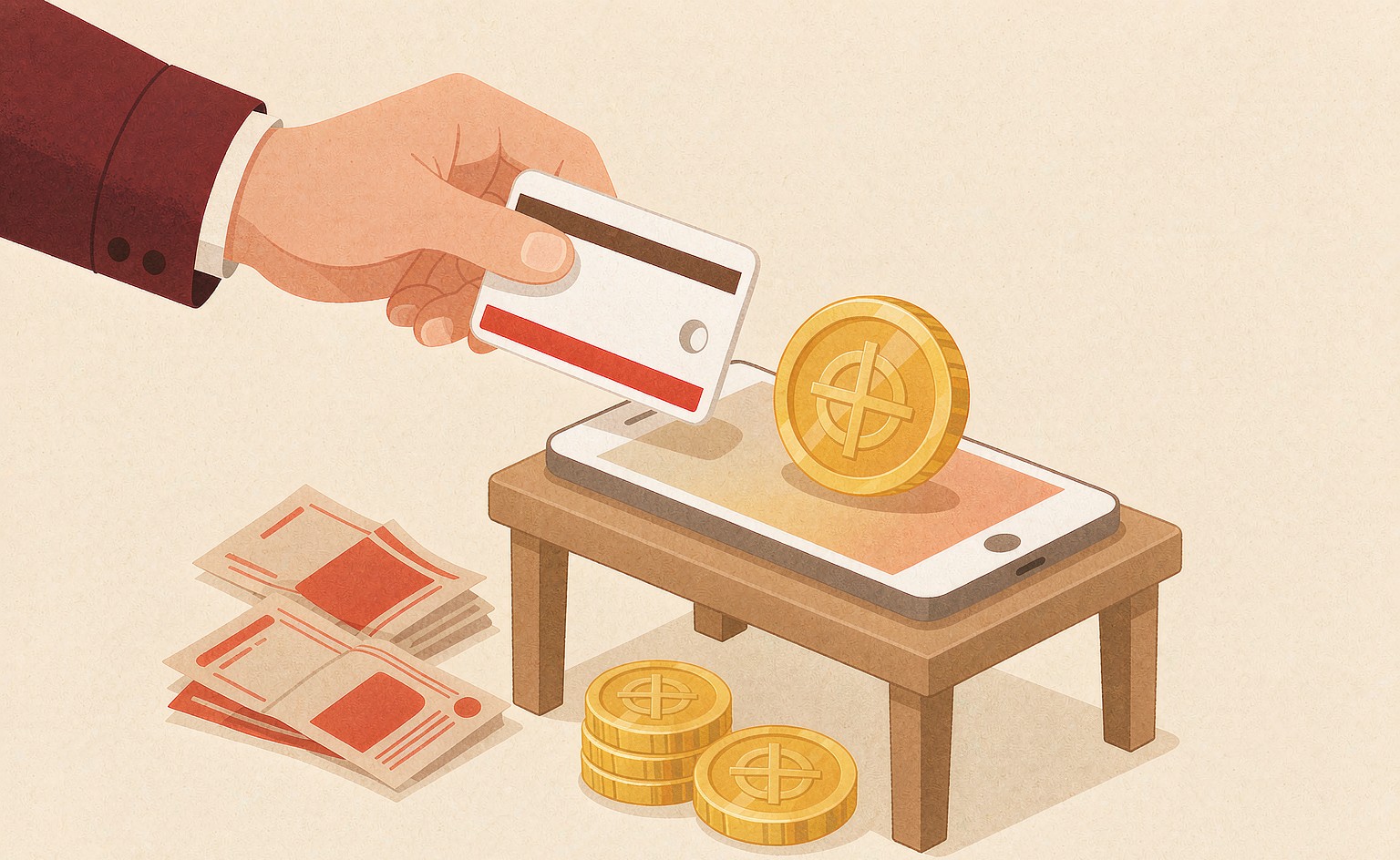
Here's where a lot of writing about e-CNY gets sloppy, so let's be precise. Spending from an e-CNY wallet carries no platform fee — that's a real difference from Alipay and WeChat Pay, which charge around 3% on foreign-card payments above ¥200 (payments under ¥200 are free on both). On a ¥3,000 hotel deposit, that gap is about ¥90.
But funding has a cost you should expect: in the central bank's own visitor guide walkthrough, a ¥100 payment made through a linked Mastercard shows the card being charged ¥103.00, service fee included. Fee-waiver promotions have come and gone since 2024, so don't take any article's word for today's rate — the app always shows the final charged amount on the confirmation screen. Treat that screen as the only source of truth, and if the fee annoys you, remember the counter-cash route has none.
Separately from all of this, Alipay and WeChat Pay operate under a regulatory ceiling for foreign-card payments — $5,000 per transaction and $50,000 per year (raised in March 2024, unchanged since). e-CNY wallet caps are a separate, yuan-denominated system, so a big purchase that bumps into one ceiling may still fit under the other.

Paying: QR codes and offline taps
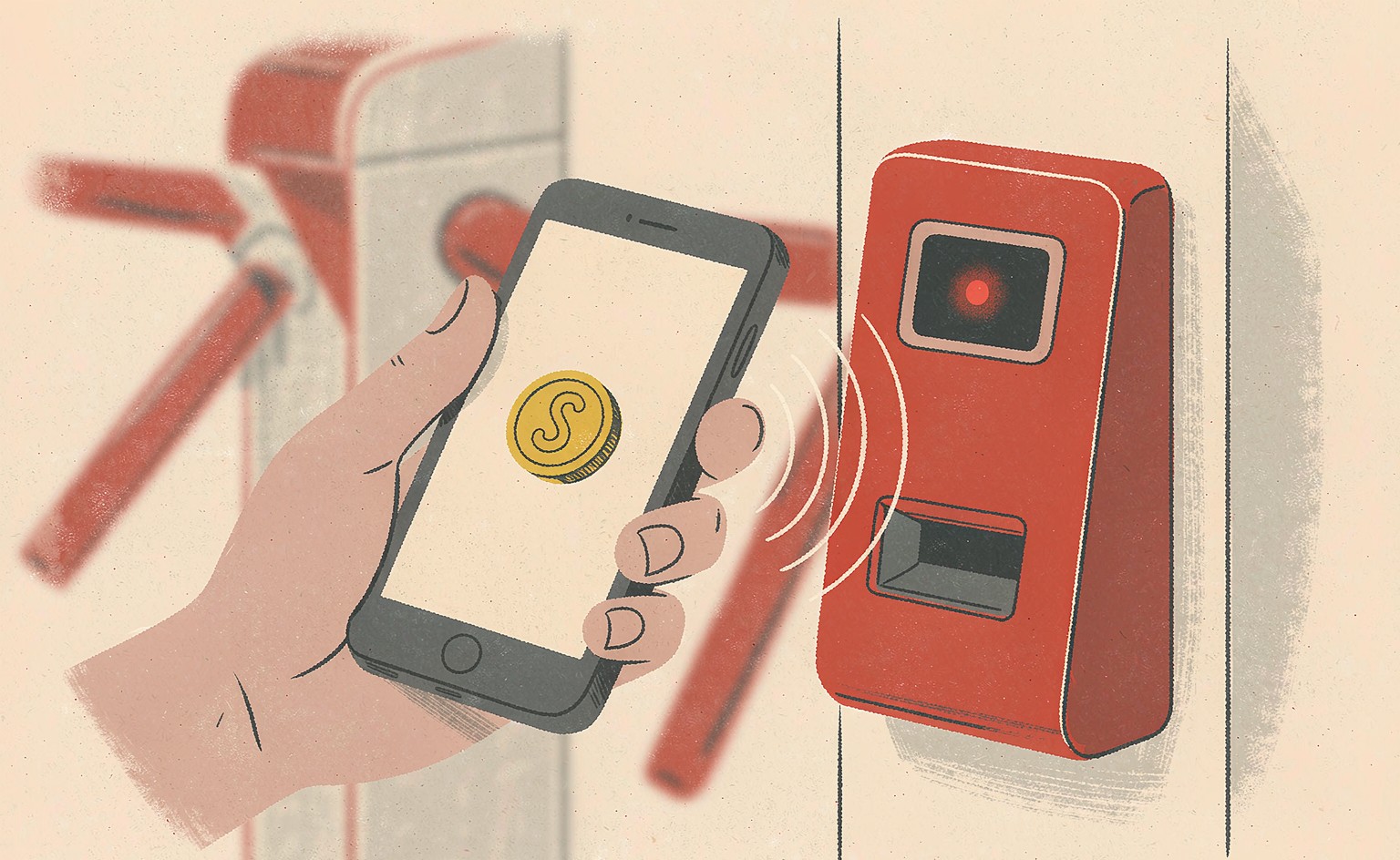
Day-to-day, e-CNY behaves like the payment apps you know: show your wallet's payment QR code to the cashier, or scan the merchant's code and confirm. The habit worth building is the second mode — tap to pay. Hold your phone near the merchant's terminal (the feature is called 碰一碰, "bump-bump") and the payment fires over NFC.
The reason to care: NFC payment works with no internet connection. Metro gates, airport basement queues, that famous scenic-area tunnel where every network dies — this is exactly where QR apps stall and the tap still goes through. It's also the feature that makes e-CNY feel like carrying a real banknote instead of another app.
On acceptance, keep expectations calibrated. Big chains, tourist sites, transit, and state-run venues take it readily; the corner breakfast stall may not, because e-CNY merchant coverage is still thinner than Alipay and WeChat's near-ubiquitous network. Look for the red-and-white e-CNY sign, or just try scanning — and since it rides the same QR codes in many cases, you'll be surprised how often it just works.
Getting money back out: the Traveler Wallet
The classic ending to a China trip used to be a phone full of unusable digital change. e-CNY planned for this. Inside the app there's a Traveler Wallet (商旅钱包) — a virtual prepaid card you top up with your foreign card and can spend anywhere bank cards are taken. When the trip ends, flip the card over in the app, tap "Deposit", and the unused balance goes back to your bank account.
Combined with counter service (cash in, cash back out), the "locked funds" problem that plagued older workarounds simply doesn't exist here. That alone makes e-CNY worth setting up if your itinerary includes big pre-payments.

Hardware wallets: cards, wearables, even SIMs
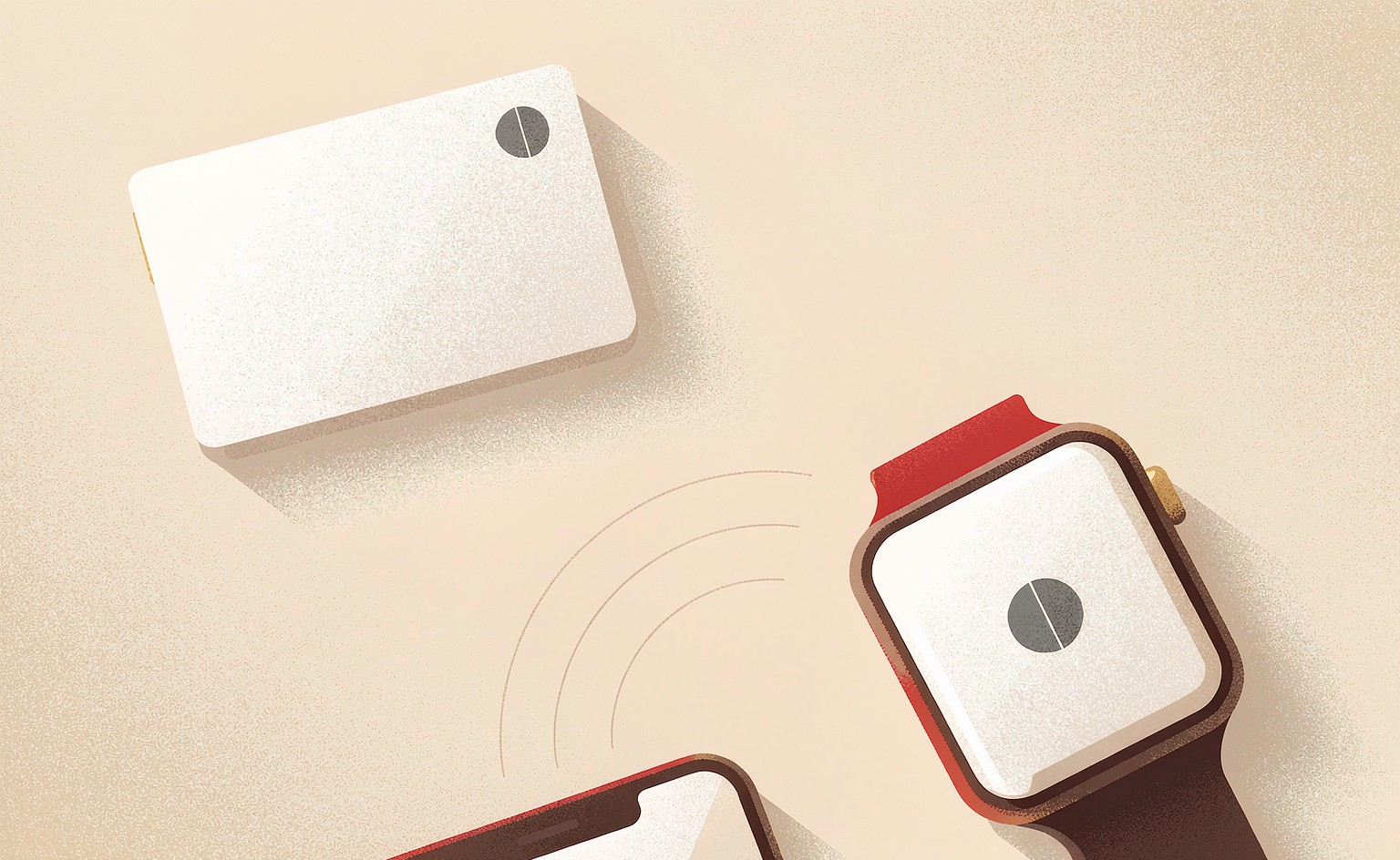
The one genuinely exotic corner of the system: physical e-CNY wallets. Operating banks issue card-style wallets (some with ink-screen balances), wristbands, badges, and even SIM cards with a wallet chip inside — swap the SIM into any phone and it becomes a payment device. They pay over NFC with no internet and, for some form factors, no battery either, and they link to the app for top-ups and management.
Honest take for a two-week trip: skip them. The phone app covers everything, and the hardware cards are mostly souvenirs with a payment chip — fun at the Winter Olympics, unnecessary at the convenience store. Long-stay residents who want a no-phone backup have a reason; tourists don't.
Common questions about the digital yuan
Is the digital yuan a cryptocurrency?
No. It's issued and controlled by the People's Bank of China — central-bank money, not a token on a public blockchain. There's no mining, no price fluctuation, and no anonymity culture; one yuan of e-CNY always equals one yuan of cash.
Do I need a Chinese bank account or phone number?
No to both. A foreign mobile number registers the account (210+ countries and regions supported), a foreign Visa or Mastercard funds it, and an anonymous wallet requires no passport at all — with the ¥2,000-per-payment, ¥5,000-per-day caps that implies.
Should I use e-CNY, Alipay, or WeChat Pay?
Set up Alipay or WeChat Pay first — their merchant acceptance is still the widest, and mini programs run daily life. Add e-CNY as the backup and fee-saver: no platform fee on spending, offline NFC for dead zones, legal-tender status, and an easy exit for unused balance. Travelers who set up all three stop thinking about payments for the rest of the trip.
Can I get unused money back when I leave?
Yes, two ways. The Traveler Wallet deposits unused balance back to your linked bank card. And at any operating bank's counter, wallet balance can be exchanged back into banknotes — RMB you already have, or foreign currency you changed at the counter.
Does it really work without internet?
The NFC tap-to-pay mode does — phone to terminal, no data connection involved. Hardware wallets go further, paying without network or battery. QR-code payments, like with any app, need a working connection on one side or the other.
Is it anonymous?
At the entry tier, yes in the everyday sense: the anonymous wallet needs no passport and links to no ID, functioning like cash with caps. Higher tiers trade some of that privacy for higher limits, with identity verified in-app. All balances are, of course, fully visible to the central bank — this is the opposite of crypto in that regard.
I'm staying longer than a vacation. Should I still bother?
If you're settling in, you'll eventually open a real bank account (see our bank account guide) and your needs will change. But for the first weeks — while paperwork is still in progress — an e-CNY wallet funded by your foreign card is the cleanest bridge there is.