The three platforms are four different legal arrangements behind similar interfaces. JD self-operated means JD bought the stock, ships it and runs after-sales itself, so the platform answers when a parcel arrives wrong. Marketplace listings put a merchant between you and the platform. Read the small grey seller line before comparing prices.
shopping in china is not one market with three front doors. it is four different legal arrangements wearing similar interfaces, and a foreign buyer who treats them as interchangeable will eventually discover the difference at the worst moment: after the money has left, holding something that does not work, trying to work out who is supposed to answer.
this guide is about that question, and it deliberately skips the part where someone claims one platform is cheapest. price moves weekly and the comparison is stale by the time it publishes. what does not move is the structure: who owns the stock, who ships it, and who is liable when it goes wrong. the mechanics of placing an order live in the Taobao guide, and what happens to the parcel afterwards is in receiving packages.
Four platforms, four kinds of market
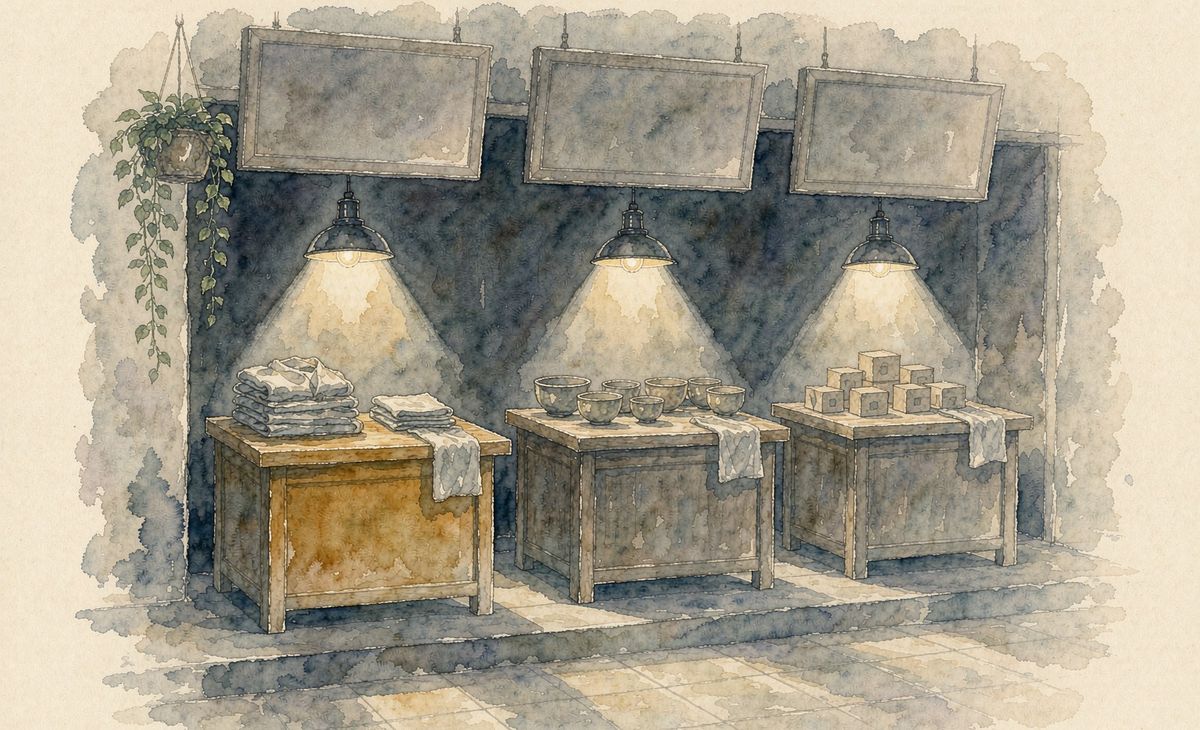
the useful mental model is a physical one. imagine a covered market with thousands of independent stalls, a department store where every counter is run by the brand, a warehouse retailer that buys stock itself and also rents space to others, and a wholesale market where the entire pitch is the lowest number on the tag.
| Platform | What it structurally is | Who holds the stock | Default answer when something fails |
|---|---|---|---|
| Taobao | Open marketplace, individuals and small businesses mixed | The seller, almost always | The individual seller, with the platform above them |
| Tmall | Brand and licensed-merchant marketplace on the same app | The brand or its authorised operator | The merchant, with brand reputation as leverage |
| JD | Self-operated retail plus a third-party marketplace | JD itself for self-operated lines | JD for self-operated, the merchant for the rest |
| Pinduoduo | Low-price marketplace built on group buying | The seller | The seller, often a factory or a reseller |
notice that only one of those four has the platform itself standing behind the goods. that single fact explains most of the anecdotes people trade about which platform is "safer", and it also explains why the safest option is frequently not the cheapest one.
Reading a listing for its seller
chinese consumer rules were written to make this answerable, which is more than most foreign marketplaces manage. the Measures for the Supervision and Administration of Online Transactions, State Administration for Market Regulation Order No. 37, took effect on 1 May 2021. Article 12 requires every merchant operating on a platform to keep its business registration information permanently visible in a prominent position on its main page: the unified social credit code, the entity name, the entity type, the legal representative, the registered address and the registered capital for a company.
merchants who are exempt from registration under Article 10 of the E-commerce Law, which covers individuals selling their own farm produce, home-made handicrafts, personal services and genuinely small occasional sales, must instead display a declaration saying so, together with a real operating address and contact details. the same article obliges platforms to mark registered and unregistered merchants distinguishably, so the difference is supposed to be legible at a glance rather than buried.
in practice, look for the shop-name area on the product page and open the business information panel behind it. three things tell you what you are dealing with.
A company name with a credit code means a registered business. That is the entity you would name in a complaint, and the entity a regulator can find.
A self-declaration of exemption means an individual. Not automatically a problem, and often the source of unusual or hand-made goods, but there is no registered capital and no corporate address to press.
Nothing at all, or a panel that will not open means the disclosure is missing, which is itself a breach of Article 12 and a legitimate reason to buy elsewhere.
the consumer regulation layered on top closes a related gap. Article 13 of the Regulation on the Implementation of the Law on the Protection of Consumer Rights and Interests, a State Council decree effective 1 July 2024, requires online operators to state their real name prominently, and where another operator actually supplies the goods or service, to disclose that operator's name, address and contact details as well. that is the clause that catches drop-shippers and licensed operators running a flagship store on someone else's behalf.
What "self-operated" buys you
on JD the label that matters is self-operated. it means JD bought the stock, holds it in its own warehouse, ships it with its own logistics network, issues the invoice and runs the after-sales process. the money you pay goes to JD, and the entity answering your complaint is JD.
everything else on JD is a third-party merchant, marked as such. those merchants may ship with JD's logistics too, which is where a common misreading starts: a parcel arriving in a red-uniformed courier's hands does not make the item self-operated. the label on the listing does. and even inside the self-operated category there are two variants worth noticing, one where JD provides the after-sales service and one where a supplier does, printed in the service line under the price.
the refund clocks are the same either way. under JD's published after-sales terms, both self-operated and third-party goods carry seven days from the day after delivery for a return and fifteen days for an exchange. the difference is not the deadline, it is who you are arguing with when the deadline is close: a service desk with a published process, or a merchant whose incentive is to run the clock down.
for a high-value item bought by someone who will not be in the country long enough to escalate, that difference is worth more than the discount. a phone, a laptop, a camera lens, anything where a fault means a real loss: pay the self-operated premium and treat it as insurance with a delivery date.
The refund rule that changed in 2025
most English-language guides still describe Pinduoduo as the platform where refunds arrive without sending anything back. that description was accurate until April 2025 and is now out of date, which matters because a considerable number of people choose the platform on the strength of it.
the retreat was gradual and then total. Taobao loosened the rule first in July 2024, stepping back from automatic intervention for merchants with strong service scores. Pinduoduo followed on 22 July 2024 with a rule giving merchants 36 hours to reject a refund-without-return request, after which the system would release the money by default. Kuaishou abolished its version in November 2024, and 1688 removed the mechanism outright. then on 22 April 2025 the major platforms, Pinduoduo, Taobao, JD, Douyin and Kuaishou among them, announced that refund-without-return would end as a platform-enforced outcome. after that date, a request to refund without returning the goods goes to the merchant to decide.
Pinduoduo had signalled the direction months earlier, announcing a merchant rights committee in January 2025 and a set of measures explicitly aimed at lowering the share of refund-only orders, lowering the platform's rate of proactive intervention, and lowering the value ceiling at which it would intervene at all.
what this means for a buyer is narrower than it sounds, and worth stating precisely. the statutory rights did not change. the seven-day no-reason return still exists, the fifteen-day faulty-goods route still exists, and the penalty floors for fraud and unsafe food still exist. those are set out in the consumer disputes guide. what disappeared is a platform policy that used to hand you a refund on a low-value item and write off the return postage as not worth the trouble. on cheap goods with a real defect, the negotiation is now yours to conduct.
the practical adjustment is small and specific: stop relying on a policy to resolve a cheap mistake, and instead buy cheap things from sellers whose return address is domestic and whose shop information is legible. the shipping cost of sending back a RMB¥30 item is the whole argument, and it is cheaper to avoid the argument.
What a foreigner can open
the platforms differ less on price than on whether you can complete a purchase at all. this is the filter that should come first, before any comparison of goods.
| Platform | Registration | English interface | Foreign card payment | Practical verdict |
|---|---|---|---|---|
| Taobao | Overseas number accepted | Switchable in app settings, with a per-page translation toggle | Through Alipay with a bound Visa or Mastercard | Works end to end from a phone |
| Tmall | Same app and account as Taobao | Same | Same | Works, same route |
| JD | Overseas number accepted | Partial, uneven across sections | Limited, and inconsistent by category | Usable, expect to lean on translation |
| Pinduoduo | Built around WeChat login | No | Effectively no direct route | Not a realistic first purchase |
the wallet is the pivot for all of it. without a verified Alipay account, Taobao checkout stops at the payment screen, and with one, most of the friction disappears. the Alipay guide covers the setup, and the passport verification described there is the step everything else depends on. The payment guide walks through that setup and the ceilings a foreign card works under.
pinduoduo deserves a plain sentence rather than a euphemism. it is a Chinese-language marketplace whose distribution is built into WeChat, whose price advantage comes partly from sellers with thin margins, and which offers no English route. a visitor can technically reach it through a WeChat account with a foreign card attached. almost nobody finds that worth the effort for a first order, and the categories where it excels are the categories where a return is most likely to be needed.
What to buy where
the mapping below is not about which is cheaper on average. it is about where the failure mode of each platform is least harmful for the kind of thing you are buying.
| What you are buying | Best structural fit | Reason |
|---|---|---|
| Phones, laptops, cameras, appliances | JD self-operated | Serial numbers, invoices and warranty all trace to one liable party |
| Brand clothing and cosmetics | Tmall flagship store | Brand-operated counter, and authenticity is the brand's own interest |
| Furniture, bedding, kitchenware | Taobao or Tmall, higher-sales sellers | Volume of sales is the only reliable quality signal at this price band |
| Phone cases, cables, desk clutter | Whichever is nearest, including Pinduoduo | Low value, low consequence, and the return is never worth the postage |
| Custom sizes, made to order | Taobao, after a chat with the seller | The conversation is the product; check that the seller replies before paying |
| Anything you must return | JD self-operated or Tmall | Domestic return address and a process that does not depend on goodwill |
one category deserves a warning rather than a row. anything ingested, applied to skin, or worn against it should not come from an unregistered individual seller on any platform, because the recall route and the liability route both depend on a company existing. the price gap there is not a bargain, it is the absence of someone to hold responsible.
A seller's own promise binds them
the most underused clause in Chinese consumer law is also the simplest. Article 12 of the 2024 implementation regulation says that where an operator makes a commitment through advertising, product recommendation, display, notice or shop signage about quantity, quality, price, after-sales service or liability, the operator must honour it for anyone who buys on the strength of it.
the official reading of that article is unusually concrete. a seller who advertises a tenfold compensation for counterfeits cannot later argue that the statutory threefold penalty in Article 55 of the Consumer Rights Protection Law is the ceiling. the shop's own words became a term of the contract, and a term more generous than the statute is enforceable on its own.
this changes how a listing should be read. a banner promising a replacement without return, a lifetime warranty, a tenfold guarantee on authenticity: those are not decoration, they are enforceable commitments, and the screenshot you take before buying is the evidence. the disputes guide covers where to file once you have it, and the escalation ladder is faster when the claim is a broken promise rather than a contested judgement about quality.
Six checks before paying
six questions, answerable in about two minutes, that decide whether the purchase is worth making on that listing.
| # | Check | What a bad answer looks like |
|---|---|---|
| 1 | Does the shop information panel open and name a company with a credit code? | A panel that will not load, or a name with no entity behind it |
| 2 | Is the item self-operated, brand-operated, or a third-party merchant? | An unclear label, which usually means third party |
| 3 | Where does a return go? | An address you cannot identify, or a seller who avoids the question in chat |
| 4 | Does the price change when you open the variant selector? | A large jump, which means the headline number was for a different item |
| 5 | How many units sold, and what do the translated reviews say about the specific fault you fear? | High sales with reviews that all mention the same defect |
| 6 | Have you screenshotted the listing, the price and any written promise? | Nothing saved, which is the state most complaints begin in |
none of this requires chinese. the shop panel is a standard component with a predictable position, the labels are two characters long, and the translation toggle handles the reviews well enough to spot a pattern. what it requires is the habit of looking before paying, which is the entire difference between a marketplace that works and one that keeps producing stories.
Common questions about JD, Taobao and Pinduoduo
Can foreigners buy from Taobao, JD and Pinduoduo?
Taobao is the most workable: an overseas phone number registers, the app switches to English, and Alipay with a bound foreign card completes the payment. JD is usable but less consistent in English and with foreign cards. Pinduoduo is built around WeChat and has no English route, so a first purchase there is not realistic for most visitors even though the account is technically openable.
What does JD self-operated mean?
That JD bought the stock, stores it in its own warehouse, ships it through its own logistics, issues the invoice and handles after-sales itself. It is the only common arrangement in Chinese e-commerce where the platform, rather than a merchant, is the party liable to you. A parcel arriving by JD courier does not prove self-operated status, because third-party merchants can use the same network; the label on the listing does.
Did China really end refund-without-return in 2025?
Yes, as a platform-enforced outcome. On 22 April 2025 Pinduoduo, Taobao, JD, Douyin and Kuaishou announced that refund-without-return requests would no longer be decided by the platform, and would go to the merchant. The statutory rights were unaffected: seven days for a no-reason return, fifteen days for faulty goods, and the penalty floors for fraud and unsafe food all still apply. What ended was the platform writing off low-value claims on your behalf.
How do I know who the seller is?
Open the shop information panel on the product page. A registered company must display its unified social credit code, entity name, entity type, legal representative, registered address and registered capital under Article 12 of the online transaction measures. An individual exempt from registration must display a declaration plus a real address and contact details. If the panel will not open, the disclosure is missing, which is a breach in itself.
Is Pinduoduo cheaper than Taobao?
Often, on identical-looking goods, and the gap comes from the seller's margin rather than from the platform's efficiency. The relevant question is what you give up: no English interface, no direct foreign-card route, and a seller base where unregistered individuals are common. For a phone case that is a fair trade. For anything electrical, ingested or worn, the absence of a company to hold liable outweighs the saving.
Which platform is safest for an expensive purchase?
JD self-operated, for the mechanical reason that one entity owns the stock, issues the invoice and answers the complaint. Tmall flagship stores are the second option, where the only thing standing behind the sale is the brand's own reputation. The return clocks are the same across JD's arrangements, seven days to return and fifteen to exchange, so the difference is not the deadline but who you are negotiating with as it approaches.
Can I use the same account on Taobao and Tmall?
Yes. Tmall sits inside the Taobao app and uses the same account, cart and checkout, so there is no separate registration and no second payment setup. The distinction that matters is on the listing rather than the login: a Tmall store is a brand or licensed merchant, while a Taobao listing can be an individual.
What if the seller disappears after I pay?
The order sits with the platform, and the platform's dispute channel is the first route, with 12315 behind it. That is why the shop information panel matters before paying rather than after: a registered company with a credit code can be located by a regulator, an individual who has closed a shop largely cannot. Article 13 of the 2024 implementation regulation also obliges disclosure of the operator actually supplying the goods, which covers the case of a storefront run on someone else's behalf.