Write the address largest to smallest: province, district, compound, building, unit, flat, then name and mobile number. The compound and the building number do most of the work. A Chinese mobile is what the courier calls and where the locker code lands. Since 1 March 2024 a parcel cannot go into a locker without your agreement.
the first parcel you order to a Chinese address will probably arrive faster than you expect and then fail to reach your hands. that gap is not a postal problem. it is a naming problem, and it has three parts: the order in which an address is written, the phone number that substitutes for a doorbell, and a delivery industry that long ago decided the doorstep was optional.
this guide is about being the recipient. buying is covered in the Taobao guide; arguing about a refund is covered in consumer disputes. what sits between those two is the part nobody explains until something is sitting in a locker you cannot find.
Where parcels actually go wrong
inside a city, a same-day order placed before mid-morning usually lands the same evening. between provinces, two to three days is normal, four for the far west. the sorting is automated, the tracking is granular down to the individual scan, and the cost is startlingly low by European or American standards. none of that is where your parcel disappears.
the failure modes cluster at the end, and they are consistent enough to name. a courier arrives at a building with no street number, only a compound name and a block number, and cannot match it to the line on the label. a driver calls the number on the waybill and reaches a phone that does not answer, because it is a hotel switchboard or a colleague who has gone home. a courier under time pressure leaves forty parcels at the nearest collection point and marks them delivered, because that is the only way the route finishes before the cut-off. all three end with you holding a message you cannot act on.
the fix for the first two is in your hands at the moment you type the address. the third is now a legal question, and the answer moved in your favour in 2024.
An address a courier can read
a Chinese address runs from largest to smallest, the exact reverse of what you are used to. province, then city, then district, then the road or the compound, then the building, then the unit, then the door. the courier does not navigate by street number the way a Western postal worker does, because large parts of Chinese cities have no continuous street numbering at all. what identifies your home is the compound name plus the block, the unit and the flat.
three details in that block do more work than the rest. the compound name (世纪花园) is the one that gets a courier to the right gate; without it, the road number only takes them to a stretch of pavement. the building and unit numbers (3 号楼 2 单元) place you inside the compound, which is typically large enough to have its own internal roads. the flat number (1502 室) tells them the floor, since the first two digits are the floor in most residential towers. the recipient's name goes on the line with the phone, not at the top.
write it in Chinese characters even if you cannot read them back. ask your landlord, your hotel front desk or a colleague to type it once, screenshot it, and reuse it as a saved address. an address written only in Latin letters will usually be transliterated badly by the app, and many order forms cap the field at a length that cuts off the last line, which is the line with your flat number. if you must write both, put the Chinese first and the English second, so a truncation removes the redundancy rather than the instructions.
two situations need an extra phrase. sending to an office: add the company name and the floor before the flat number, because reception will receive it, not you. sending to a hotel: add 前台代收 (front desk receives on your behalf) and your room number, and confirm with the desk that they accept parcels at all, since smaller hotels often refuse.
if you have just signed a lease, the address on your contract is the one to copy exactly, including the district. the apartment guide covers what to check in that contract, and the address line is worth photographing on day one.
The phone number problem
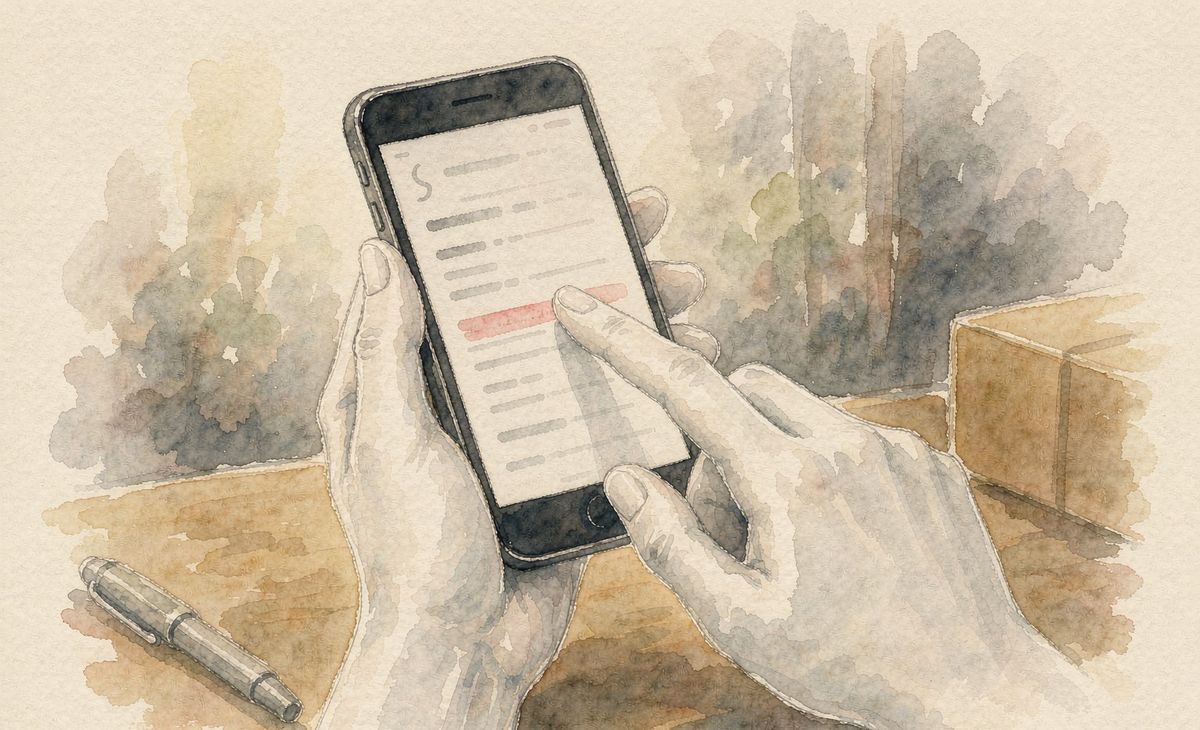
a mobile number is not optional on a Chinese waybill. it is the field the delivery system uses as the primary key, and it is where every notification goes: the arrival message, the locker code, the pickup code, the call from the courier asking which gate to use. an address without a working number is a parcel in limbo.
if you do not have a Chinese SIM, three arrangements work, in descending order of reliability. first, a colleague or friend's number, with their agreement, and their name in the recipient field so the courier's call makes sense. second, a hotel that accepts parcels, using the front desk's number and your room number, which works well for a stay of a week or more but fails the day you check out. third, a collection point near you that will hold a parcel against a code, which still requires a number able to receive the text in the first place.
what does not work is a foreign number in the field with no plan behind it. international SMS does reach most foreign phones in China, but the courier's call will not, and a missed call from an unknown local number is the most common reason a parcel goes to the locker instead of the door.
if you are staying more than a couple of weeks, a local number is the single highest-value purchase you can make for daily life, and it also unlocks the delivery apps, the ride-hailing accounts and the banking that everything else assumes. the SIM and eSIM guide covers which product gives you one.
Pickup codes and locker countdowns
most parcels that do not reach your hand end up in one of two places, and they behave differently.
a staffed collection point, usually branded Cainiao (菜鸟驿站) or a local variant, holds parcels on shelves and sends you a text with a pickup code. the code is normally three numbers separated by dashes, roughly shelf, tier and position, something like 1-2-3. you walk in, read the code out or show the message, and someone fetches it. larger points let you scan a QR code at the counter and find the shelf yourself. bring your phone; a passport is useful if the staff ask who you are, though most do not.
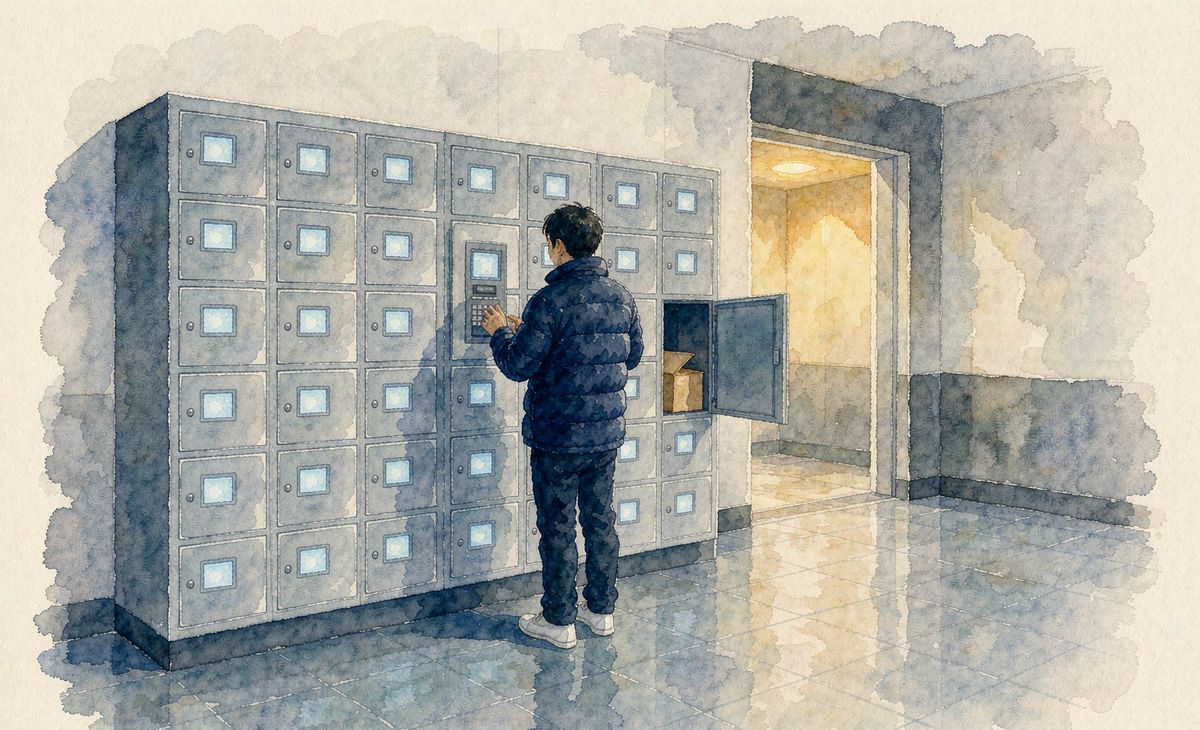
a parcel locker is unattended and works on a countdown. the text gives you an opening code, you type it on the screen or scan the QR, and a door pops. the clock starts when the parcel is placed, and past the free window the machine charges a holding fee that it displays on screen before it opens the door, payable by QR. the exact free period and fee vary by brand and by site, so treat the message as the authority rather than any number you read online, including in this article.
collection points keep normal retail hours and are usually open until 21:00 or 22:00, which matters more than it sounds: a parcel that arrives while you are at work is collectable that evening, not the next weekend. lockers never close, which is their advantage, and their disadvantage is that nobody is there to help when the screen rejects your code.
one mechanic catches visitors repeatedly. the arrival message goes to the phone number on the waybill, not to your app, and if that number belongs to a colleague, the code is on their phone. plan for that before you order, not after.
The rule that puts you in charge
the practice of dropping parcels at a locker or a collection point without asking was widespread enough that the regulator wrote a rule against it. the Measures for the Administration of the Express Delivery Market, issued as Ministry of Transport Order No. 22 of 2023 and in force since 1 March 2024, states in Article 28 that a courier company may not confirm receipt on the recipient's behalf without consent, and may not place a parcel in a smart locker or a delivery station without the recipient's agreement. where the recipient cannot inspect the parcel in person, the company is required to agree a different delivery method and confirmation method with them.
Article 54 attaches the consequence: a warning or public reprimand, plus a fine of up to RMB¥10,000, rising to RMB¥10,000 to RMB¥30,000 where the circumstances are serious. that is not a symbolic number for a delivery station working on a few yuan per parcel.
knowing the rule does not automatically produce the behaviour, and enforcement varies by city and by station. what changes the outcome in practice is evidence, and evidence is easy to create at the moment of ordering.
| Stage | Action | Why it helps |
|---|---|---|
| Placing the order | Put 请送货上门,勿放驿站 or 请电话联系 in the order note | Written intent on record, timestamped by the platform |
| Courier calls | Say clearly that you want it delivered to the door | Consent, or its absence, is the whole question under Article 28 |
| Parcel already in a locker | Use the "request redelivery" option in the locker app or call the station | Faster than any complaint, usually same or next day |
| Nothing happens | Complain to the courier company, then to the postal regulator on 12305 | Companies must answer a complaint within 7 days |
one honest caveat. a note on the order is a request, and some couriers never see it because the route is generated before the note is read. the phone call is the moment that counts, and a short, friendly sentence in Chinese, or the same sentence shown on your screen, is enough. most couriers would rather hand it over than carry it back.
Sending one yourself
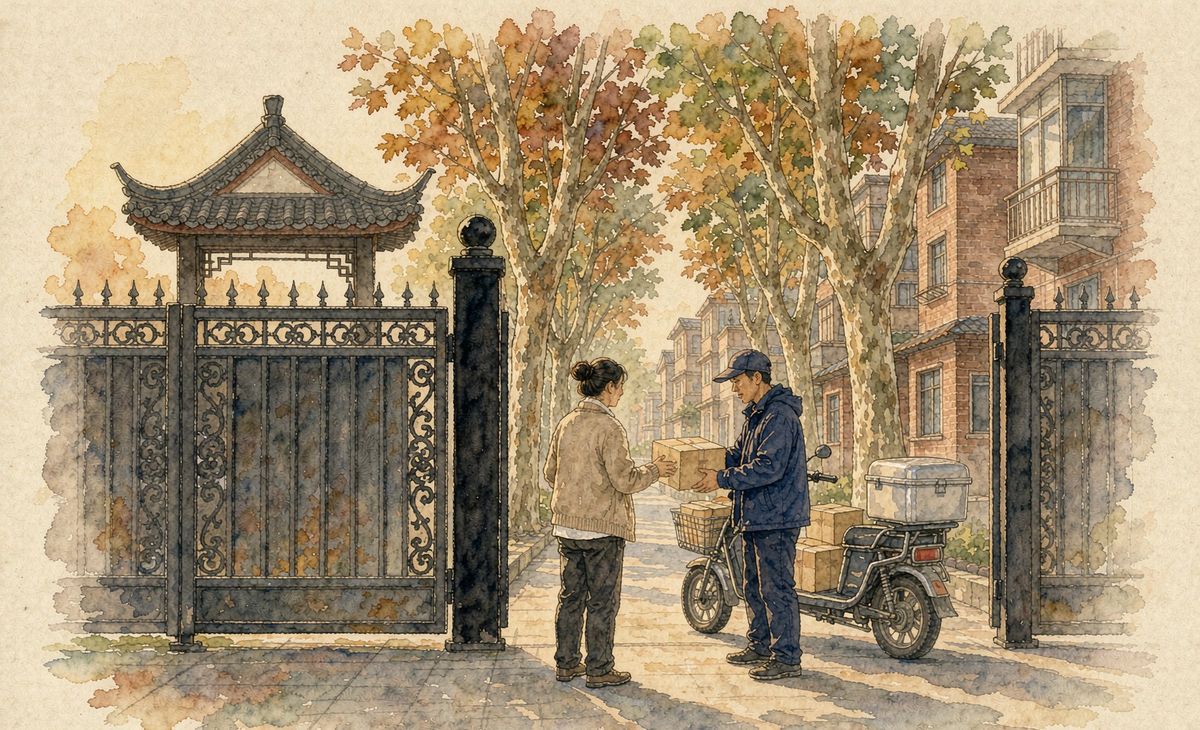
outbound parcels are more tightly controlled than inbound ones, because the sender carries the legal duty. Article 26 of the same 2024 measure requires the company to verify the sender's identity and register it, and to refuse the parcel if the sender declines or gives false details. Under the Interim Regulation on Express Delivery (State Council Order No. 697), Article 31, the company must also inspect the contents and mark that it has done so, and may refuse the parcel if you will not let them look.
for a foreign sender this means one practical thing: bring your passport. the counter will record the number, and a station that cannot record it will not accept the parcel, however small it is. the contents inspection is visual and quick, and it is not negotiable, so do not seal a box before you arrive.
sending domestically costs little. a small parcel within the same city typically starts around RMB¥8 to RMB¥12 through the major networks, with intercity rates a few yuan higher and premium next-day services roughly double. sending abroad is a different exercise, with customs thresholds that changed substantially in 2025 and 2026, and the shipping abroad guide covers those routes and the de minimis rules that apply at the other end.
When it goes missing
the compensation rules are less generous than most people assume, and the reason is a single word: declared value. Article 27 of the Interim Regulation says that for an insured parcel, liability follows the insurance terms agreed between the company and the sender; for an uninsured parcel, liability follows the general civil law. in practice, the terms printed on the waybill or shown in the app usually cap an uninsured claim at a multiple of the shipping fee, commonly somewhere between one and nine times, and courts have upheld those terms where the company highlighted them clearly at checkout.
translated: if the parcel is worth more than a few hundred yuan, pay for the declared value. the surcharge is a percentage of what you declare, it is quoted before you pay, and it converts a fight about a shipping fee into a claim about a real number.
the complaint clock is fixed and useful. Article 28 of the Interim Regulation requires the company to handle a complaint and tell you the outcome within seven days of receiving it. if that comes back unsatisfying, or does not come back, the postal regulator runs a separate appeal channel on 12305, which covers express delivery the way 12315 covers retail. the escalation ladder for a purchase that never arrived, including the platform route and the statutory refund windows, sits in the consumer disputes guide.
two habits shorten this considerably. photograph the parcel before opening it if the box looks crushed, and film the opening if the contents are fragile or expensive. a ninety-second video settles in one message what otherwise takes a week of assertions.
Returns without leaving the flat
returning something is easier than receiving it, because the platforms built the logistics for exactly this. inside Taobao, JD or Pinduoduo, a return request offers a pickup option: a courier comes to your address, scans a code on your phone, and takes the parcel. no printer, no queue, no Chinese conversation beyond showing the screen.
the cost depends on who is at fault. a quality problem or a wrong item is normally the seller's cost, and the platform provides a prepaid label or a pickup at no charge. a change of mind under the seven-day no-reason right usually means you pay the return shipping unless the listing says otherwise. the refunds guide sets out what "unused" means for the seven-day rule, which is narrower than people expect and does not require the packaging to be intact.
one thing worth doing before any return: screenshot the product page, the order and the chat. platform dispute systems resolve on uploaded images, and the side with the screenshots wins.
Your first week
six things, in the order they matter, and then the system stops surprising you.
| # | Do this | Time |
|---|---|---|
| 1 | Ask your building whether parcels come to the door, the gatehouse, or a station, and where that station is | 5 minutes |
| 2 | Get your address typed in Chinese by someone local, screenshot it, save it in the shopping app | 10 minutes |
| 3 | Decide which phone number goes on the waybill, and tell that person | 2 minutes |
| 4 | Walk to the nearest collection point once, so you know its hours before you need them | 15 minutes |
| 5 | Add the delivery note to your saved address, not to each order | 2 minutes |
| 6 | Save 12305 in your contacts, next to 12315 | 1 minute |
after that the pattern is stable. the parcel arrives, the message lands, the code works, and the only remaining question is whether the thing you bought is any good, which is a different guide.
Common questions about receiving packages in China
Can I receive packages in China without a Chinese phone number?
Yes, but not smoothly. The waybill requires a mobile number, and the arrival message and any locker code go to that number. The workable routes are a colleague or friend's number with their consent, a hotel front desk that accepts parcels, or a collection point that will hold a parcel against a code. A foreign number alone will receive the SMS in most cases but not the courier's call, and the missed call is what sends parcels to a locker.
How should I write my address for delivery in China?
Largest to smallest: province or municipality, district, road or compound name, building number, unit number, flat number, then the recipient name and mobile number. The compound name and the building number do most of the work, because many Chinese streets have no continuous numbering. Write it in Chinese characters where you can, keep the phone number on its own line, and avoid an English-only address if the form allows Chinese.
Why did my parcel go to a locker instead of my door?
Usually time pressure on the route, sometimes a phone number the courier could not reach, occasionally a building that refuses couriers at the gate. Since 1 March 2024 a company may not place a parcel in a smart locker or delivery station without your agreement, under Article 28 of the express delivery market measures. In practice you get it faster by using the locker app's redelivery request than by arguing, and you get it consistently by stating your preference on the phone when the courier calls.
What is a pickup code and where do I find it?
A short numeric code sent by text message when your parcel reaches a collection point or locker, usually three numbers in a dash-separated pattern such as 1-2-3, which roughly maps to shelf, tier and position. It arrives on the phone number written on the waybill, not in the shopping app, which is why a parcel sent to a colleague's number leaves you without the code.
How long will a collection point hold my parcel?
Longer than a locker, and it varies by operator and by site, so the message is the only reliable source. Most staffed points hold parcels for several days before returning them to the sender, and lockers start charging a holding fee after a free window that is shorter, typically measured in hours rather than days. The fee is shown on the locker screen before the door opens.
Is it legal for a courier to leave my parcel at a station?
Not without your agreement. Article 28 of the Measures for the Administration of the Express Delivery Market, in force since 1 March 2024, prohibits confirming receipt on your behalf and prohibits using a smart locker or delivery station without consent. Article 54 sets a fine of up to RMB¥10,000, or RMB¥10,000 to RMB¥30,000 in serious cases. Enforcement is uneven across cities, so the rule is most useful as leverage in a complaint rather than as a prediction of what will happen at your gate.
What can I do if my parcel is lost or damaged?
Complain to the courier company first, which must respond within seven days under Article 28 of the Interim Regulation. If the parcel was insured at declared value, compensation follows those terms; if it was not, the civil law applies but the waybill terms usually cap the claim at a multiple of the shipping fee. Escalate to 12305, the postal regulator's appeal line, if the answer is unsatisfactory. Photographs of the packaging and a video of the opening make the difference.
Do I need my passport to send a parcel?
Yes. Senders' identities must be verified and recorded at the counter, and a station that cannot record yours will not accept the parcel. Expect a quick visual inspection of the contents as well, which is mandatory and cannot be waived, so do not seal the box before you arrive.