A remitter such as Wise or Remitly pays RMB straight into an Alipay, WeChat or UnionPay account, usually within hours. Published limits run to RMB¥50,000 per transfer. The transfer is cancelled if the recipient does not finish identity verification inside 72 hours on Alipay, or 48 on WeChat. The US$50,000 figure is a resident paperwork shortcut, not a foreigner's cap.
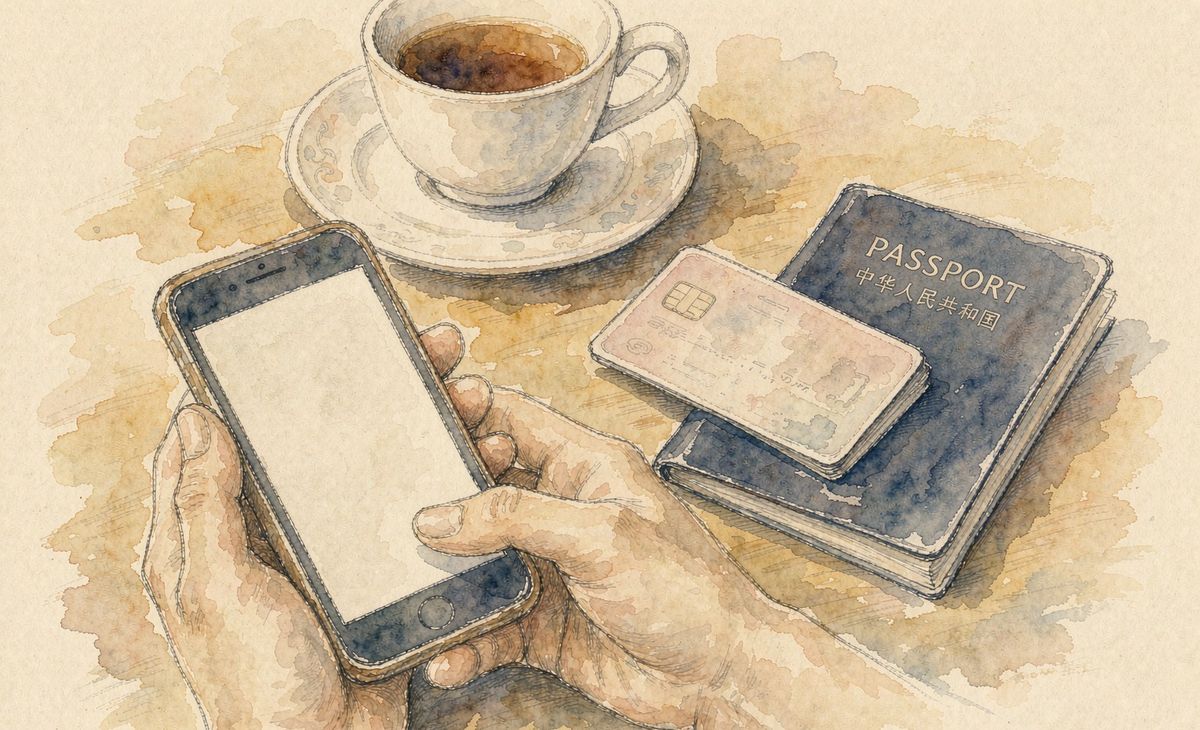
the moment that turns money transfer from theory into logistics is concrete: your landlord is standing in front of you asking for the deposit, and it is RMB¥22,500, and it is in your account in another country. or the mirror image: payday, and your salary sits in RMB in a bank app that cannot leave the country by itself. both directions run on the same machinery: a small number of legal channels, a short list of documents, and limits that are widely misreported. checked against the state administration of foreign exchange (safe) guidance and the customs rules on 19 october 2026.
this page covers money in, money out, and the middle ground where you move neither. it connects to the practical neighbors: the renting guide explains what you are funding, the bank account guide gets you the account every route below assumes, and the Alipay guide covers the wallet half the country pays with.
Getting money into China: three routes
| route | how it lands | limits and conditions |
|---|---|---|
| digital remitter (Wise, Remitly and similar) | RMB paid directly to the recipient's Alipay, WeChat wallet or UnionPay card | per Wise's published CNY limits: RMB¥50,000 per transfer via Alipay or WeChat, RMB¥33,000 via UnionPay; annual per-recipient caps apply (Alipay RMB¥300,000-600,000 by purpose, WeChat RMB¥800,000) |
| bank wire (SWIFT) | foreign currency into the recipient's Chinese bank account, converted on arrival or held as foreign currency | no route-specific cap for genuine transactions; the bank may ask the recipient to declare the purpose; wires take one to three business days and carry both sender and intermediary fees |
| cash in your bag | whatever you declare at the border | foreign currency over US$5,000 equivalent must be declared in writing on arrival; no limit on RMB over RMB¥20,000 equivalent because it is prohibited above that line (see customs section) |
the remitter route is the fast one: Wise's own documentation quotes most transfers arriving in seconds to hours, and the money arrives as RMB the recipient can spend immediately. two conditions do the real work. the payout route must exist (Wise sends CNY only through its partner rails, which is why the limits above are per Alipay, WeChat or UnionPay), and the recipient has to cooperate with a one-time verification. if your recipient is, say, a landlord who never opens the app, pick the wire route instead.
the wire route is the workhorse for large amounts. it costs more, moves slower, and lands in a bank account, which is exactly what a tuition bill or a full lease payment needs. the receiving bank may phone the account holder about the declared purpose; "family support" or "rent payment" with the matching paperwork clears without drama.

The US$50,000 number, and who it belongs to
here is the correction most guides need. china's foreign exchange rules give every person an annual "facilitation quota" of US$50,000 equivalent, and forum posts routinely turn it into a hard ceiling on what anyone can move. both halves are wrong for a foreign worker.
the quota, under safe's current-account rules (circular huifa 2020 no. 14), is a paperwork shortcut: a chinese resident can buy or sell up to US$50,000 equivalent of foreign currency per calendar year with just an ID, no supporting documents. three facts matter for you:
- it is not a cap. genuine, documented transactions face no amount limit; above the quota you simply present proof of the transaction (an admission letter, an invoice, a contract) and the bank processes it.
- it belongs to residents. a foreign national without permanent residence does not hold this quota at all. holders of the foreigners' permanent residence ID card are the exception and get the same treatment as locals.
- it resets every january 1. unused quota does not carry over.
so what governs a foreigner's transfers? not a quota, a paper trail. the rule for converting your legally earned RMB income into foreign currency (safe's article 59) requires your valid ID plus documents proving where the money came from, tax proof included. no quota in either direction, and no ceiling; just evidence. the same logic runs in reverse for money arriving from abroad: amounts within reason land without questions, larger ones may prompt the bank to ask what the payment is for.
one hardware limit to know: a single foreign-currency conversion of over US$50,000 equivalent cannot sit in your own account as RMB. safe requires the RMB proceeds of such a conversion to be transferred directly to the counterparty's onshore account. for almost everyone this never triggers; for someone wiring a house purchase or a business payment, it defines the mechanics.
Sending your salary home
the monthly ritual for most foreign employees in china converts RMB salary to your home currency and wires it out. the bank counter (or your bank's app, once your file is set up) wants four things, and having them ready turns a forty-minute interview into a ten-minute errand:
- your passport, the one your residence permit is in.
- your labor contract, to show the income is employment income.
- salary records, typically the last few months of payslips or the bank statement showing the deposits.
- the individual income tax payment record. this is the one banks actually check, because safe's rules say salary conversion requires proof the income was taxed. the personal income tax app (geren suodeshui) issues the certificate; your HR can usually pull it too.

no legal cap applies to documented salary: an engineer remitting US$80,000 a year with clean tax records clears where an undocumented US$8,000 bounces. what trips people up is not the amount, it is the missing tax certificate, or salary that was never declared in the first place.
a small note on timing: do this during banking hours at your home branch the first time. banks differ in how they onboard a foreign customer for cross-border business, and the first visit, where your documents get scanned into your file, makes every later one a formality. the tax side has its own calendar; if you stay past 183 days in a tax year you count as a tax resident, and foreign employees can currently choose between the special additional deductions and the old expat allowances (housing, children's schooling) through 2027.
When you do not need a transfer at all
for spending, the shortest route is no movement of funds: link your foreign card to Alipay or WeChat Pay and pay Chinese merchants directly. since the people's bank of china's 2024 round of payment reforms, the official limits for foreign visitors using mobile payments this way are US$5,000 per single transaction and US$50,000 accumulated per year, up from US$1,000 and US$10,000. a card-linked wallet covers restaurants, groceries, metro fares, most of a normal month in china. Paying in China starts from that same angle and stops at the counter.
where the card route runs out is cash and rent. landlords want transfers to a Chinese account, and cash means an ATM, where your home bank's fees and the daily withdrawal limits apply. so the practical stack for a long stay is: card-linked wallet for daily spending, a Chinese bank account for salary and rent, and one of the routes above for the bridge in and out. that stack is exactly what the bank account guide and the Alipay setup guide walk through.
Carrying cash through customs
cash has its own rulebook, and it is enforced at the border rather than at a bank counter. chinese customs sets a hard line for RMB banknotes: RMB¥20,000 per person, per crossing, in either direction. above that it is not a declaration, it is a prohibition. The border line, the quota and the rest of the hard numbers, each with its notice, sit in China by the numbers.
foreign currency cash is a declaration regime. bringing in more than US$5,000 equivalent requires a written declaration on arrival. taking cash out is graded: up to US$5,000 equivalent walks through freely; US$5,000 to US$10,000 requires a carrying permit issued by a bank; above US$10,000 the permit comes from safe itself. short-trip frequent crossers face tighter sub-limits. for almost every reader the honest advice is simpler than the rules: do not carry meaningful cash. wire transfers exist precisely so that no one has to explain US$9,000 in an envelope to a customs officer.
What blocks a transfer
transfers to china fail for a short list of reasons, and every one is avoidable at the keyboard:
- the verification window. wallet-route transfers give the recipient a clock: 72 hours to complete identity verification on Alipay, 48 hours on WeChat, per the remitters' own terms. miss it and the transfer is delayed or cancelled, with refunds processed in a few business days. tell your recipient to expect the notification before you send.
- name mismatches. the receiving account name must match the recipient's ID exactly. a nickname, an anglicized spelling or a reversed name order sends money into review limbo. use the pinyin exactly as it appears on their ID.
- structuring. splitting one payment into many small ones to stay under a reporting threshold is treated as evasion, not cleverness. safe's monitoring flags the pattern, and banks can refuse or freeze. one honest transfer with documents beats ten anonymous small ones.
- underground exchangers. the wechat-group currency dealers quoting rates banks cannot match are unlicensed, and both the money and the legal exposure are yours. china treats them as illegal foreign exchange business; use a licensed channel and accept the fee.
- purpose mismatches. a wire labeled "tourism" that lands as a house deposit generates questions. label payments accurately the first time; corrections cost days.
that last point cuts both ways: the paperwork chase exists to keep the legal channels clean, and using them is what keeps your own record clean for the next transfer. money you moved correctly once moves faster the second time.
Common questions
How do I send money to China?
three routes. a digital remitter (Wise, Remitly and similar) pays RMB directly to an Alipay, WeChat or UnionPay recipient, usually within hours and with the fee shown upfront. a SWIFT bank wire lands foreign currency in a Chinese bank account in one to three business days, which suits large amounts like tuition or a lease payment. cash is the last resort and obeys the customs declaration rules below.
Can I send money to someone's Alipay or WeChat from abroad?
yes, through remitters that support the wallet rails. published limits run to RMB¥50,000 per transfer, with annual per-recipient caps that vary by route and purpose. the recipient must complete a one-time identity verification, within 72 hours on Alipay or 48 hours on WeChat, or the transfer is delayed and eventually refunded.
Why was my transfer to Alipay cancelled?
most cancellations are the verification window: the recipient never completed the in-app identity or bank-card binding step before the deadline (72 hours for Alipay, 48 for WeChat). remitters refund cancelled transfers within a few business days. before resending, make sure the recipient is ready to verify the moment the notification arrives.
Is there a limit on how much money I can send to China?
for genuine transactions, no fixed cap. the widely quoted US$50,000 is china's annual facilitation quota, a paperwork shortcut that lets residents convert currency with an ID alone, and it resets every calendar year. documented transactions above the quota are routine; what matters is that the declared purpose matches reality.
How do I send my salary from China to my home country?
at your bank, with four documents: passport, labor contract, recent salary records, and the individual income tax payment certificate from the tax app. foreign workers have no annual conversion quota; the requirement is proof the income was taxed, after which the amount itself is not capped. the first visit sets up your file and later transfers become routine.
Do I need a Chinese bank account to receive money in China?
not for small amounts: wallet payouts via Alipay or WeChat work without one. for salary, rent and any wire transfer, yes, and a Chinese account is also what makes the tax certificate and salary records easy to produce. the account-opening process for foreigners is its own topic and is covered in the bank account guide.
How much cash can I bring into China?
foreign currency cash over US$5,000 equivalent must be declared in writing at customs on arrival. RMB banknotes are capped at RMB¥20,000 per person per crossing, and carrying more is prohibited outright, not just declarable. leaving china with cash is graded: up to US$5,000 equivalent freely, US$5,000 to 10,000 with a bank-issued carrying permit, above that a safe permit.
Does the US$50,000 annual limit apply to foreigners?
no. the facilitation quota belongs to chinese residents, and a foreign national without permanent residence does not hold it at all; permanent-residence ID holders do. a foreigner's currency conversion instead runs on documented purpose: taxed salary, invoices, contracts. no quota, no ceiling, just evidence.
Can I split a large transfer into smaller ones to avoid limits?
do not. structuring, meaning deliberately breaking one payment into several to stay under a reporting threshold, is monitored as evasion, and banks can refuse or freeze the transfers involved. it also does not help: china has no amount cap on documented transactions. send one transfer with the right paperwork attached.
What is the cheapest way to move money to China?
it depends on size. for a few hundred dollars, wallet-route remitters typically cost less than a wire, with fees quoted before you send. for large amounts, a SWIFT wire's percentage cost shrinks while a remitter's stays flat, and the receiving bank may charge a small incoming fee. compare the total landed RMB, fee plus exchange rate, not the fee alone; remitters generally use the mid-market rate with no hidden spread.