No Chinese visa category asks for an insurance certificate, and neither visa-free entry nor the 240-hour transit checks for one. The only mandatory case is international students, at school registration after arrival. What a policy buys is the hospital bill you would otherwise settle yourself; short inbound plans start near RMB¥30.
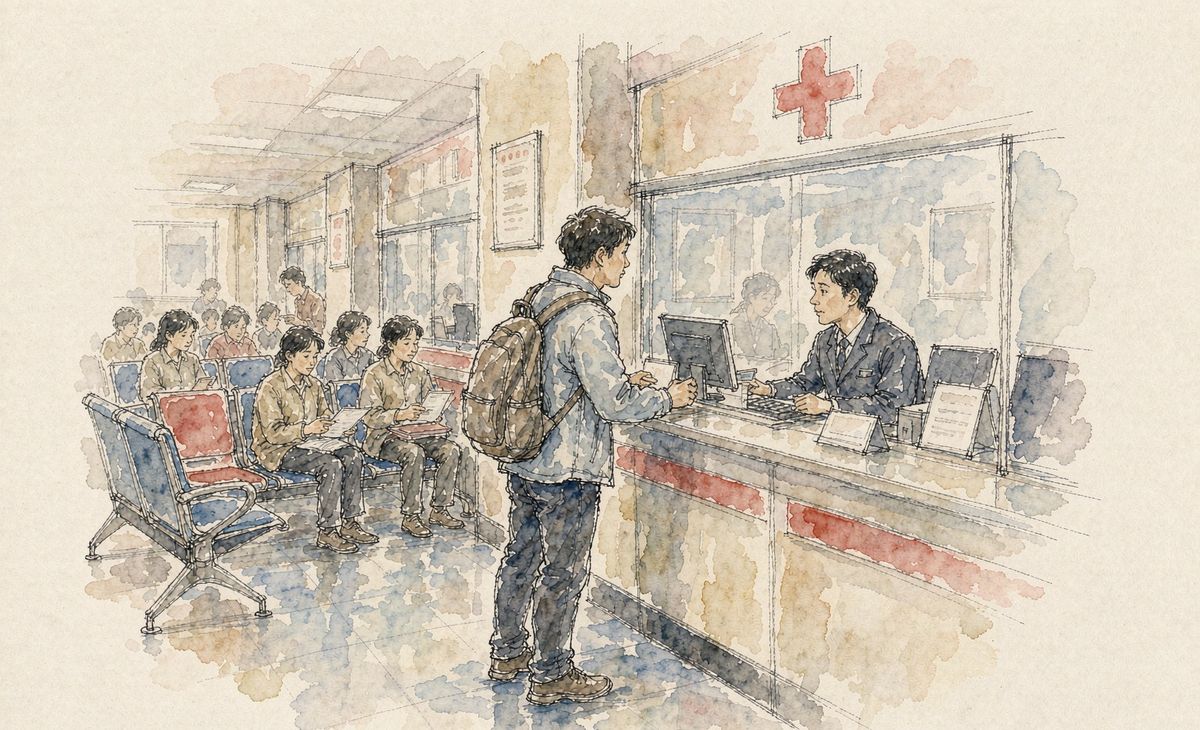
the most expensive rumor about a china trip is the claim, repeated on comparison sites, that you must show an insurance certificate with a certain medical limit at the visa counter or the border. you do not. the official material list for every chinese visa category, published by the ministry of foreign affairs consular service, contains passport pages, photos, invitations and admission letters, and not one line about insurance. checked 18 october 2026.
this page sorts out what is actually required, prices the risk you would be carrying uninsured, and turns the policy fine print into four numbers. it sits between the pre-departure checklist and the cost of living guide: same method, official sources, every figure traceable.
What entry actually requires
start with the categories most visitors use:
| route | insurance asked for? | what is checked instead |
|---|---|---|
| L tourist visa | no | passport, photo, residence proof; since 2024, US consulates even waive flight and hotel bookings |
| 30-day visa-free entry (70+ nationalities, through 2026-12-31) | no | eligible passport, onward ticket, accommodation |
| 240-hour visa-free transit (57 countries) | no | passport valid 3+ months, onward ticket to a third country |
| Z work visa | no, at application | work permit notice; after arrival your employer enrolls you in social insurance |
| X1 student visa, over 180 days | no, at the visa stage | admission letter and JW201/JW202 form; insurance becomes mandatory at school registration |
| Q family, M business, F exchange | no | invitation letters and kinship documents |
the one genuinely mandatory case is students, and it arrives after landing, not at the consulate. the ministry of education's rules on international students (order no. 42, in force since 2017) require every international student to hold insurance: no policy, no enrollment, and students already enrolled get suspended from registration until they buy one. the ministry's own FAQ puts the line concretely: students staying more than six months must buy group comprehensive medical insurance in mainland china before the school can process semester registration.
so if a comparison site tells you a chinese tourist visa needs proof of US$50,000 medical cover, that is a schengen rule wearing a china costume. chinese consular checklists do not carry it.

A hospital visit without a policy
the risk you are self-insuring is not a GP visit. public hospitals charge everyone by one published fee schedule, no foreigner surcharge, and a standard outpatient consultation is cheap by western standards. peking union medical college hospital, the country's most famous public hospital, lists its own prices openly: RMB¥50 to RMB¥100 for a regular outpatient consultation depending on the doctor's rank, RMB¥200 to RMB¥300 for priority (tequ) clinics, and RMB¥600 to RMB¥900 in the international medical department where staff speak english. checked on the hospital's own booking site, 18 october 2026.
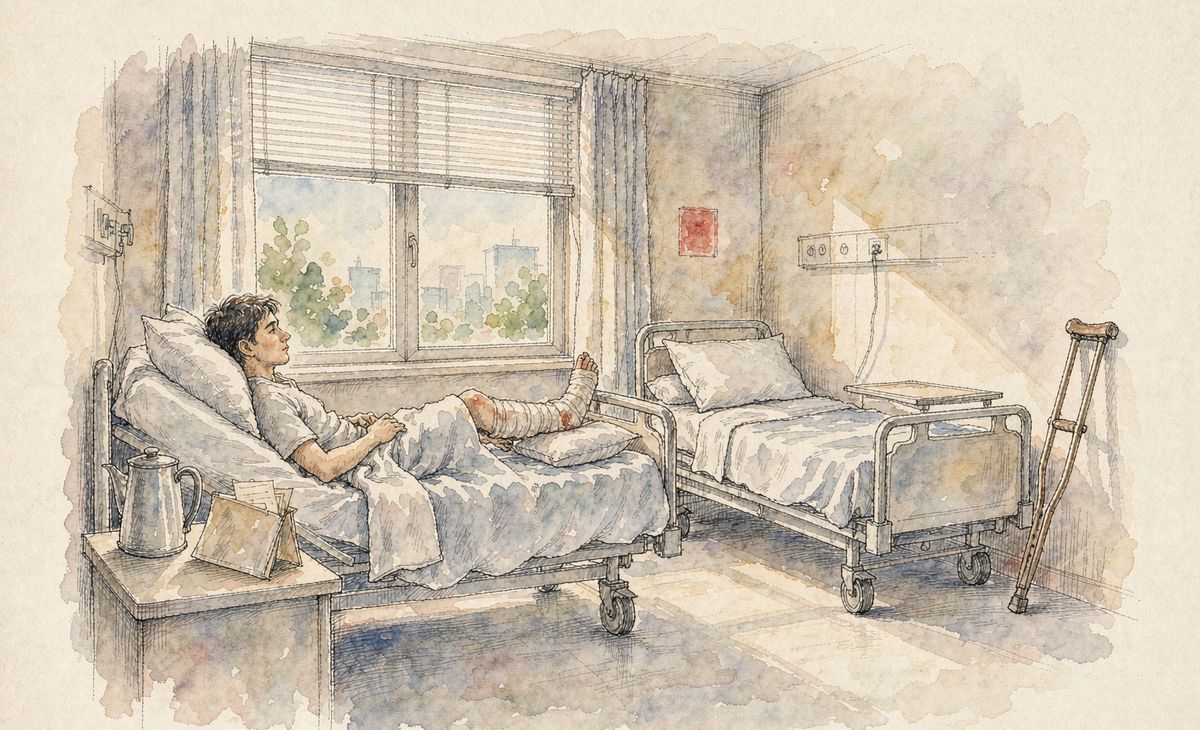
the bill escalates with the bed, not the consultation. a hospital stay means treatment, medication and equipment billed on top, and surgery pushes totals into five figures. foreign visitors carry none of china's social insurance, so every yuan of it is self-pay. international departments and private hospitals also ask for a payment guarantee or deposit before admission, which is where an uninsured traveler starts negotiating payment from a hospital bed.
two recent policy changes soften the edges. since 2025-03-31, public hospitals nationwide have stopped collecting outpatient deposits, and since 2025-06-30 inpatient deposits are capped with reference to the average self-pay cost of the same diagnosis-related group. that is real money left in your pocket. it does not change who pays the final bill: without insurance, that person is you.
Why your home coverage stops at the border
for US readers, medicare's own page is blunt: medicare usually does not cover health care while you are traveling outside the united states, outside three narrow exceptions that involve being closer to a foreign hospital than an american one in an emergency. some medigap supplement plans add a foreign-travel emergency benefit, but it is an emergency-only patch, not trip cover.
for UK readers, gov.uk states it in one line: china does not have a reciprocal health agreement with the UK, so make sure you have appropriate health insurance. the GHIC card, which covers the EEA and a handful of other countries, is not valid in china.
the state department's travel health page adds the number that makes evacuation cover non-optional: a medical evacuation by air ambulance back to the united states can cost from US$20,000 to US$200,000 depending on where you are and your condition. the US government does not pay medical bills abroad, and neither does any other government for its citizens.
Four numbers to check before you buy
quotes are personalized by age, trip length and residence country, so no guide can name your price. what a guide can do is tell you which lines in the quote sheet decide everything else:
| number | why it decides the outcome | practical floor |
|---|---|---|
| emergency medical limit | pays the hospital bill; surgery and ICU days burn through small limits fast | US$100,000; more if you have a chronic condition |
| evacuation and repatriation limit | pays the air ambulance your condition may need; the single largest possible bill | US$250,000 or higher; the state department's US$200,000 top-end is the benchmark |
| deductible (excess) | what you pay per claim before the policy pays anything; a cheap policy with a huge deductible is a discount on paper only | US$100 or less, or zero |
| altitude and activity caps | western china sits high: lhasa is about 3,650 m and the everest tourist camp near 5,000 m; policies cap coverage by altitude and list excluded activities | check the clause against your actual itinerary before paying |
one more line worth finding in the wording: whether the insurer pays the hospital directly (direct billing) or reimburses you after you pay. at a chinese public hospital cashier, reimbursement means fronting the money first, so know which one you bought while you are still at home, not from a queue.
Already in China? You can still buy
western travel policies are generally sold to residents of their home countries and bought before departure. once you have landed, the practical option is a chinese inbound product designed for foreign visitors. ping an, one of the country's largest insurers, sells an accident and illness policy built specifically for foreign visitors to china ("ping an go, foreign visitor plan"): coverage from 3 days to 366 days, ages 0 to 80, passport-only purchase, starting at RMB¥30 for the basic tier. it includes accidental and illness outpatient and emergency care, hospitalization allowances, ambulance fees and medical evacuation and repatriation cover; higher tiers raise the limits. checked on ping an's official product pages, 18 october 2026.
read the deductibles and limits on the actual quote screen before buying, and note what such plans are not: they are not annual multi-trip policies, and they do not cover routine care in your home country. for a long stay, the right tool is different: employer social insurance if you hold a work permit, or a long-term international health plan.
Using a policy when something happens
the machinery, in order:
- call the insurer's assistance line before racking up large bills. the 24/7 number is in your policy document. for life-threatening emergencies go straight to the hospital; for everything else, the assistance line tells you which hospital has a direct-billing arrangement and opens a claim file.
- for an ambulance, dial 120. it is the national medical emergency number, free to call, no area code. the police line is 110. keep both in your phone with the local area code of the city you are in, or just dial them directly from anywhere in the country.
- pay and keep every receipt. hospital cashiers run on alipay and wechat pay; if you pay by either, screenshot the payment record. registration slips, test invoices and pharmacy receipts are the claim. a folder in your bag or an album in your phone both work.
- ask for itemized bills, not summary receipts. insurers process itemized charges, and a diagnosis note in english or a translated summary speeds everything up.
- file fast. policies set claim deadlines, commonly 30 days from treatment. digital submission through the insurer's app or email is normal now.
for getting to a hospital in the first place, a regular taxi or didi is often faster than an ambulance for non-life-threatening cases in city traffic; the didi guide covers hailing one without chinese. and for the broader picture of what can go wrong beyond health, from pickpocketing to ticket scams, the safety guide keeps the same evidence-first method.
Common questions
Do you need travel insurance to enter China?
no. no visa category lists insurance among its required documents, and neither visa-free entry nor the 240-hour transit checks for a policy. the mandatory case exists only for international students after arrival, at school registration.
Is travel insurance required for a Chinese visa application?
no. the consular service's material lists for L, M, F, Q, X, Z and other categories cover identity, invitation and admission documents. any site telling you a medical insurance certificate is needed for a chinese tourist visa is confusing china with schengen rules.
How much does travel insurance for China cost?
it depends on age, trip length, residence country and coverage tier, so treat any flat figure in a guide as marketing. as reference points on published prices: a chinese inbound plan for foreign visitors starts at RMB¥30 for a short basic tier, while western comprehensive single-trip policies are quoted individually and commonly land in the low hundreds of US dollars for a multi-week trip. get a live quote and compare the four numbers, not the headline price.
Does Medicare cover me in China?
no, outside three narrow exceptions that will not apply to a planned trip. some medigap supplement plans include a foreign-travel emergency benefit; check whether yours does and what its cap is. the same logic applies to most US employer plans, which typically treat foreign care as out-of-network or exclude it.
Does the NHS or a GHIC card cover me in China?
no. the UK has no reciprocal health agreement with china, and the GHIC applies to the EEA and a short list of other countries that does not include china. gov.uk's own advice for visitors is to carry appropriate health insurance.
Can I buy travel insurance after arriving in China?
yes, through chinese inbound products made for foreign visitors, bought with just a passport and valid from 3 days to a full year. what is usually not possible is buying a standard western travel policy once you are already resident abroad, since those are sold by residence country.
What happens if I go to a Chinese hospital without insurance?
you pay as you go and claim nothing back. outpatient consultations at public hospitals are affordable, but deposits apply to inpatient care, international departments ask for payment guarantees, and serious treatment can reach five figures fast. since 2025 public hospitals no longer take outpatient deposits and inpatient deposits are capped, which helps cash flow but does not change the final bill.
Does travel insurance cover Tibet and high-altitude areas?
only up to the altitude written in the policy. policies cap emergency coverage by elevation, and a cap below 5,000 m will not cover the everest tourist camp. also remember tibet requires a separate travel permit arranged through a registered agency, which is an entry question, not an insurance one.