The factories around Shenzhen make most of the world's vaping devices, in every flavour a market wants. Inside China the same devices may only be sold in tobacco flavour, through licensed shops, in closed cartridges, at a nicotine ceiling the exporter never has to meet. A traveller arriving with a personal vape meets the second set of rules, and the numbers are small.
vaping is legal for an adult in china, and buying a device after you land is easy. what surprises arriving travellers is everything around that simple sentence. the flavour in the shop is not the flavour you left home with. the liquid cannot be refilled by hand. the allowance at the border is counted in devices and millilitres, not in months of supply. and the places where you may actually use it have their own fines, printed in city ordinances that most visitors never read.
this guide follows the device from the baggage belt to the shop shelf to the train seat. every figure below comes from the regulation that sets it, and the sources are named inline so you can check the current text before you fly.

The factory belt, and the ban next door
start with the scale, because it explains everything else. the commerce department's own trade briefing cites industry figures that ninety five percent of the world's e-cigarettes are made in china, and seventy percent of chinese production sits in shenzhen. the city holds four hundred and eighteen of the five hundred and eighty three production licences the tobacco regulator has issued nationwide. in twenty twenty three the country exported eleven point one billion us dollars worth of the products.
the same year the rules changed, the domestic market was closed to almost all of that. the e-cigarette management measures, issued by the tobacco monopoly authority in march twenty twenty two and effective from the first of may that year, set the domestic regime. article twenty six bans the sale of any flavoured e-cigarette other than tobacco flavour, and bans open-system devices a user can fill with their own liquid. the export lines kept running. the shop shelves were emptied of everything else.
so the mint, mango and cola cartridges an exporter ships to europe or the middle east are legal to make in china and illegal to sell in china. grey market stock does circulate through social media sellers and delivery riders, and the shenzhen authorities ran enforcement campaigns against it through twenty twenty five. buying from one puts the buyer inside an unlicensed transaction with no quality trail, which is a different risk than the flavour alone suggests.
What you may land with
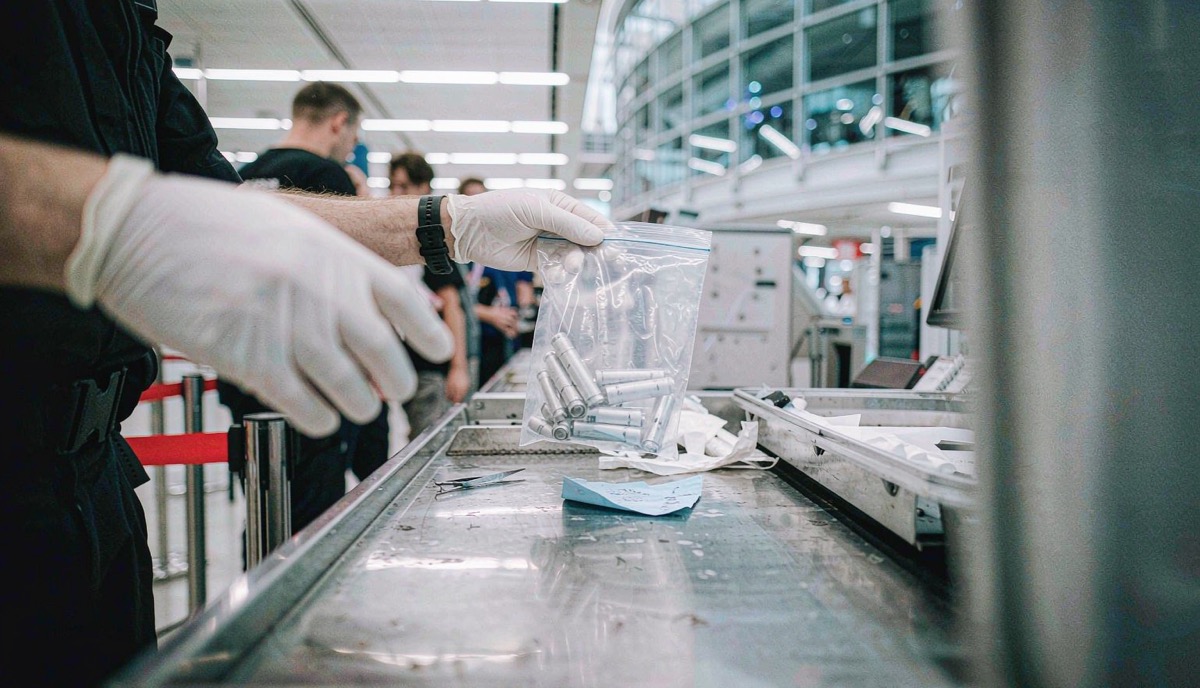
the entry allowance is set by the baggage items duty schedule that took effect in twenty twenty four, and the customs service publishes the figures in its own question channel. for an ordinary arriving traveller the tobacco-free allowance is two devices and six cartridges, or six disposable units counting as cartridges, with total liquid capacity of twelve millilitres. arriving from hong kong or macao the figures halve to one device and three cartridges, six millilitres. a frequent border crosser, defined by travel frequency, gets one device and one cartridge, two millilitres, once a day.
three boundary rules sit around those numbers and each one catches someone. travellers under eighteen may not bring an e-cigarette into the country at all. a device or cartridge whose liquid capacity is not marked is barred from entry, because the officer cannot verify the volume against the allowance. and the allowance is per person, so a family of four travelling together has four allowances, not one pooled one.
| Traveller | Devices | Cartridges or disposables | Total liquid |
|---|---|---|---|
| Standard arriving traveller | 2 | 6 | 12 ml |
| Arriving from Hong Kong or Macao | 1 | 3 | 6 ml |
| Frequent border crosser, once per day | 1 | 1 | 2 ml |
| Under eighteen | Not permitted | Not permitted | Not permitted |
conventional tobacco has its own parallel numbers and they are larger: four hundred cigarettes, or twenty cigars, or five hundred grams of tobacco, with heated-tobacco sticks counted as cigarettes. the device allowance for vaping is deliberately far tighter than the cigarette allowance beside it.
Above the allowance is a tax, not a seizure
exceeding the free allowance does not make the goods contraband. it makes them dutiable. the officer applies the personal postal and baggage tax rate to the excess, and the traveller pays at the counter and continues. the failure mode that actually costs people their property is different: walking through the green nothing-to-declare channel with a suitcase the scanner flags, after which the undeclared excess is treated as an attempt to evade duty and can be confiscated under the customs penalty rules. the red channel and an honest declaration is the cheap route.
cannabis vapes are a different file entirely, and they are covered near the end of this guide.
What the shelves hold now
a licensed shop, which in practice means tobacconists and the e-cigarette counters inside convenience chains, sells tobacco-flavoured closed pods and disposables that passed the regulator's technical review. the device must carry a licensed retail premise, and the shop must refuse anyone who cannot be confirmed as an adult, checking identification when age is unclear. vending machines are banned outright, and no sale may happen through any online channel outside the regulator's trading platform, which in effect means no lawful online retail at all. the secondhand listings on social platforms sit outside that system.
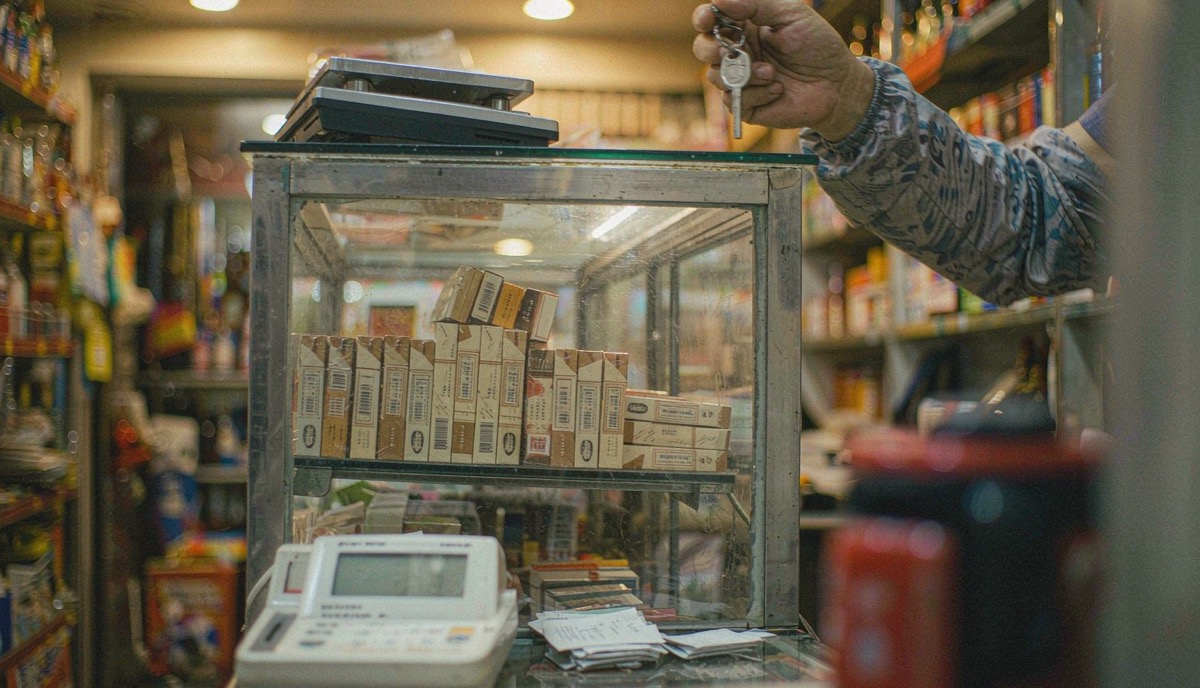
heated tobacco is a separate door that stays shut. the management measures fold heated-tobacco devices into ordinary cigarette regulation, and the regulator has not approved any heated-tobacco product for domestic sale. carrying your own sticks in is a cigarette allowance question, buying them here is not on the menu.
The standard that sealed the device
the reason nobody refills a pod in china is the national standard. the mandatory e-cigarette standard published in april twenty twenty two and effective from october that year requires the cartridge and its device to be a closed structure that prevents filling by hand, adds child-resistant and accidental-start protection, and caps the nicotine in the liquid at twenty milligrams per gram with no more than two hundred milligrams in a cartridge. it also publishes a whitelist of one hundred and one permitted additives, which is the technical form the flavour ban takes.
read together with the management measures, the design outcome is a device nobody can modify. an arriving traveller's open refillable rig from home is not banned at the border within the allowance, but it has no legal liquid supply inside the country, because liquid for manual filling is exactly what the domestic market may not sell. the practical consequence lands on heavy users: a twelve millilitre allowance is a few days of use, and the domestic replacements are tobacco-flavoured only.
Where the fines are printed
indoor public places are smoke-free nationwide under the detailed rules for public place hygiene management, and city ordinances add the numbers a visitor actually meets. in beijing, smoking in a banned indoor place costs fifty yuan on the spot, two hundred if you refuse to correct, and more in venues meant for children. shanghai fines fifty to two hundred yuan. shenzhen starts at fifty, rises to two hundred for refusal, and reaches five hundred for obstructing enforcement. the local ordinances in shanghai and shenzhen explicitly bring e-cigarettes inside the ban, so the argument that vapour is not smoke has already been settled in the places a visitor eats, drinks and queues.
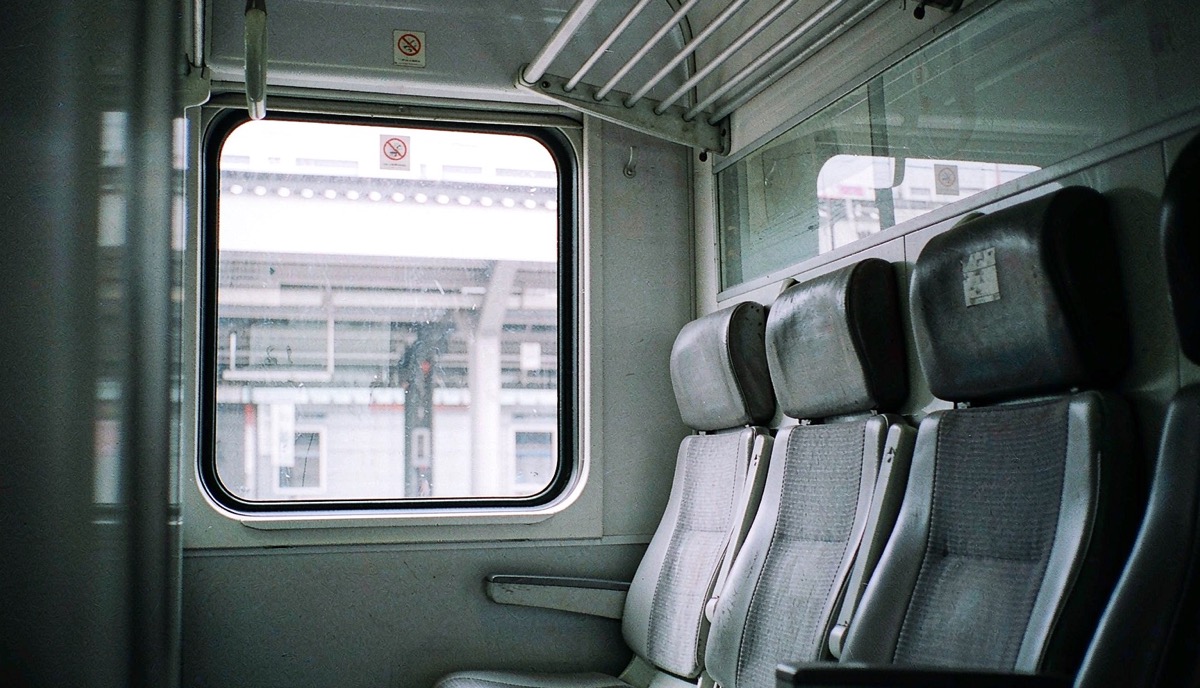
transport is stricter than streets. on a high-speed train the smoking ban covers the whole train including vestibules and toilets, and the smoke detectors read aerosol as well as smoke, so an e-cigarette trips the same alarm. the railway safety management rules put the personal fine at five hundred to two thousand yuan, and a recorded violation puts the traveller on the credit list that blocks train ticket purchases for one hundred and eighty days. on an aircraft, smoking including e-cigarettes is a listed violation of civil aviation order, police at the arrival gate have handed out five to ten days of administrative detention for vaping in a cabin, and a serious case can add a year on the airline credit list. devices themselves fly in carry-on only, never in checked baggage, because of the battery.
booking mechanics for the trains and the airport rules are covered in the guides to buying train tickets and domestic flights; the packing-side view of both tobacco and e-cigarette allowances sits in the packing guide.
Sending one in
the postal route exists but it is tight. the tobacco regulator and the postal authority set the same figures as the passenger allowance for each parcel, two devices and six cartridges totalling twelve millilitres, or twelve millilitres of liquid alone, and one parcel per person per day, with cross-border mail held to the same limits. a parcel above that is not taxed, it is refused. for a resident ordering a favourite liquid from abroad, the daily single-parcel cap and the twelve millilitre ceiling are the two numbers that decide whether the order ships.
The bag that is not a tobacco question
a vape cartridge containing thc or any other controlled substance is drugs, not tobacco, and the legal frame is criminal rather than administrative. the criminal code's drug provisions cover smuggling of any quantity, and the narcotics regulation's controlled lists decide the classification. the criminal code also places controlled narcotic and psychotropic substances in the definition of drugs, which is the same hook the medication guide traces for prescription stimulants. there is no personal-use allowance that converts a thc cartridge into a fine at the border. travellers who carry one for medical reasons should read the entry rules for medication instead and expect the medication file, not the tobacco file.
Common questions
Is vaping legal in China?
Yes for an adult. E-cigarettes are regulated as tobacco products, sold in licensed shops in tobacco flavour only, and using one indoors is fined in the same way as smoking. The legality ends where the flavour ban, the sealed-pod standard or a controlled substance begins.
Can I bring my vape to China?
Yes, within the allowance: two devices and six cartridges totalling twelve millilitres for a standard arrival, half that from Hong Kong or Macao, and none for anyone under eighteen. The liquid capacity must be marked on the product.
Can I buy e-liquid or flavours in China?
Only tobacco flavour, only in sealed pods, only from licensed shops. Flavoured liquid and open refillable systems may not be sold domestically, and there is no lawful online retail outside the regulator's own platform.
Can I vape indoors or in a bar?
No in the cities most visitors use as a base. Beijing, Shanghai and Shenzhen all fine indoor smoking, and the Shanghai and Shenzhen ordinances name e-cigarettes explicitly. Outdoor areas follow local signage.
What happens if I vape on a high-speed train?
The detectors read aerosol as smoke, the fine is five hundred to two thousand yuan, and the violation can bar you from buying train tickets for one hundred and eighty days. Toilets and vestibules are covered too.
Can I mail my vape or liquid into China?
Within one parcel per person per day, holding two devices or six cartridges or twelve millilitres of liquid. Above the limit the parcel is refused rather than taxed.