A Chinese bank quotes the dollar twice, once as a balance that moves between accounts and once as paper you carry in. The paper price is the worse of the two, it applies to every foreign note at the counter, and it is published openly rather than hidden in a fee.
the board outside the branch lists a number for the dollar and the number is accurate. it is also not the number that will apply to the envelope in your hand. nothing dishonest happens between the door and the window. the bank simply publishes more than one price and the one that fits your situation is the least generous of the set.
paper costs the bank money to hold. notes have to be counted, guarded, insured and flown out to a correspondent bank before they earn anything, and until that flight they sit in a vault doing nothing. an electronic balance earns from the moment it lands. the difference between those two situations is the difference between the two prices, and it is paid by whoever turns up with notes.
the sums involved are not trivial on a long trip. a traveller changing a thousand dollars at the paper price rather than the balance price gives up enough for two days of meals, and the loss is invisible because no line on the receipt calls it a loss. the rest of this guide is about paying as little of it as the rules allow, and about the two documents that decide whether leftover yuan can leave with you or turn back into dollars.
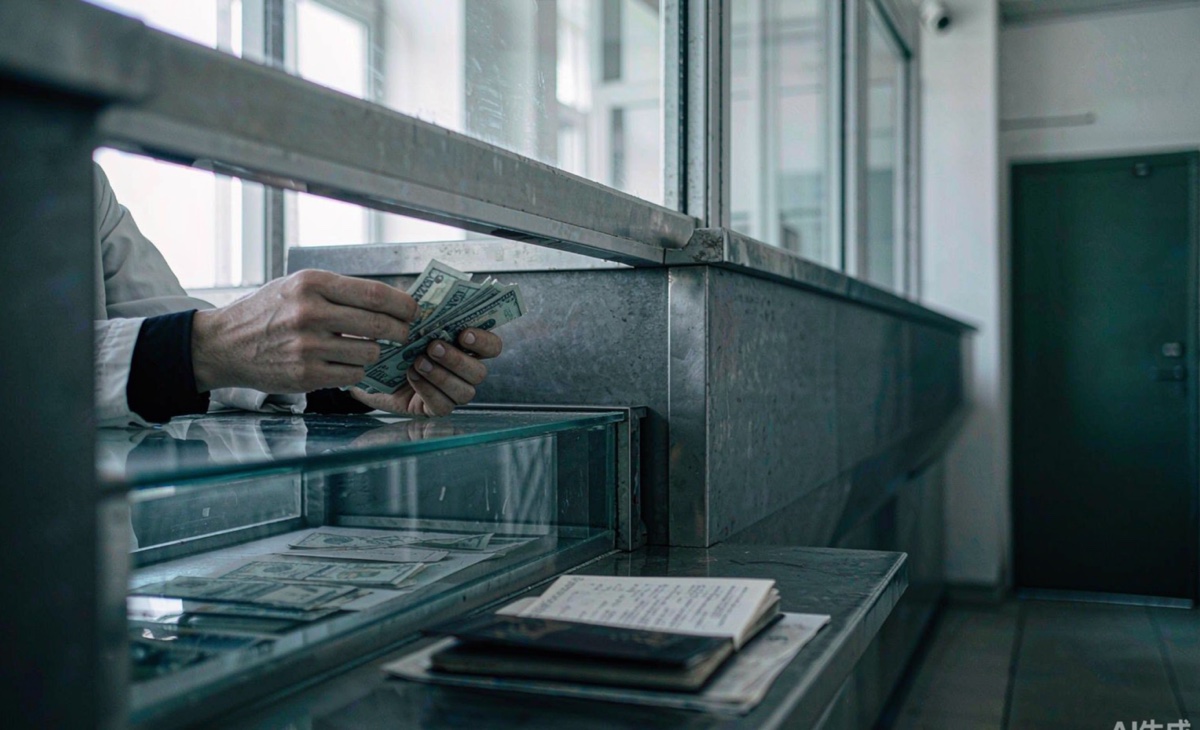
Four prices, one currency
a chinese branch window displays a small grid rather than a single rate. the columns are named from the bank's side of the trade, which is the first thing that confuses visitors: a buying price is what the bank pays you, a selling price is what you pay the bank. hand over dollars and take yuan and the bank is buying, so the buying column applies.
there are two buying columns and they differ. the settlement buying price covers money arriving as a transfer, a draft or a balance already on an account. the cash buying price covers notes on the counter. the second is lower, every time, at every bank, in every currency, and the reason is the vault.
the selling side has no such split. when the bank sells you foreign currency, the settlement price and the cash price are the same number. that asymmetry is worth remembering when you plan a trip out of China, because buying currency to carry abroad costs the same whether it leaves as a transfer or as notes, and it is only the return leg that penalises paper.
supervision sets how wide the gap may run for the dollar, and the allowance for notes is broader than the allowance for balances. for currencies other than the dollar there is no band at all and each bank sets its own spread, which is why a currency like the baht or the rupiah can show a wider difference between branches than the dollar ever does. comparing two banks on the same morning is not paranoia. it is the only free saving in the whole process.
one more column usually appears on the screen and it should be ignored for decision making. it is a reference rate derived from the interbank market, printed for information, and never the price you transact at. a rate you found on a phone app is almost certainly this one, which explains the recurring complaint that the counter quoted something different from what the app showed.
Three places that take foreign notes
the bank branch is the obvious one and the best equipped. bank of china handles the widest list, thirty-eight currencies at the counter as of its 2024 service guide, and a small exchange needs no account and no paperwork beyond the passport itself. that last point matters more than it sounds. a visitor without a Chinese bank account, without a local phone number and without a residence permit can still walk in, hand over notes and walk out with yuan.
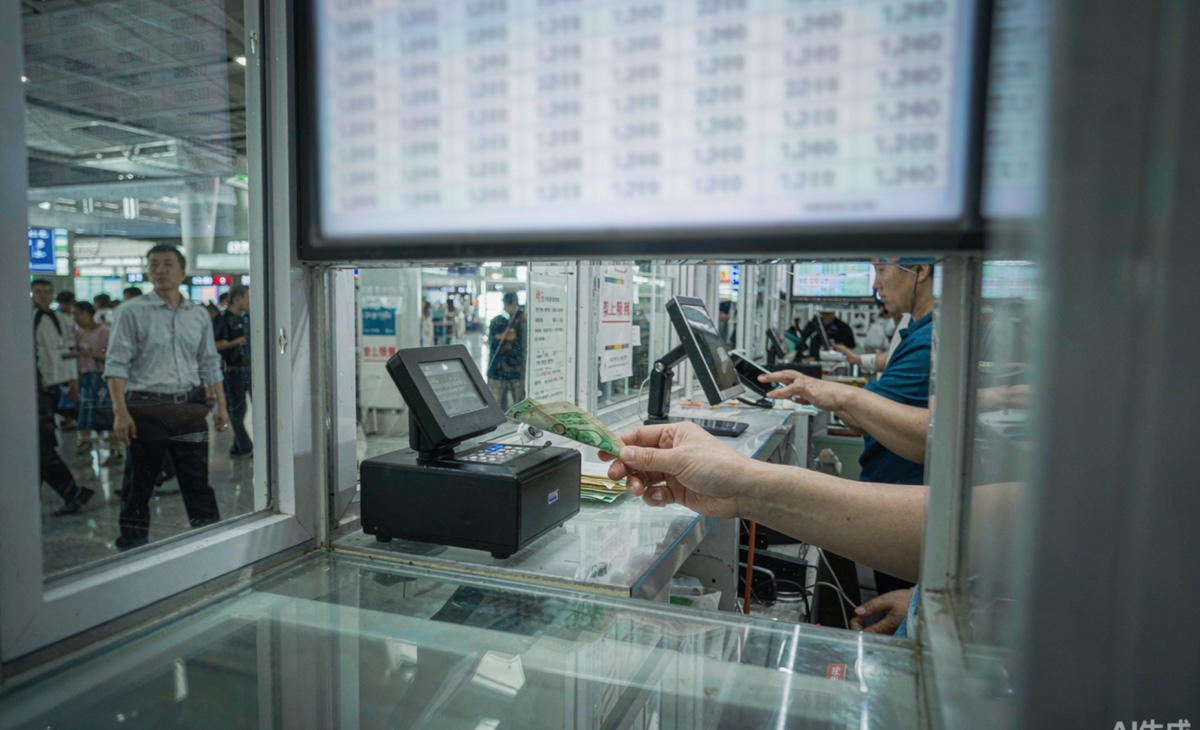
the second kind is the authorised counter, and most travellers meet it before they meet a branch. the same bank has authorised more than thirteen hundred hotel reception desks and airport exchange desks to handle foreign notes. these are convenient and they are capped, which is the subject of the next section.
the third kind is a machine. self-service exchange units sit in airports, at land border points and in hotel lobbies, take up to twenty currencies, and pay out either in yuan notes or into a digital yuan hardware wallet. the wallet option is the interesting one for anyone who would rather not carry a thick bundle, and the machine is the only place in this guide where a foreign note can become a stored balance without a human involved.
coverage is not uniform across the three. the bank's own notice says some currencies are handled at some branches only, and that the way to check is the phone line or the counter itself. a currency outside the common dozen is worth a call before a taxi ride, and worth arranging a day ahead if the amount is large, because a branch holds what it expects to hold and nothing more.
what none of the three will do is quote you a price in advance and hold it. the bank states plainly that rates move in real time and that a completed exchange cannot be reversed. the decision is made at the window, in the moment, with the number on the screen in front of you.
The ceiling at two of them
the authorised hotel and airport desks carry a limit that the branch window does not. the published figure is RMB¥10,000 per person per day and RMB¥50,000 per person per year. that is a rule about the desk, not about you, and its practical effect is that a traveller changing a large sum at an airport arrives at the cap quickly and then has to find a branch.
the branch window has no daily ceiling of that kind. what it has instead is the annual settlement allowance described further down, which is a much larger number expressed in dollars rather than yuan. the two limits are not the same instrument and they do not stack in the way people assume. one caps a desk. the other caps a person across every desk in the country.
customs adds a third number at the border, and this one is about carriage rather than exchange. bringing cash in, the declaration threshold is the equivalent of US$5,000 in foreign notes, and RMB¥20,000 is the ceiling on yuan in either direction. above the foreign threshold the declaration is compulsory rather than optional, and the channel to use is the red one with a printed or electronic form.
taking cash out has its own ladder. between the equivalent of US$5,000 and US$10,000 a permit is issued by a bank. above US$10,000 the permit comes from the foreign exchange authority instead. a traveller who has been in the country less than fifteen days and is leaving for the second time in that window is held to a much lower figure, which is the rule that catches people doing visa runs with a wallet full of notes.
there is one prohibition worth stating plainly because it is the one that carries a consequence beyond a refused transaction. splitting an exchange across several people or several days to stay under a threshold is treated as evasion, and the authority keeps a watch list for it. the penalty is not a fine at the window. it is the loss of the simplified channel on every future visit, which turns a five minute errand into a documented application.
The receipt that buys the money back
the single most useful document in this whole process is a thin slip of paper most travellers throw away. a visitor who changed too much and wants dollars back can do it, at a bank, using the original exchange receipt, and the window on that right is twenty-four months from the date of the exchange.
twenty-four months is far longer than any holiday and it changes the calculation at the start of the trip. over-changing is recoverable. the money does not have to be spent, given away at the airport at a bad rate, or carried home as a souvenir. it can be walked back into a branch on a later visit and turned into the currency it came from.
two small exceptions skip the receipt entirely. a same-day reversal of up to the equivalent of US$500 needs only the passport, and a reversal at a port-side counter before departure of up to US$1,000 needs only the passport. both are designed for the traveller who changes money at the last minute and immediately regrets it.
the practical instruction is therefore not to keep the receipt safe in the way one keeps a boarding pass. photograph it, and photograph it before leaving the counter, because the paper carries the transaction number the branch will look for and a bank cannot reconstruct a rate from a bank statement alone. the receipt is also the only proof of which counter you used, and the authorised desks and the branches are not the same counterparty.
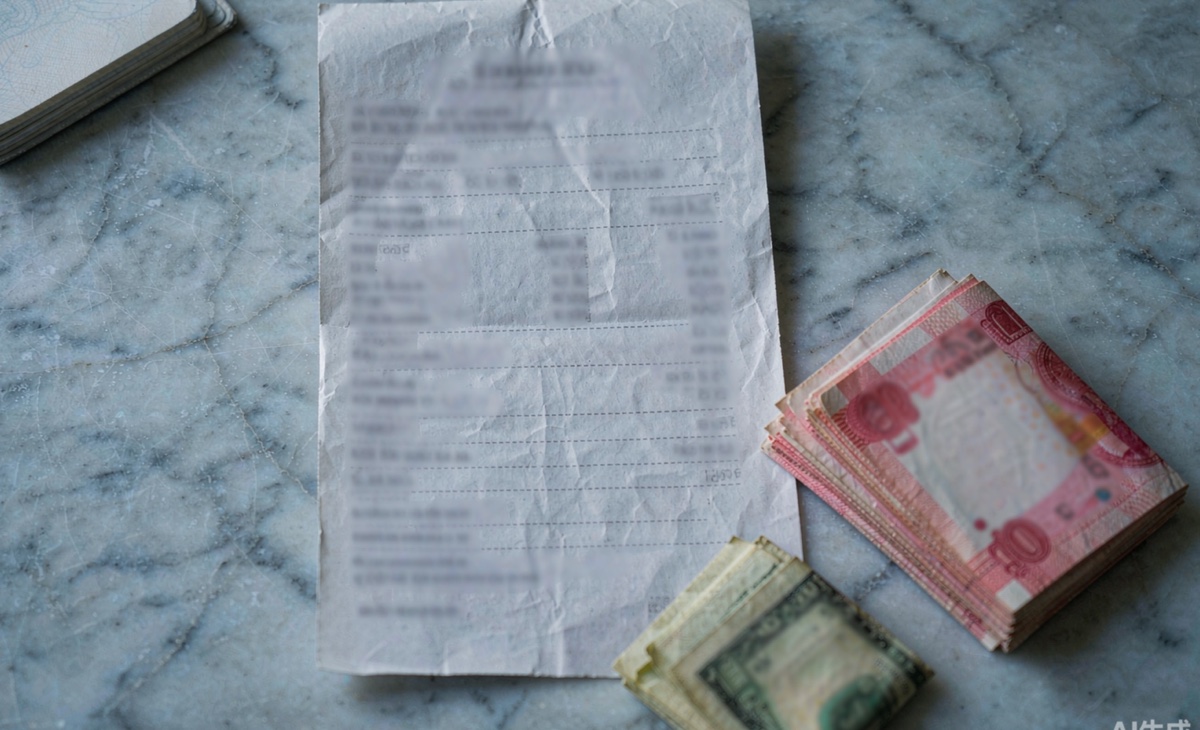
this is the point where the two ways of getting yuan diverge most sharply. a card withdrawal at a machine produces a slip that proves an amount, and the guide to a foreign card at a Chinese ATM covers the limits and the pin rules for that route. a cash exchange produces a slip that proves a rate. the second is the one that can be reversed.
A five-figure line that opens one way
china manages personal foreign exchange with an annual allowance rather than a hard prohibition, and the number attached to it is the equivalent of US$50,000 per person per year. inside that allowance a person can settle foreign currency into yuan, or buy foreign currency with yuan, on an identity document alone. outside it, the same transaction is possible but requires documents showing what the money is for.
the allowance is not symmetrical for visitors. a foreign national without a permanent residence card holds the settlement side of it and not the purchase side. converting incoming foreign currency into yuan is straightforward. converting yuan back into foreign currency is not covered by the allowance at all, and runs instead through the receipt route described above or through proof of a legitimate yuan income earned inside the country.
that asymmetry explains a complaint that appears in every forum about this topic: the bank let me change dollars into yuan at the airport without a word, and refuses to change the yuan back. the first transaction was inside an allowance. the second one never had an allowance to sit in.
two mechanical details sit underneath the number. the allowance resets on the first of january and unused room does not carry over, so a december exchange and a january exchange draw on two separate pots. and a settlement above the equivalent of US$50,000 in a single transaction does not pay out as cash at all, since the yuan proceeds must be transferred directly to the counterparty's account inside the country. that rule exists to stop large sums moving through a counter, and it applies to a visitor as much as to a resident.
the allowance also interacts with the paperwork that comes before a trip. money sent into china to fund a stay is covered separately, and the guide to sending money to China deals with the incoming leg and the account it lands in. a visitor who wired money in and then wants to change it should expect the bank to ask which of the two routes applies.
Which notes a counter will refuse
a counter takes paper, and it takes paper in good condition. a note that is torn, taped, written on, washed out, or from an issue withdrawn decades ago is a note a teller may decline, and the refusal is not negotiable at the window because the note cannot be flown out and settled.
the condition standard applies hardest to the dollar, which is the most widely held and the most widely counterfeited foreign note in the region. a folded hundred with a pen mark on the portrait is worth trying. the same hundred with a corner missing is worth taking to a second branch before giving up. a note from an old series may be accepted at one bank and refused at the next, and there is no published list that settles the question in advance.
coins are a separate matter and the answer is almost always no. foreign coin is not handled at the counter in the way notes are, which makes the small change left over from a previous trip effectively worthless in china. it is worth spending before boarding rather than carrying across a border.
the other refusal is about availability rather than condition. a currency outside the common set may be a currency the branch simply does not stock, and the notice is explicit that some are handled at selected outlets only. calling the bank's line first costs nothing and saves a wasted morning.
Five minutes at the window
the transaction itself is short. the passport goes across the counter, a form gets filled in with the amount and the currency, the teller counts the notes twice, and the screen shows a rate to confirm. the confirmation is the step that matters, because the rate is locked at that moment and the bank states that a completed exchange cannot be undone.
there is no account to open and no local phone number to give for a small exchange. that is the part foreign guides most often get wrong, usually by describing the account opening process and implying it is a prerequisite. it is not. the guide to opening a Chinese bank account covers that separate errand, which is worth doing for other reasons and is not needed for this one.
two habits make the visit smoother. count the yuan before stepping away from the glass, since a short count discovered at the door is a much harder conversation than one discovered at the counter. and ask for a mix of denominations rather than a stack of hundred yuan notes, because a hundred is awkward at a noodle shop and change is not always available early in the morning.
bring the passport itself rather than a photograph of it. the document is verified at the counter and a photocopy is not a substitute, which is the same rule that applies at a hotel desk and at a train station ticket window.
How much cash is worth carrying
the honest answer for a first visit is less than most people bring. card acceptance at hotels, airports and large retail has widened considerably, mobile payment handles nearly everything else, and the guide to paying in China sets out how a foreign card sits inside that system. a wallet of yuan is a backup rather than the main instrument.
cash still earns its place in a few situations. street stalls and morning markets run on it. temples and small attractions often take it when the card terminal is down. rural transport, some taxis in smaller cities, and anything involving a queue of people who all pay with a phone will occasionally leave a foreign card out of the loop. a few hundred yuan in small notes covers all of those cases.
the currency to bring is the one your bank at home sells cheapest, not the one you think china prefers. the counter converts whatever arrives, and the dollar is not privileged at a chinese window the way it is in some neighbouring countries. euros, pounds, yen, won and the rest of the list are handled on the same terms, with the dollar's only advantage being the narrower supervisory band on its spread.
and the sum to bring in is capped by the declaration threshold rather than by common sense. anything above the equivalent of US$5,000 in notes has to be declared at the border, and a traveller who would rather not explain a large bundle at customs has a simpler option in the machine on the wall. the arithmetic of that choice, including what an overseas issuer charges per withdrawal, is in the ATM guide linked above.
one last item belongs with the cash rather than in a separate article. the refund counter at departure hands back value added tax in yuan, sometimes in cash, sometimes to a card, and the guide to the departure refund covers which counter pays which way. money received there in yuan at the end of a trip is money that can go straight back through the receipt route if it is not spent.
Common questions
Where is the best place to change money in China?
A bank branch, for the rate and for the absence of a daily cap. Airport and hotel desks are convenient and limited to RMB¥10,000 per person per day. The branch also handles the widest list of currencies.
Can I change money at the airport in China?
Yes. Authorised airport desks handle foreign notes, are capped at RMB¥10,000 per person per day and RMB¥50,000 per year, and are the most expensive place to do it in terms of convenience rather than price.
Do I need my passport to exchange currency?
Yes, the document itself. No account, no local phone number and no residence permit are needed for a small exchange. A photograph of the passport is not accepted.
Why is the rate at the counter worse than the rate I saw online?
The online number is usually the reference rate derived from the interbank market. The counter applies the cash buying price, which sits below the settlement buying price because notes cost the bank money to store and ship.
Can I change leftover yuan back into dollars?
Yes, with the original exchange receipt, for twenty-four months from the exchange date. Up to the equivalent of US$500 on the same day, or US$1,000 at a port counter before departure, needs only the passport.
How much foreign cash can I bring into China?
Above the equivalent of US$5,000 you must declare it at customs. Yuan is capped at RMB¥20,000 in either direction. Amounts above US$10,000 leaving the country need a permit from the foreign exchange authority.
Is there an annual limit on changing money in China?
For a foreign visitor, the settlement side carries an annual allowance of the equivalent of US$50,000. The purchase side does not extend to visitors without a permanent residence card, which is why yuan can be harder to convert back.
Will Chinese banks accept old or damaged foreign notes?
Often not. Torn, taped, marked or withdrawn-series notes may be refused because they cannot be settled abroad. Try a second branch before giving up, and expect foreign coins to be refused outright.
Can I pay with US dollars in China?
Almost never. Prices are in yuan and merchants are not obliged to accept foreign notes. A few hotel desks will take dollars at a poor rate. Everything else runs on yuan or a phone.
Is it cheaper to use an ATM or a currency counter?
It depends on what your bank charges. A card withdrawal avoids the cash buying spread and may add a fixed fee plus a conversion margin from the issuer. A cash exchange pays the spread once, visibly, with no fee line. Compare the two totals rather than the headline rate.