A 1993 customs list names psychotropic drugs as prohibited goods. A State Council regulation, revised in January 2025, lets a patient carry one prescription's worth through the same gate. Both are current. Which one the officer applies depends on the bottle in front of him.
if you take a daily medicine and you are flying into china, the answer depends less on the drug than on which list it sits in. three lists decide the outcome: the prohibited goods list issued by customs, the catalogue of narcotic and psychotropic substances, and the prescription rules that set how much a single prescription may legally contain. most travellers have never seen any of the three, and most guides describe only the third.
the reassuring part is real. chinese law does not forbid a traveller from arriving with their own medication, and customs answers published on the service's own site say so plainly. the difficult part is narrower than the internet suggests. a routine blood pressure tablet and a bottle of attention deficit medication are not the same file at the border, even when both come with a valid prescription from home.
what follows is written from the two documents that actually get applied, plus the customs service's own published replies. it is not medical advice, and it cannot substitute for what the officer in front of your bag decides on the day.
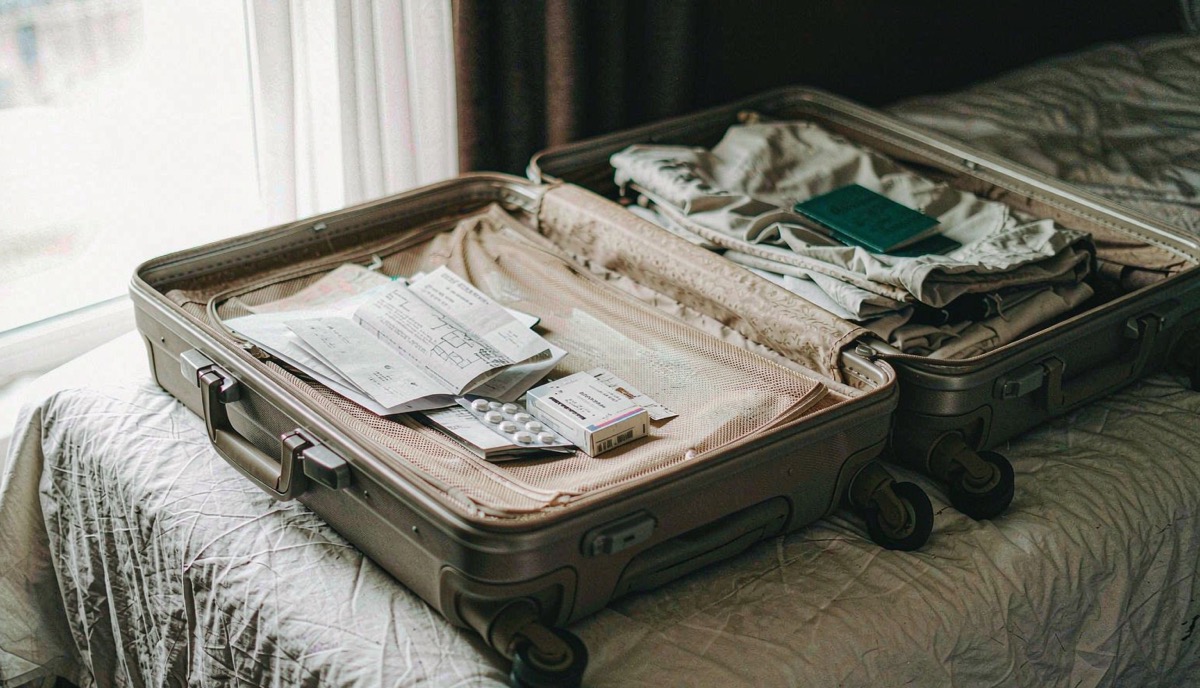
Two lists, and one of them is an exception
the first list is short and absolute. the prohibited goods schedule, issued as customs order no. 43 in february 1993 and still cited by customs offices today, puts opium, morphine, heroin, cannabis and other dependence-forming narcotics and psychotropic substances in the prohibited-for-import column. read on its own, that sentence says a sleeping pill in your wash bag is contraband.
the second document opens the door. article 44 of the regulation on the administration of narcotic and psychotropic drugs, first issued in 2005 and amended with effect from 20 january 2025, provides that a person who needs a narcotic or a class one psychotropic drug for treatment may carry an amount within the maximum quantity of a single prescription, on the strength of a medical diagnosis issued by a medical institution and their own identity document, and that customs releases it on the principle of personal use and reasonable quantity.
so the ban list is the default and article 44 is the door in it. the door has a width, and the width is a prescription, not a bottle, not a three month supply, and not a friend's worth. everything practical in this guide follows from that one measurement.
the second paragraph of article 44 explains a misunderstanding that costs people money and time. it requires a certificate issued by a provincial drug regulator, but only from medical staff carrying a small quantity for medical work. a patient carrying their own tablets is handled under the first paragraph and needs a diagnosis and an identity document, not that certificate. travellers repeat the certificate requirement to each other for years because the two paragraphs sit next to each other in the same article.
the third category is the one article 44 does not mention at all. class two psychotropics, which is where most sleeping pills and anti-anxiety tablets land, fall outside the article's scope, so the general rule for personal medicines applies. an answer published by xi'an customs in the service's own question channel says the prescription quantity for class two drugs may be extended appropriately, which is a softer line than the one drawn for class one.
everything else, meaning the ordinary prescription drugs that fill most wash bags, sits under article 39 of the measures on imported drugs: a traveller may carry a small quantity for personal use, within personal use and reasonable quantity, and under customs supervision. no list, no certificate, no drama, as long as the quantity still looks like a person's own supply.
How many days a legal carry actually is
the regulation says single prescription maximum and leaves the number to the health ministry's prescription rules. article 23 of those rules sets it by dosage form. a narcotic injection is one dose per prescription. a controlled-release preparation is no more than seven days. any other form is no more than three days. class one psychotropics follow the same three figures, with one addition that matters to families: methylphenidate prescribed for a child's attention deficit disorder may run to fifteen days.
class two psychotropics are capped at seven days generally, with a note that a doctor may extend it for a chronic condition and record the reason.
customs publishes a matching rule of thumb in its own public information. prescription drugs are generally no more than seven days of use, narcotic and class one psychotropic injections are one dose, and other dosage forms generally no more than three days.
put together, the numbers read like this. a month of blood pressure tablets is an ordinary prescription and the seven day figure is guidance rather than statute. a month of extended-release methylphenidate is three to four times a legal single prescription. a month of ordinary-release methylphenidate tablets is ten times one.
there is a second standard running alongside the first, and it is the one that decides close cases. reasonable quantity is defined in the customs penalty rules as the normal quantity determined by the officer according to the traveller's circumstances, purpose of travel and length of stay. a visitor with a two week itinerary and a resident with a year long permit are not the same person at that counter, and the same box of tablets can be reasonable for one and excessive for the other.
| Category | What article 44 covers | Quantity per prescription |
|---|---|---|
| Ordinary prescription drug | No, falls under the general personal medicine rule | Personal use, reasonable quantity; customs guidance is generally seven days |
| Class two psychotropic (most sleeping and anti-anxiety tablets) | Not covered by article 44 | Seven days as prescribed, extendable for a chronic condition with the reason recorded |
| Class one psychotropic, tablet | Yes | Three days |
| Class one psychotropic, controlled release | Yes | Seven days |
| Methylphenidate for a child with ADHD | Yes | Fifteen days |
| Narcotic injection | Yes | One dose |
Where the ADHD drugs sit
this is the group that generates the most searches and the most anxiety, and the classification is not ambiguous. the drug regulator, the police and the health ministry reissued the medical use catalogue on 21 july 2025, effective on publication, and class one now contains eighteen substances: amphetamine, dexamfetamine, levamfetamine, methylphenidate including its mixed salts, ketamine, secobarbital, triazolam and a short list of others.
the common american stimulant products are built on exactly those first substances. the drug regulator's own public article on so-called smart drugs names ritalin, modafinil and adderall as strictly controlled substances in china, and describes the first as methylphenidate and the third as dexamfetamine. a valid foreign prescription does not reclassify the molecule. it only supplies the diagnosis that article 44 asks for, and the quantity still stops at the prescription limit.
the 2025 catalogue looks dramatically shorter than the 2013 version, which listed sixty eight class one substances, and that is the detail most likely to be misread. the count fell because the regulation was rewritten in january 2025 to split substances into a medical track and a non-medical track. substances with no accepted medical use moved to a separate police-led catalogue where production, sale and use are barred outright. nothing was liberalised. the eighteen that remain are the ones a hospital may still prescribe, under the same controls as before.
one name change inside that list is worth knowing for search purposes only. methylphenidate is now written with a different character in chinese, aligning the drug catalogue with the pharmacopoeia. the substance, the class and the rules are unchanged.
inside china the same molecules are available, on a narrower path. class one psychotropics may not be sold at retail at all under article 30 of the regulation, so there is no pharmacy counter and no online order. methylphenidate comes through a hospital psychiatric prescription, usually after an assessment rather than on presentation of a foreign script. what a hospital visit looks like, including registration and payment order, is set out in the guide to seeing a doctor in China.
What goes in the bag, and what to say at the desk
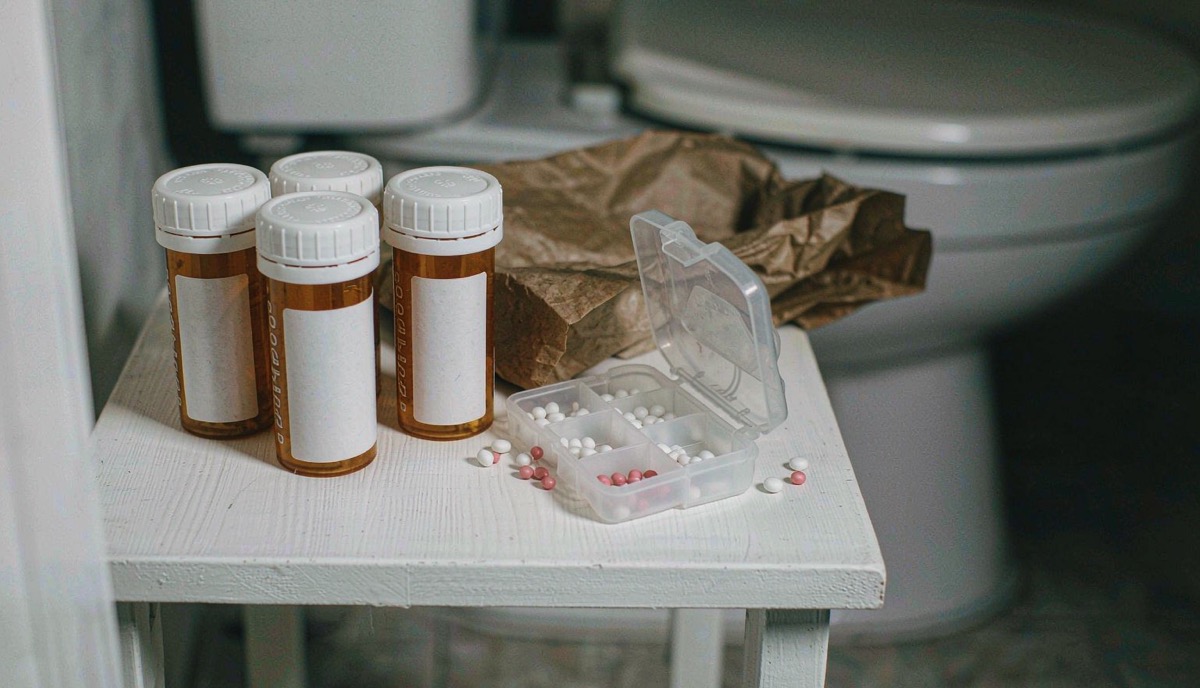
pack the original box with the pharmacy label intact. a weekly pill organiser is the single most common self-inflicted problem, because an unlabelled tablet cannot be identified at a counter, and identification is the entire conversation. if space is tight, decant the tablets into a smaller bottle but keep the printed label and the leaflet with it.
carry three papers: the prescription itself, a diagnosis letter from the treating doctor, and a short English list of what you take and why. the customs reply published by kunming customs names a written certificate from a medical institution and the original valid prescription as what the officer will look at. a name on the prescription that matches the passport removes the next question before it is asked.
keep it in the cabin bag. checked holds run cold, and a delayed suitcase can put a daily medicine a day or two out of reach. injectables such as insulin travel with the prescription and will be opened and inspected at security, which is routine rather than adversarial.
then declare. the customs service names two channels in its own reply: the declaration counter in the arrivals hall, or the customs traveller service mini program, where the drug name and purpose are entered in advance. walking the green channel with a controlled substance in the bag converts a two minute conversation into an enforcement file, and the difference is entirely the declaration.
the script at the counter is three sentences. it is mine, here is the diagnosis, this is the amount for the length of my stay. officers are not looking for a reason to seize a traveller's own tablets. they are looking for a reason to believe the tablets are not the traveller's own, and paperwork answers that question faster than any explanation.
What happens if you say nothing
most arrivals walk through nothing to declare, and most of the time nothing happens. the risk is a bag scan and a selection, and what follows is not a tax assessment. a psychotropic substance sits in the prohibited column of the 1993 schedule, so the file starts as a prohibited goods case rather than a duty case, and it can move from an administrative penalty to a criminal referral depending on the substance and the quantity.
the criminal side is unusually harsh by design. article 347 of the criminal law makes smuggling, trafficking, transporting or manufacturing drugs a criminal offence regardless of quantity, which means there is no threshold below which a prosecution becomes impossible. the heaviest band, fifteen years to life or death, starts at one kilogram of opium or fifty grams of heroin or methamphetamine. the lightest band, up to three years, still covers small quantities.
the sentence that ties the two documents together is article 357, which defines drugs to include narcotic and psychotropic substances under state control that can produce dependence. a bottle of tablets is therefore not automatically outside the definition, and the classification of the molecule plus the quantity is what decides which side of it a case falls on.
none of this describes the ordinary declared traveller with a diagnosis. it describes the case where the answer at the counter is evasive, or the quantity is commercial, or the packaging has been stripped of anything that identifies it.

Why a parcel fails
the question that follows every failed carry attempt is whether the family can post the rest. for controlled medicines the answer is no, and the reason is structural rather than bureaucratic. article 54 of the regulation requires the sender of a mailed narcotic or psychotropic drug to produce a permission certificate issued by the municipal drug regulator, requires the post office to inspect and retain that certificate, and forbids the post office from accepting the parcel without it.
the certificate is not something a patient can obtain. a shanghai service guide for the same permit lists the eligible applicants as licensed manufacturers, distributors, medical institutions and research bodies, requires business licences and drug permits as supporting documents, and states that the recipient must be a unit. the scheme exists for institutions moving stock, not for families moving a prescription.
ordinary prescription drugs are a different and less absolute case, but posting them is still not a substitute for carrying them. personal postal articles enter under a value ceiling and are subject to inspection and tax, and a three month supply of anything is a parcel that can be held, opened or returned. the practical version is that a traveller should arrive with what the trip needs, and plan a local prescription for anything longer.
CBD, codeine, and the herbal shelf
three categories cause more seizures than the stimulants people worry about, and each has a simple reason.
cannabis and everything derived from it sit in item five of the prohibited schedule, and china has no medical cannabis channel, so there is no prescription that converts a cannabis product into a permitted import. cbd oil, gummies and vape cartridges are treated as the same category as the plant, and the absence of psychoactive effect is not a defence written into the rule.
codeine is a narcotic in the chinese catalogue, and codeine-containing cough preparations are controlled medicines rather than ordinary pharmacy items. a bottle carried for a cough, without a prescription, is exactly the case article 44 was written to filter.
patent medicines containing endangered animal or plant ingredients are prohibited regardless of quantity and regardless of purpose, which catches some traditional preparations sold openly elsewhere. the same logic applies to unlabelled, expired or repackaged products: they cannot be identified, so they cannot be released.
Getting a refill inside China
the refill question splits by class. class one psychotropics are hospital only, so the route is a psychiatric outpatient appointment, an assessment, and a prescription dispensed inside the hospital. bring the foreign records and the diagnosis letter, translated, and expect the appointment to be a fresh evaluation rather than a transcription of the old prescription. appointment mechanics, the registration desk and the payment sequence are covered in the doctor guide linked above.
class two drugs are more available: a prescription from a hospital doctor can be filled at a designated pharmacy, generally seven days at a time, and the pharmacy keeps the prescription on file. ordinary repeats are the easiest of the three, filled at any hospital pharmacy or chain with a local prescription.
two planning notes are worth more than any of this. the first is that a daily medicine is a pre-existing condition, and travel insurance generally excludes pre-existing conditions unless the policy says otherwise, which the guide to travel insurance for China sets out in detail. the second is that the packing list that works for a two week trip is the wrong list for a six month stay, and the guide to what to pack for China covers the rest of the bag.
Common questions
Can I bring my prescription medicine to China?
Yes, for your own use and in a reasonable quantity, with the original packaging and a prescription or a diagnosis letter. Controlled substances fall under article 44 of the narcotics regulation and are limited to the maximum quantity of a single prescription.
How many days of medicine can I carry?
Ordinary prescription drugs follow a reasonable quantity standard that customs guidance puts at about seven days. Class one psychotropics are three days for tablets, seven for controlled release, and fifteen for methylphenidate prescribed to a child. Narcotic injections are one dose.
Do I need the certificate from a provincial drug regulator?
Only medical staff carrying a small quantity for medical work need it. A patient carrying their own medicine needs a diagnosis from a medical institution and an identity document, not that certificate.
Is Adderall legal in China?
Its active substances, amphetamine and dexamfetamine, are class one psychotropics in the July 2025 catalogue, and the drug regulator names the product among strictly controlled smart drugs. A foreign prescription supplies the diagnosis that article 44 requires, but not an exemption from the quantity limit.
Can my family post my medicine to me?
Not if it is a narcotic or psychotropic. Mailing one requires a permit issued to an institution by the municipal drug regulator, the post office may not accept the parcel without it, and the recipient must be a unit rather than a person.
Do I have to declare pills at customs?
Declare anything controlled. The customs service names the declaration counter and its traveller service mini program as the two channels, and a declared bottle with a diagnosis is a conversation rather than a case.
Can I get the same medicine in China?
Methylphenidate products are available through a hospital psychiatric prescription, usually after a new assessment. Class one drugs are never sold at retail. Class two drugs can be filled at designated pharmacies on a local prescription.
What about CBD oil or medical cannabis?
Cannabis is in the prohibited import list with no medical exemption, and China has no legal medical cannabis channel. Oils, edibles and cartridges are treated as the same category as the plant.