A passport is enough to register. The national average outpatient visit at a tier 3 public hospital was RMB¥376.5 between January and August 2025, about US$53. Registration alone runs RMB¥50 to 100 at Peking Union Medical College Hospital, and RMB¥600 to 900 in its international department, where the staff speak English.
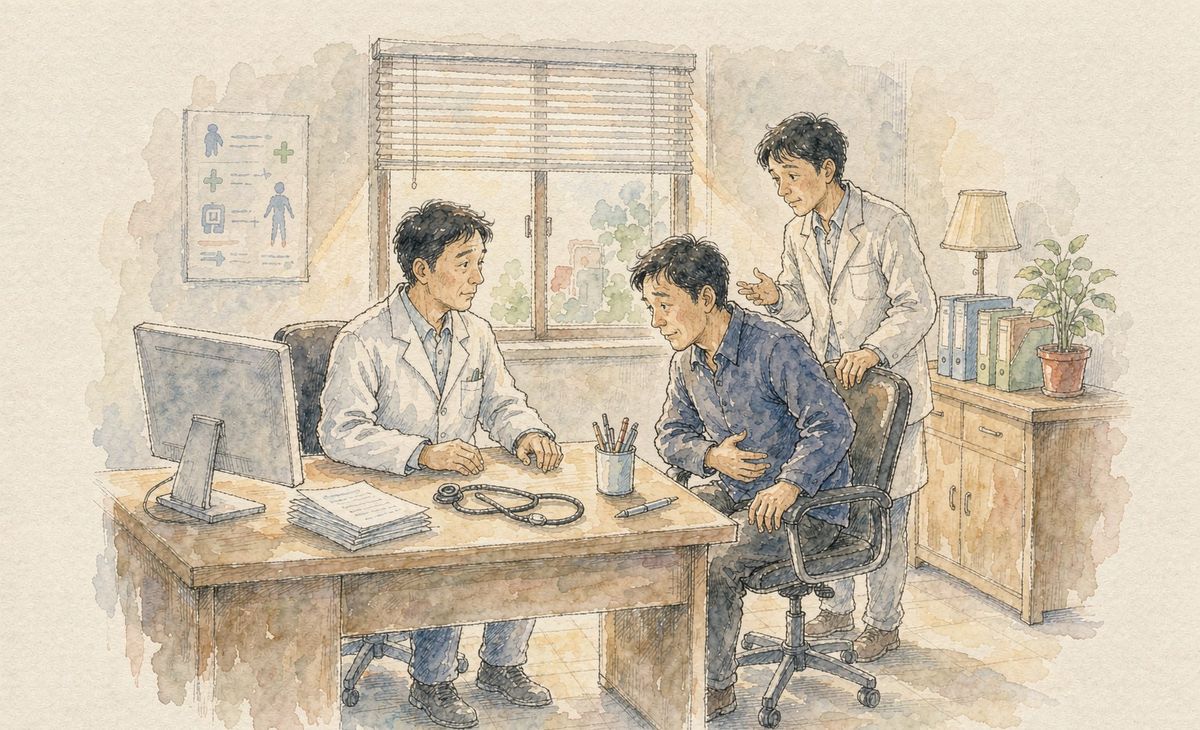
most guides to chinese healthcare start with famous hospital names. that is the wrong end of the problem. what decides your day is not prestige but status: a tourist, an international student and an employee with a work permit enter the system through different doors, and each door changes who pays, which documents unlock it, and what happens if you cannot pay. only after you know your door does the loop itself matter, because inside the hospital every visit runs the same sequence, and nobody ever hands you a single final bill. every figure below traces to the national health commission, the ministry of human resources and social security, or beijing's official booking service, checked 18 october 2026.
the companion piece to this one is the travel insurance guide, which covers what no policy covers and how to buy one after landing. this page is about the ground the policy lands on: how the system actually behaves once you are standing in it. if you are still deciding what to bring, start with the pre-departure checklist.
Three doors: what your status changes
china treats medical payment as a status question before it treats it as a money question. the table below is the whole article in one view:
| who you are | who pays | the rule behind it |
|---|---|---|
| tourist, visa-free visitor, business traveler | you, at every step, cash or QR | no chinese visa category or the 30-day visa-free entry asks for an insurance certificate, so nobody checks; you pay out of pocket and claim back from a travel policy if you bought one |
| international student, stay over 6 months | you, through a mandatory group policy | ministry of education order no. 42 requires every international student to hold insurance; no policy, no registration, and enrolled students get suspended from re-registration until they buy one |
| employee with a work permit | employer plus you, through social insurance | mohrss order no. 16 obliges your employer to enroll you in the five social insurance schemes, including employee medical insurance, within 30 days of your employment permit |
the employee door is the one almost nobody mentions, and it is the strongest: enrollment is not a perk your employer can skip, it is the law, with a 30-day deadline attached to your employment permit. once enrolled you carry the same local medical insurance a chinese colleague carries, and the discounted price appears automatically when you present your social security card at a registered hospital. the tourist door is the weakest, which is exactly why the insurance guide exists.
The real price of a visit
the national health commission publishes averages every month, and they are more useful than any anecdote because they cover the whole country:
| item | tier 3 hospital | tier 2 hospital |
|---|---|---|
| average outpatient visit, all fees in | RMB¥376.5, about US$53 | RMB¥232.6, about US$33 |
| average inpatient stay, all fees in | RMB¥11,575.7, about US$1,620 | RMB¥5,708.4, about US$800 |
| average length of stay | 7.5 days | 9.0 days |
registration at beijing union medical college hospital, the hospital foreigners name most often, shows how the tiers inside one building work: a standard outpatient consultation runs RMB¥50 to RMB¥100 depending on the doctor's rank, the special-needs clinic RMB¥200 to RMB¥300, and the international medical department, with english-speaking staff and longer slots, RMB¥600 to RMB¥900. that spread, from a US$7 consultation to a US$126 one, is the same hospital. what changes is the queue, the language, and the time the doctor can spend on you.
one rule changed the cash flow of the whole system in 2025: since 31 march, public hospitals no longer collect outpatient deposits, and since 30 june inpatient deposits are capped at the average personal share of a same-condition stay. before that rule, hospitals commonly asked for deposits up front just to be seen. the final bill was never affected, but the money you had to hand over before treatment was, and that is the part a visitor feels.
Choosing the hospital tier
hospitals sit on an official six-grade scale, from tier 1 to tier 3, each split into grades, with tier 3 grade A (sanjia) at the top. the number of grades matters less than the trade it buys:
| setting | what it is | when it makes sense |
|---|---|---|
| tier 3 grade A public hospital (sanjia) | the top of the scale, specialist departments, research hospitals like PUMCH; crowded but complete | anything serious, anything unclear, specialist care; expect crowds and a fast-paced consultation |
| tier 2 district hospital | smaller, calmer, cheaper on average (RMB¥232.6 per visit nationally) | straightforward issues you can name: a fever, a sprain, a follow-up |
| community health center | neighborhood clinics for colds, injections, prescription refills, check-ups | minor complaints when you want speed over depth |
| international medical department of a public hospital | a private-feeling wing inside a public hospital; english staff, longer appointments, market pricing | you want public-hospital competence with manageable language friction, and can pay RMB¥600 to RMB¥900 to register |
| private international hospitals | foreign-oriented hospitals priced at market rates, usually the priciest option | you want a familiar experience and direct billing with an international insurer |
a reasonable default for a short visit: community center or tier 2 for anything you can name, sanjia or an international department for anything you cannot. beijing has built a middle path worth knowing about: as of the end of 2025, 86 tier-2-and-above hospitals and pilot institutions there accept international commercial insurance directly, and 156 institutions offer full foreign-language service, per the city's international medical services program.
Booking with a passport
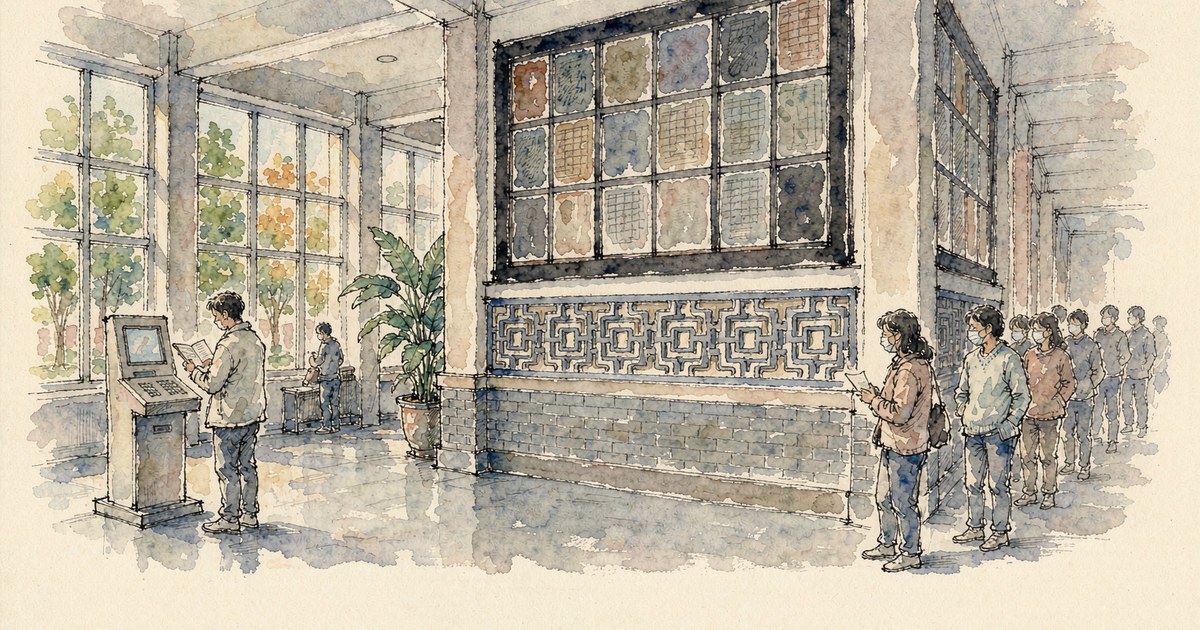
the booking systems were built around chinese ID numbers, and that is the single biggest friction point for foreigners. beijing's government answered it directly in an official Q&A published 16 october 2025: foreigners can book through the english version of the 114 appointment platform, and fifteen hospital campuses provide a fully english online booking flow, including PUMCH, Peking University Third Hospital, Xuanwu, Fuwai, Tiantan, three campuses of Jishuitan, and Tsinghua Changgung. the city's wider program has since pushed the english booking option to 41 hospitals.
outside that list, the normal path is the hospital's own WeChat mini program or app. three practical notes:
- real-name means real-name. bookings are tied to your identity, so your name spelling in the app must match your passport exactly. a mismatch between booking profile and passport is a common reason a kiosk cannot find your record.
- the first visit often needs a counter. many systems verify a passport in person before online booking works, so arrive early and register at a staffed window; after that, the app flow usually unlocks.
- verification codes go to chinese numbers. some apps send codes only to +86 phones. if you use an eSIM or a roaming number, either pick a hospital on the 114 english list or plan to book in person.
The loop every visit follows
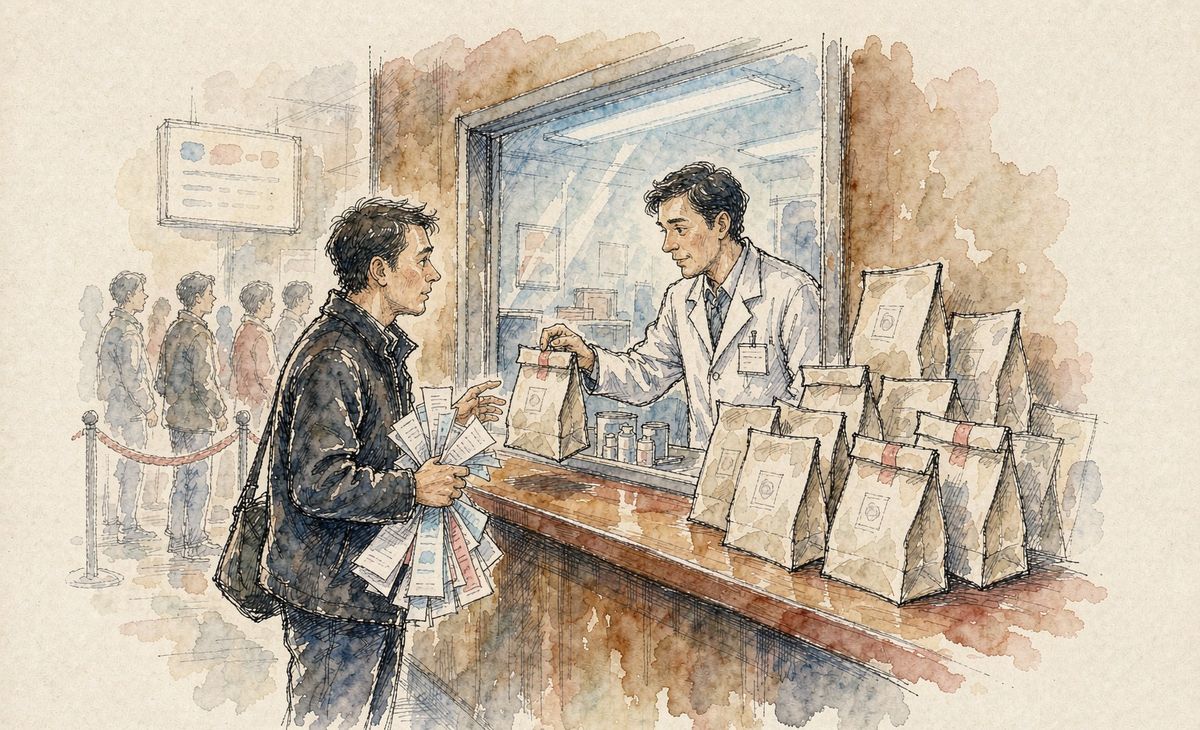
inside the hospital, visits run one way: register, wait, consult, pay, test, pay again, return to the doctor, collect medicine, leave. payment happens before each service, not after, and there is no final bill at the end. the sequence trips visitors up at three points:
- check-in after booking. an appointment does not automatically queue you. at arrival you check in, at a kiosk or in the app, and only then does the consulting queue see your name. skip the check-in and the queue never calls you.
- pay before every step. the doctor hands you test orders or a prescription, you pay at a machine or by scanning a QR code, then the lab or pharmacy accepts you. payment apps work here the same way they work everywhere else in china; the Alipay guide covers setting one up before you need it.
- same-day results. most outpatient tests finish the same visit and you carry results back to the same doctor. electronic reports land in the hospital's mini program within days, and kiosks print copies on site.
consultations in public hospitals are brief, sometimes a few minutes, because the doctor may see dozens of patients in a session. bring a written, translated summary of your symptoms, current medications and allergies, and hand it over at the start. a live translation app covers the rest for most routine visits.
Emergencies: 120 and the no-refusal rule
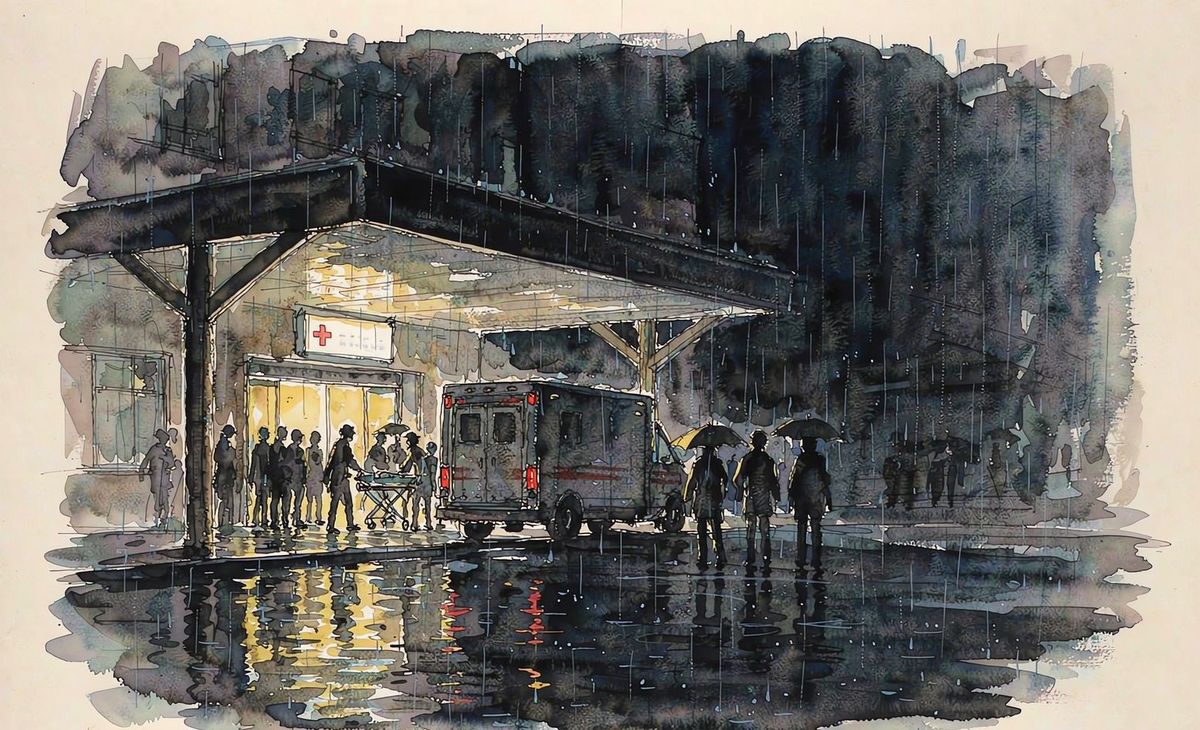
the ambulance number is 120, staffed around the clock. the regulation behind it, the pre-hospital medical aid management measures, puts two things in writing that matter to a visitor: dispatch centers must staff 120 around the clock, and ambulance services may not refuse or delay care because of payment questions. the crew takes the patient to the nearest appropriate hospital rather than the one you would pick, which is the correct trade in an emergency and a reason to keep your passport and payment method on you, not in the hotel.
for emergencies, walk into the emergency department (jizhen) directly; it runs 24 hours and does not use the booking system. for anything urgent but not an emergency, remember that a taxi or a ride-hail to a tier 2 emergency department is often faster than waiting for an ambulance across clogged traffic, a trade the safety guide also makes for police matters. the national emergency numbers are 110 for police, 119 for fire, 120 for medical, 122 for traffic accidents.
Paperwork for the insurance claim
everything in the loop produces a slip of paper, and the slips are the claim. the set an insurer or a corporate reimbursement desk asks for:
- the official fee receipt (fapiao) issued for every payment, one per transaction
- the printed medical record from the consultation, which you must request; doctors enter notes into a system that does not print them by default, so ask before leaving the room
- a diagnosis certificate, issued on request at a service window, with the hospital stamp
- the itemized cost list for any inpatient stay, plus discharge summary
- test and imaging reports, printed at the kiosks even when the electronic version exists
photograph every slip the moment you receive it, and keep the paper versions; claim systems accept copies, but originals resolve disputes. if you hold the inbound visitor policy from the insurance guide, these five items are exactly what its claim form asks you to upload.
Five half-day losses, and how to skip each
the pattern behind most wasted mornings is administrative, not medical:
- wrong campus. big hospitals spread across three to five campuses, and the department you booked may not be on the one you walked into. check the campus name in the booking confirmation, not just the hospital name.
- booked but never checked in. the kiosk check-in activates your queue slot; skipping it means waiting forever in a line that will not call you.
- name mismatch. passport spelling versus app profile spelling. keep one spelling everywhere.
- no chinese phone number. verification codes and some kiosks assume a +86 number. the counter solves it; so does booking on the 114 english platform.
- self-triage into the wrong department. when unsure which specialist fits, book general practice (quanke yixue) where the hospital offers it, and let the doctor route you; a wrong department costs a re-registration fee and an afternoon.
one more that costs money rather than time: antibiotics sit behind prescriptions in china, classified as prescription-only medicines that a pharmacy is not supposed to sell without a doctor's order, so the pharmacy workaround people remember from other countries does not reliably exist. if you expect to need a specific prescription medicine, bring it, with the prescription or a doctor's letter, and check the packing guide for the rules on carrying medicines in.
Common questions
Can a foreigner register at a Chinese hospital with just a passport?
yes. the passport is the identity document at registration, and beijing's official Q&A confirms foreigners book through the 114 platform's english version, with fifteen campuses offering a full english flow as of october 2025. many hospitals verify a passport in person at a staffed counter on the first visit before their app flow works, so budget extra time on visit one.
How much does it cost to see a doctor in China?
the national average for a full outpatient visit at a tier 3 public hospital was RMB¥376.5 in january to august 2025, about US$53, and RMB¥232.6 at tier 2. registration alone runs RMB¥50 to RMB¥100 at PUMCH, rising to RMB¥600 to RMB¥900 in its international department. an average inpatient stay at tier 3 is RMB¥11,575.7, about US$1,620.
Do I need to speak Chinese to see a doctor?
not on the fifteen english-flow campuses in beijing, and not at international medical departments, which staff english speakers. elsewhere, a translation app plus a written symptom summary covers most routine visits. beijing counts 156 institutions with full foreign-language service under its international medical program.
Can I pay at a Chinese hospital with Alipay, WeChat Pay, or a foreign card?
Alipay and WeChat Pay are the standard at payment machines, windows and pharmacy counters, which is why the payment setup belongs on your pre-arrival list. some counters still want cash for passport-based payments, and foreign bank cards are accepted inconsistently at hospital terminals, so keep a cash fallback of a few hundred RMB.
What does 3A (sanjia) hospital mean, and does the grade matter?
it is the top grade on china's official six-grade hospital scale, and it signals the deepest specialist coverage and the heaviest research load. the grade matters for complex or unclear conditions; for a fever or a prescription refill, a tier 2 hospital or community health center is faster and cheaper, with the national average visit at RMB¥232.6.
When should I call 120 instead of taking a taxi to the hospital?
call for anything involving collapse, chest pain, breathing trouble, heavy bleeding, head injury, or when moving the person could make it worse. the dispatcher sends the nearest appropriate unit, the service runs 24 hours, and the rules prohibit refusing or delaying dispatch over payment. for urgent-but-mobile situations, a car to the emergency department is often quicker in traffic.
Can I buy antibiotics or my regular medicine at a Chinese pharmacy?
antibiotics are classified as prescription-only, sold against a doctor's order, so the no-prescription pharmacy route is not something to count on. over-the-counter medicine sells freely. for a medicine you take daily, bring enough for the trip plus the original prescription, and see a doctor locally for refills beyond that.
What documents do I need to claim on travel insurance after treatment?
the fee receipts (fapiao) from each payment, the printed medical record, a stamped diagnosis certificate, the itemized cost list and discharge summary for inpatient care, and the test reports. request the record print before leaving the consultation room, photograph every slip as you receive it, and keep the originals until the claim closes.