The 2027 arrangement comes from the State Council General Office notice Guobanfamingdian [2026] No. 10, published on gov.cn on November 5, 2026. Seven holidays, 27 paid days off in total, five weekend days converted into workdays to pay for the long ones. Everything on this page traces back to that notice.
foreign coverage of chinese holidays tends to recycle last year's dates or list the festivals by lunar calendar without the adjustments, and both habits fail in practice. the dates are set centrally once a year, the adjustments are what move your weekends, and the practical effects (queues, closed counters, sold-out tickets) follow from the notice rather than from the festival itself. the 2027 version landed on november 5, which means every date below is the final one, not a projection.
The official 2027 calendar
seven holidays are named in the notice. two of them, spring festival and national day, are long breaks built partly out of borrowed weekends; the other five are short stands of one to three days that mostly stay where the calendar puts them.
| Holiday | Dates off | Length | Workdays moved in |
|---|---|---|---|
| New Year's Day | Jan 1 (Fri) – Jan 3 (Sun) | 3 days | none |
| Spring Festival | Feb 5 (Fri, Lunar New Year's Eve) – Feb 13 (Sat) | 9 days | Sun Jan 31, Sun Feb 14 |
| Qingming Festival | Apr 3 (Sat) – Apr 5 (Mon) | 3 days | none |
| Labour Day | May 1 (Sat) – May 5 (Wed) | 5 days | Sat May 8 |
| Dragon Boat Festival | Jun 9 (Wed) | 1 day | none |
| Mid-Autumn Festival | Sep 15 (Wed) | 1 day | none |
| National Day | Oct 1 (Fri) – Oct 7 (Thu) | 7 days | Sun Sep 26, Sat Oct 9 |
two details in the table reward a second look. the spring festival break starts on new year's eve itself, february 5, rather than on the first day of the lunar year, which is a recent convention and the reason the block reaches nine days. and mid-autumn lands on september 15, a standalone wednesday, with no bridge into the october break; the notice explicitly encourages employers to combine it with annual leave rather than build a swap into the calendar.

Tiaoxiu: the borrowed weekends
the word to know is 调休, tiaoxiu, adjusted rest. a nine-day february break cannot be conjured from public holidays alone, because the spring festival legally grants only three days. the notice closes the gap by designating january 31 and february 14, both ordinary sundays, as official workdays. the same mechanism moves september 26 and october 9 before and after the national day week, and may 8 after labour day.
this is the single largest source of calendar confusion for people who did not grow up with the system. a sunday that appears free on your phone's default calendar is a workday, your company's office is open, and the metro runs a rush-hour schedule. conversely, a wednesday off in june arrives with no warning signs at all. the reliable fix is to enter the five swapped days into your own calendar the moment you read the notice, because no international calendar app will do it for you.
the swaps also explain a pattern in office life that puzzles newcomers: the week after a long break is longer than usual. after the february break, the week containing february 14 runs six days. labour day costs the following saturday. the rest is real but it is borrowed, and the repayment is scheduled in the same notice.
What the nine February days actually do
spring festival is the only holiday that stops the country rather than just filling it. the scale has a number attached: the 2026 travel rush moved a projected 9.5 billion passenger trips across forty days, the highest ever recorded, and 2027's february rush will run on the same infrastructure. three effects reach everyone who lives here, visitor or resident.
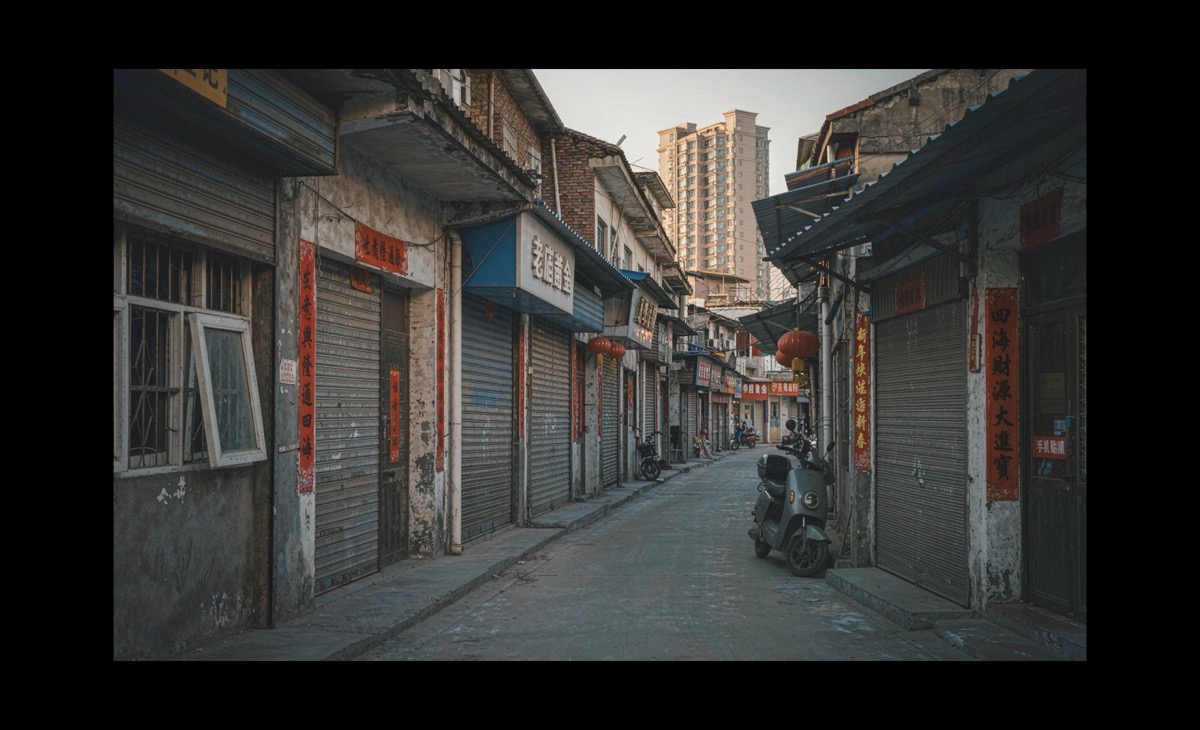
the first is closures. small restaurants, private clinics, dry cleaners, barbershops and independent shops shut for the core of the break, commonly from new year's eve through the fourth or fifth day of the new year, reopening in stages through the week. chains and malls reopen sooner. the street in the photograph below is the normal look of a residential block on the second day of the festival: shutters down, lanterns up.
the second is couriers. the major express companies now keep skeleton operations through the break rather than stopping outright, but capacity drops sharply and promised delivery windows lapse; anything shipped in the week before february 5 competes with the entire country's gift volume. the dependable rule is to move anything that must arrive before mid-february by the end of january, and to treat packages sent in the first festival week as arriving when they arrive. the mechanics of the postal system, including what still works and what does not, are covered in the packages guide.
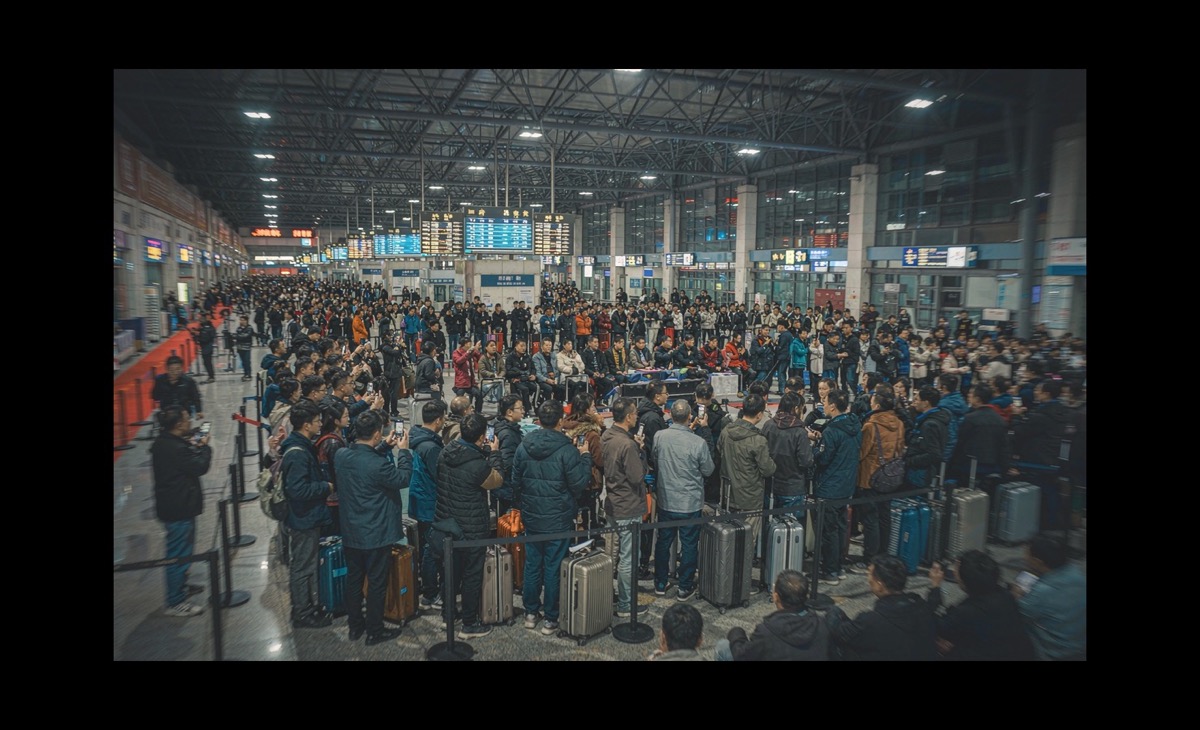
the third is the ticket market. february is when the whole railway system sells out, and the mechanics sit in the next section because they apply to every holiday, not only this one.
The fifteen-day ticket window
china railway sells tickets fifteen days ahead, counting the travel day itself, on 12306 and its app, which are the only official channels. anything advertising a longer presale is a marketing product, not an earlier window; the fifteen-day rule binds every platform. for the february rush that arithmetic is unforgiving: the february 5 travel day opens for sale on january 22, at that station's published on-sale time, and the peak directions are gone within minutes.
the system built for that shortfall is the waitlist. you can hold up to six pending waitlist orders, each covering three travel dates and up to sixty date-and-train combinations, and the railway fills them in order as cancellations and added services appear. the official success rate across the 2026 rush was quoted above seventy percent, which is a better bet than any paid scalper service, and the waitlist itself charges nothing. one warning belongs in the same paragraph: cancelling a refundable ticket is free within thirty minutes of purchase and more than four hours before departure, but tickets changed into or out of spring festival travel dates carry a twenty percent refund fee, so treat february bookings as decisions rather than options.
the process of buying as a foreign national, including the passport requirements and the app setup, is a guide of its own: see buying train tickets. the short version for holiday planning is that the fifteen-day clock and the waitlist are identical for everyone, and the passport is what you travel with, so the name on the order must match it exactly.
Stretching the short ones
the five short holidays reward anyone willing to spend two days of annual leave. the arithmetic for 2027:
| Take leave on | Against | Produces |
|---|---|---|
| Thu Jun 10 – Fri Jun 11 | the Dragon Boat Wednesday | 5 days, Jun 9 – 13 |
| Thu Sep 16 – Fri Sep 17 | the Mid-Autumn Wednesday | 5 days, Sep 15 – 19 |
| Mon Apr 6 – Tue Apr 7 | the Qingming long weekend | 5 days, Apr 3 – 7 |
| Thu Jan 28 – Fri Jan 29 | the New Year weekend | 5 days, Jan 28 – Feb 1 |
spring festival and national day need no stretching; they arrive long and depart expensive. the honest planning question for both is direction, not length: everyone moves at once, the railways price the peak accordingly, and the tourist regions price hotels the same way. if your schedule allows travel outside the two golden weeks, the shoulder seasons are covered in the timing guide. if the holiday is the only window you have, book the transport before the accommodation, because transport is the part that sells out.
Services that pause, services that don't
government counters follow the holiday calendar exactly. the exit-entry halls that handle visa extensions and residence permits close for all seven holidays, and their appointment systems shut with them, so an application that must be filed in a specific week should not be planned against a holiday week at all. the deadlines for immigration matters run on their own clocks and do not pause for the festival; the mechanics are in the visa extension and residence permit guides.
banking splits by channel. branch counters close, sometimes for the whole nine days at smaller locations, while the apps keep running and atms keep dispensing. anything requiring a human banker, a new card, a large transfer with verification, belongs before february 5. hospitals keep emergency departments open without interruption, and the larger public hospitals run holiday outpatient schedules that are usually lighter than normal; the practical routing for a non-emergency during the break is covered in the doctor guide.
the everyday apps keep functioning through every holiday: payments, ride-hailing, maps and delivery do not pause, though delivery slows as noted above. if your phone setup is still incomplete, the holiday week is a bad week to finish it, since service counters at telecom shops keep holiday hours too. the baseline setup lives in the apps guide.
Common questions about China's 2027 holidays
When is Chinese New Year in 2027?
Lunar New Year's Day falls on February 6, 2027, and the public holiday begins the evening before: the official break runs February 5 to 13, nine days, starting on New Year's Eve. This follows the convention adopted in recent years of counting the eve as the first holiday day.
Why do I have to work on Sunday, January 31?
That Sunday is one of the adjusted workdays, or tiaoxiu, that pay for the nine-day Spring Festival break. The notice designates January 31 and February 14 as official workdays; the same mechanism moves September 26 and October 9 around National Day, and May 8 after Labour Day. Your employer's calendar follows the notice, not your phone's default calendar.
How many days off does the 2027 calendar give in total?
Twenty-seven days across seven holidays: three at New Year, nine at Spring Festival, three at Qingming, five at Labour Day, one each at Dragon Boat and Mid-Autumn, and seven at National Day. Five weekend days are converted into workdays to fund the two long breaks.
When do 2027 Spring Festival train tickets go on sale?
Fifteen days before travel, counting the travel day. The February 5 tickets open on January 22, February 6 on January 23, and so on, each at its station's published on-sale time. 12306 is the only official sales channel, and its waitlist is free with a quoted success rate above seventy percent across the 2026 rush.
Are shops and restaurants closed during Spring Festival?
Independent shops, small restaurants and private clinics commonly shut from New Year's Eve through the fourth or fifth day of the new year, reopening in stages. Chains, shopping malls and convenience stores stay open on reduced hours. Banks close their branch counters while keeping apps and ATMs running, and hospital emergency departments do not close at all.
Do couriers stop during the February break?
They keep skeleton operations rather than stopping outright, but capacity falls sharply and normal delivery promises lapse. Anything that must arrive before mid-February should ship by the end of January, and anything sent during the first festival week should be treated as arriving without a firm date.
Can I get a visa extended during a holiday week?
The exit-entry administration halls close for the full holiday, and their appointment systems close with them. Immigration deadlines do not pause for the festival, so an application that must be filed inside a specific week should never be planned against a holiday week. Filing seven days before expiry, the legal floor, is the rule that decides the timing.
Is it a bad idea to travel inside China during the golden weeks?
It is the most crowded and most expensive week to travel, and transport sells out first: the railways move billions of passenger trips across the February rush, and peak directions vanish within minutes of the fifteen-day window opening. If the holiday is your only window, book transport before accommodation and use the waitlist rather than paid reseller services. If your dates are flexible, the shoulder seasons are cheaper and quieter.